
REVIEW · TBILISI OLD TOWN WALKS
Private Walking Tbilisi City Tour (Day Trip)
Tbilisi makes sense after you walk it. This shared day trip strings together Old Tbilisi landmarks and key viewpoints with real context, not just photo stops. I especially like the multi-faith route (you see major religious landmarks in one sweep) and the practical pacing, plus bottled water for each person. One thing to consider: it is a walking day with hillside sections, so comfy shoes matter and you will likely want to move at the local pace.
I also like how the tour explains why places matter. You get the background behind Tbilisi’s legends, the “warm” meaning of tbili, and what the city’s landmark churches and synagogues represent, including standout guidance from people like Teimuraz and Temo, who were specifically praised for being clear and helpful. The only possible drawback is that the day can run on the longer side of the 6 to 7 hours estimate, so plan your evening accordingly.
In This Review
- Key Points Before You Go
- A 6-7 Hour Walking Route That Explains Tbilisi’s Layers
- Narikala Fortress Area: Old Tbilisi Up Close, Then Back to Story
- Sulfur Baths, Metekhi Plateaus, and the Legend of tbili
- Rustaveli Avenue: Where the Capital Shows Its Modern Side
- Abanotubani and the Hot Springs Quarter: Where the Legend Starts
- The Great Synagogue of Tbilisi and the Jumah Mosque Connection
- Metekhi to Bridge of Peace: Old Power Lines Up With New Design
- Rike Park, Kartlis Deda, and the City’s Big Symbols
- Anchiskhati Basilica and Sioni Cathedral: Two Orthodox Anchors
- Leselidze Street and Rezo Gabriadze Marionette Theater: Street Life and Soul
- Dzveli Tbilisi Sulfur Waterfall: The City’s Hot Water With a View
- What You Get for $59, and Why It Can Be Worth It
- Who Should Book This Walk (and Who Might Skip It)
- Should You Book This Tbilisi City Tour?
- FAQ
- How long is the Private Walking Tbilisi City Tour?
- What does it cost, and what is included in the price?
- Is transportation included?
- What languages is the tour offered in?
- Do I need an app or ticket printed out in advance?
- How many people are on the tour?
- What if the weather is bad?
Key Points Before You Go
- Multi-faith focus in one coherent route, from Jumah Mosque area to the Great Synagogue of Tbilisi
- Narikala Fortress area plus sweeping views over Old Tbilisi
- Legend and place-based stories, including why tbili means warm and the hot springs origins
- Big mix of old and new, with Rustaveli Avenue and the Bridge of Peace
- Mostly no extra fees, with Narikala admission included and other major stops listed as free
- Small comfort touch: bottled water is included, so you can keep moving
Other walks through the balconies and backstreets of old Tbilisi
A 6-7 Hour Walking Route That Explains Tbilisi’s Layers

This is a guided, shared city walk designed to help you understand how Tbilisi grew, changed, and still feels like a place where different cultures overlap in the same neighborhoods. For the price, the biggest value is that you are not piecing together the story yourself. A professional guide keeps the day connected, and the route covers practical “orientation points” you can use later when you wander on your own.
The day runs about 6 to 7 hours. That includes short stop times at each major sight, so the goal is momentum plus context, not long museum-style reading. You are also not paying for transportation because it is walking-based, so you will want to start with decent energy and shoes you trust.
Who this suits best: first-timers who want a strong foundation, people who like city history when it is tied to streets and buildings, and anyone who wants a route that naturally mixes architecture, religion, and local legend without feeling like a lecture.
Narikala Fortress Area: Old Tbilisi Up Close, Then Back to Story
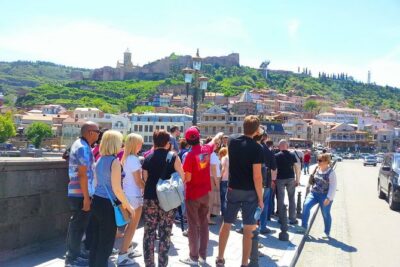
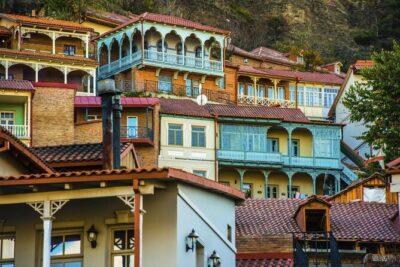
The day starts in the Narikala Fortress area, which is a smart place to begin because it gives you immediate skyline perspective. You are in the zone where you can look over Old Tbilisi and see the city’s familiar layers: typical houses with balconies, church silhouettes, and that classic hilltop feel.
This stop also hits a lot of major landmarks in a compact area. You will pass through or near places like Anchiskhati Church (dated to the 6th century), the Holy Trinity Cathedral, and the wider cluster of Christian sites in the general area, including Catholic and Gregorian churches. On top of that, you see Muslim and Jewish heritage landmarks in the same broader viewpoint area, which is exactly the kind of “multi-faith geography” that makes Tbilisi different from many European capitals.
Practical consideration: the Narikala area can mean uneven ground and steps. Even if your stop time is “only” around 50 minutes here, you will feel it in your legs if you are not used to walking uphill. Take it slow for the first part of the day. If you rush, the viewpoint stops feeling rewarding.
One more benefit: Narikala admission is included, so you are not hunting for tickets or timing separate entries early on.
Sulfur Baths, Metekhi Plateaus, and the Legend of tbili
After the fortress viewpoints, the tour shifts down toward the historic hot-spring story that sits at the heart of Tbilisi’s identity. You get a stop tied to the sulfur baths area, where the city’s name comes from the legend of King Vakhtang Gorgasali and the meaning behind tbili, warm.
You will also see the setting where modern Tbilisi landmarks act like book covers for older legends: the sulfur baths are not just a “spa thing,” they are part of the city’s origin myth and its geography. This is one of the reasons the tour is worth it even for people who do not plan to soak in baths. You learn why the hot springs shaped settlement patterns.
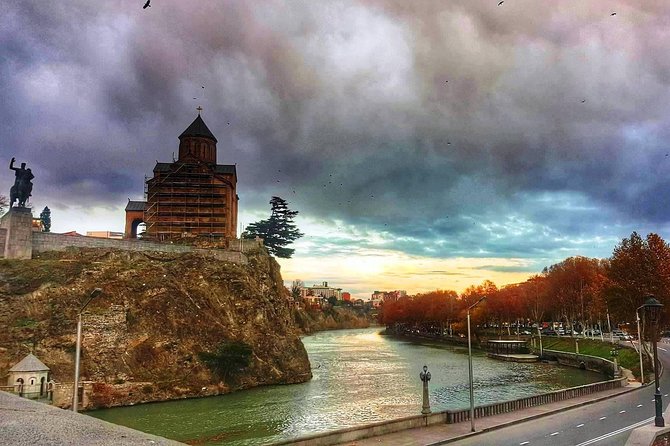
Metekhi Cathedral comes next. This stop is only around 15 minutes, but it is dense with meaning. Metekhi is tied to King Vakhtang Gorgasali erecting a church and a fort that served as residence, and the name itself dates back to around the 12th century, literally pointing to the area around the palace. In short, this is a quick dose of “why power was placed here,” not just “what the building looks like.”
Tip: if you want photos, bring a quick plan. You might only have minutes at each point, so pick one angle before you start walking inside viewing areas.
Rustaveli Avenue: Where the Capital Shows Its Modern Side
Then you move toward Rustaveli Avenue, one of Tbilisi’s main “big city” corridors. This is a nice contrast after the old-town layers because it helps you see where Tbilisi expanded after the 20th century.
Along the avenue, you will pass and get context around major cultural buildings such as the Drama Theater named after Rustaveli and the State Academic Theater of Opera and Ballet named after Zakaria Paliashvili. There are also references to art salons and other civic landmarks, which helps you connect why this avenue feels like a cultural spine.
This part of the day is about getting your bearings fast. You will likely want to come back here later, not because it is the oldest spot, but because it gives you a practical map of where “daytime Tbilisi life” happens.
More ways to see Tbilisi in a day, cable car included
- City tour Tbilisi on red bus★ 4.5 · 139 reviews
- Discover Tbilisi: Hidden Gems and Iconic Sights Walking Tour★ 5.0 · 138 reviews
- Private Walking Tbilisi City Tour (Day Trip)★ 5.0 · 69 reviews
- Tbilisi city tour PRIVATE excursion Airport and hotel pickup INCL★ 5.0 · 68 reviews
- Tbilisi City Tour, Most Popular Tourists Destinations In The Capital Of Georgia★ 5.0 · 58 reviews
Abanotubani and the Hot Springs Quarter: Where the Legend Starts
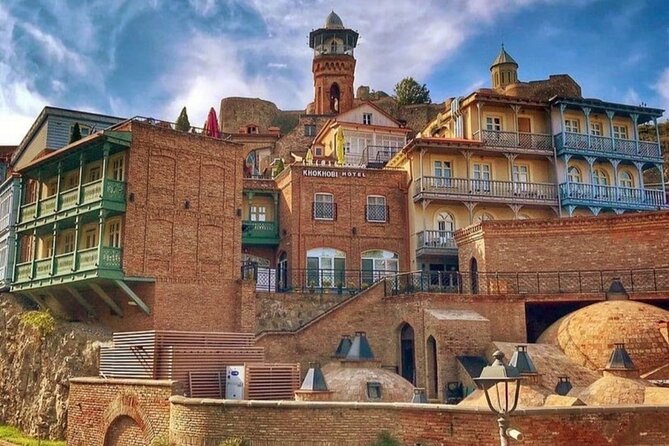
Abanotubani is one of those places where you can feel the old story in the physical geography. This is where, according to legend, the falcon of King Vakhtang Gorgasali fell, leading to the discovery of hot springs and the founding of a new capital.
It helps to know what you are looking at. Without context, this area can look like a cluster of bath buildings. With context, it becomes the origin point of the city’s signature feature: warm water where people built their lives.
Time here is short, around 15 minutes, so think of it as orientation. You are not getting an extended bath-culture deep read. Instead, you get the “why” behind what you see, then you can explore at your own pace later if you want to.
The Great Synagogue of Tbilisi and the Jumah Mosque Connection
One of the most praised themes in this tour is its multi-faith framing. In a single day, you are exposed to major religious landmarks that represent different communities in Georgia’s capital.
A highlight is the Great Synagogue of Tbilisi, built from 1895 to 1903 in an eclectic style. It was supported by Georgian Jews from Akhaltsikhe who migrated to Tbilisi in the late 19th century, which is why you may also hear it called the synagogue of the people of Akhaltsikhe. Even if you only spend around 15 minutes, knowing the migration story makes the building feel tied to real human movement, not just architecture.
The tour also flags the presence of Jumah Mosque as part of the multi-faith heritage focus. If you like comparing how different traditions shaped city space, this is a key part of the day.
Practical note: if you want calm photos inside or near religious sites, dress and behavior matter. Plan to be respectful and ready for quiet, brief viewing.
Metekhi to Bridge of Peace: Old Power Lines Up With New Design
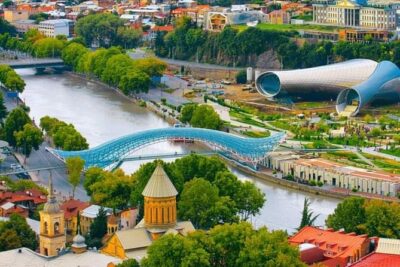
As you keep moving, Tbilisi becomes a conversation between eras. Metekhi adds the “palace and fort” logic. Then you reach the Bridge of Peace, built in 2009 to 2010, designed by Italian architect Micele De Luci, with a lighting system by French Philip Martino.
It is a small stop on paper, around 15 minutes, but it is a good pause to see how the city visually modernized without losing the old-town gravity nearby. Bridges do that. They connect views. They also force you to look at neighborhoods as a whole rather than as disconnected points.
If you are the type who likes architecture details, take a second and look at the bridge as a “night-time object.” The lighting designer detail is not random trivia, it is a hint that this bridge is meant to look good after dark too.
Rike Park, Kartlis Deda, and the City’s Big Symbols
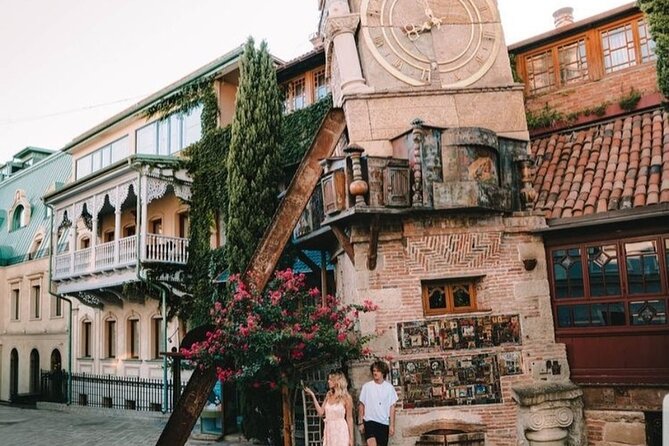
From the bridge area you head to Rike Park, a spot known for festivals like Tbilisoba. It is not the kind of place where you need to spend a long time, but it does give you a breather and a sense of where community life happens.
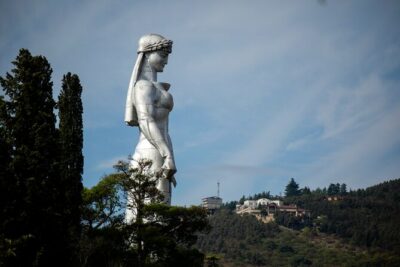
Then you see Kartlis Deda, Georgia’s symbol: a female figure meeting friends with wine and enemies with sword. This is a powerful bit of public symbolism, and even with a short stop, it helps you interpret the city’s cultural messaging. It is the kind of statue you can see from far away and recognize instantly later.
If you enjoy learning what cities choose to celebrate, this section is more than a photo opportunity. It teaches you that Tbilisi’s public art is part of the same storytelling system as churches and legends.
Anchiskhati Basilica and Sioni Cathedral: Two Orthodox Anchors
The tour includes two Orthodox heavyweights, both tied to Georgia’s long religious timeline.
First is Anchiskhati Basilica, described as the oldest of survived churches in Georgia, dating to the 6th century. The stop also notes that a studio connected to the famous Georgian sculptor Elguja Amashukeli existed here, and that he created Kartlis Deda. If you connect the dots, this makes Anchiskhati feel like more than a landmark. It becomes a creative birthplace for a major national symbol.
Next is Sioni Cathedral Church, built in the 6th and 7th centuries and then destroyed and rebuilt through periods of foreign invasion. The current version is based on a 13th-century version, with changes from the 17th to 19th centuries. It was also once the main Georgian Orthodox Cathedral and the seat of the Catholicos-Patriarch of All Georgia until the Holy Trinity Cathedral was consecrated.
Even if your time at each is about 15 minutes, you are getting a concentrated sense of continuity and disruption. Georgia’s story here is not only about survival, it is about rebuilding and reshaping what came before.
Leselidze Street and Rezo Gabriadze Marionette Theater: Street Life and Soul
Tbilisi is not only cathedrals and fortresses. Two stops help balance the day with street-level texture and local performance culture.
Leselidze is described as a street combining old and new parts of the city. That sounds simple, but it is actually a helpful way to understand how Tbilisi mixes time periods. You get to see firsthand that the city does not separate old from new in clean sections.
Then comes the Rezo Gabriadze Marionette Theater, one of Tbilisi’s most recognizable sights. The tour notes that daily shows attract many tourists and that the performance is popular worldwide because it carries depth and soul. Even if you do not see the show, the stop helps you understand what Tbilisi exports culturally, not just what it preserves physically.
If you are a theater person, plan for an extra visit later. A 10-minute “look” is only a teaser.
Dzveli Tbilisi Sulfur Waterfall: The City’s Hot Water With a View
Near the end, the tour reaches Dzveli Tbilisi Sulphur Waterfall, also called Leghvtakhevi, which is listed as 22 meters tall. The tour also gives you the meaning behind the name: it connects to the Georgian word leghvi, fig, because there were many fig trees around the area.
This is a stop that makes you understand the hot-spring story as more than a bathhouse slogan. It shows water, height, and legend meeting in one place, and it is a satisfying final “nature meets city” moment before the walk closes back near where you started.
If you want photos here, watch the ground. Water areas can be slippery, and the stop timing is limited.
What You Get for $59, and Why It Can Be Worth It
At $59 per person, the value mostly comes from three things: a professional guide, bottled water included, and a route that packs a lot of orientation into one day.
You also get a practical cost win. Narikala Fortress has an admission ticket included. Many other stops in the day are listed as free, which helps keep spending predictable. Since transportation is not included, you are paying for walking guidance, not transfers. For a city like Tbilisi where distances between landmark clusters vary, that can be a fair trade.
Is it cheap? In the context of a full guided day, it is hard to argue. Also, the consistent 5-star rating and strong recommendation rate suggest you are likely to get what you expect: a clear, friendly guide and a route that makes the city click.
Who Should Book This Walk (and Who Might Skip It)
Book it if:
- You are visiting for a short time and want fast context.
- You care about how Tbilisi blends different communities and religious traditions.
- You like walking routes that feel like a city lesson, not a checklist.
- You value a guide who can explain details in a way that sticks. Names like Teimuraz and Temo came up for being especially informative and helpful.
Consider another option if:
- You hate walking uphill or you expect mostly flat streets.
- You want long, unhurried visits inside churches, theaters, or museums. This is designed for short stop windows.
Should You Book This Tbilisi City Tour?
If you want Tbilisi to make sense quickly, I would book it. The multi-faith focus plus the sequence of fortress views, hot-spring legend, central avenues, and major church landmarks is a strong mix for first-timers. Add in bottled water and a guide who can make the place feel readable, and you get good value for a full day.
Just show up ready to walk. Wear supportive shoes, keep your phone charged for quick photos, and treat the day like a guided orientation you can build on later. If you do that, you will leave with more than memories, you will have a mental map of how Tbilisi works.
FAQ
How long is the Private Walking Tbilisi City Tour?
The tour lasts about 6 to 7 hours.
What does it cost, and what is included in the price?
It costs $59.00 per person. The tour includes a professional guide service and bottled water. Narikala Fortress admission is included, and other listed stops are marked as free.
Is transportation included?
No. Transportation is not included.
What languages is the tour offered in?
The tour is offered in English.
Do I need an app or ticket printed out in advance?
You get a mobile ticket.
How many people are on the tour?
The tour has a maximum of 100 travelers.
What if the weather is bad?
The experience requires good weather. If it is canceled due to poor weather, you will be offered a different date or a full refund. You can cancel for a full refund up to 24 hours in advance.
Everything Else Across the Caucasus


Still in Tbilisi? Keep Going


Old Tbilisi, Three More Ways
Other Georgian tours we have been through, from the Black Sea to the Kakheti vineyards
- Private Adorable City Tour of Tbilisi
★ 5.0 · 3 reviews - Tbilisi Airport to Gudauri, Bakuriani, Batumi, Tbilisi
★ 5.0 · 3 reviews - Private Wine Tour In Kakheti Region with 7 Wines and Lunch
★ 5.0 · 3 reviews - Two Capitals in One Day: Tbilisi and Mtskheta Combo Tour
★ 5.0 · 3 reviews - Private Effortless transfer from Tbilisi to Gudauri ski resort
★ 5.0 · 3 reviews - Tbilisi to Gudauri Stepantsminda Private Transfer
★ 5.0 · 3 reviews
Tbilisi Old Town Walks, compared.
 ★ 5.0Tbilisi Walking Tour Including Cable Car and Traditional BakeryFrom $191,310 reviews
 ★ 5.0Old Tbilisi Highlights walking tour with wine & 10 tastingsFrom $15276 reviews
 ★ 5.0Old Tbilisi Tour: Private Walking Tour With Wine TastingFrom $39273 reviews
 ★ 5.0Tbilisi Old Town Walking Tour with a Local GuideFrom $38168 reviews
 ★ 5.0Tbilisi old town & soviet heritage – Private driver-guided TourFrom $7783 reviews
 ★ 5.0Old Town and Beyond: A Tbilisi Silk Road Feast with Culinary BackstreetsFrom $12562 reviews
 ★ 5.0Private Walking Tbilisi City TourFrom $4536 reviews
 ★ 5.0Tbilisi Explorer: Essential Walking Tour for First-TimersFrom $4122 reviews
Browse the lists this tour appears in