
REVIEW · MTSKHETA & JVARI MONASTERY
Day Trip to Mtskheta Gori and Uplistsikhe
Caves and cathedrals in one long day. This trip strings together Uplistsikhe and UNESCO-listed Mtskheta, plus a stop in Joseph Stalin’s hometown.
I love the round-trip transportation and a guide who keeps the sites connected, not just recited. I also like the way you get a mix of eras in one day, from Early Iron Age rock-cut life to Georgian Orthodox monuments.
One drawback: it is a full day with a fair amount of walking and steps at Uplistsikhe, and the optional add-ons can add cost fast.
In This Review
- Key things to know before you go
- From Avlabari to Uplistsikhe: how the day starts
- Uplistsikhe Cave Town: walking through layered Georgia
- Gori lunch hour: local food or free time in town
- Stalin Museum in Gori: a Soviet detour you control
- Jvari Monastery: the Cross and the rivers’ meeting point
- Svetitskhoveli Cathedral in Mtskheta: Christ’s robe and centuries of kings
- How much walking is this day really?
- Group size and guide style: what makes it feel smooth
- Price and value: why $29 can work if you use it right
- Who should book this day trip from Tbilisi
- Quick practical tips that make the difference
- Should you book this tour?
- FAQ
- What is the price of the Day Trip to Mtskheta, Gori, and Uplistsikhe?
- How long is the tour?
- What is included in the price?
- Are entrance fees included for Uplistsikhe and the Stalin Museum?
- Is lunch included?
- Where do I meet for the tour?
- What time does the tour start?
- Does the tour run in bad weather?
- Are there rules for church visits?
- What is the minimum age to join?
Key things to know before you go
- Uplistsikhe is rock-cut history, with structures spanning Early Iron Age to Late Middle Ages.
- Mtskheta is UNESCO-listed, including Jvari Monastery and Svetitskhoveli Cathedral.
- Gori adds a dramatic contrast, including the Stalin Museum option.
- Optional lunch is your flexibility knob, so you can choose a local meal or free time in town.
- Church dress rules apply, so pack accordingly if you want to avoid stress at the gate.
- This runs in all weather, so plan for real, not ideal, conditions.
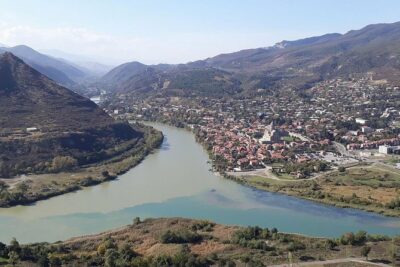
More of Mtskheta and the Jvari hill above the confluence
From Avlabari to Uplistsikhe: how the day starts
You begin in Tbilisi at the M/S Avlabari meeting point, then you head out toward the first major stop: Uplistsikhe. There’s a short, welcoming start before you roll, with time at the meeting area where you can meet people, listen to music, and even grab a glass of wine while waiting.
This is a good setup if you do not want to wrestle with timing or transportation. You show up, get oriented, and then the guide handles the moving parts. It also means you can stay focused on the sights instead of constantly checking buses and schedules.
Uplistsikhe Cave Town: walking through layered Georgia
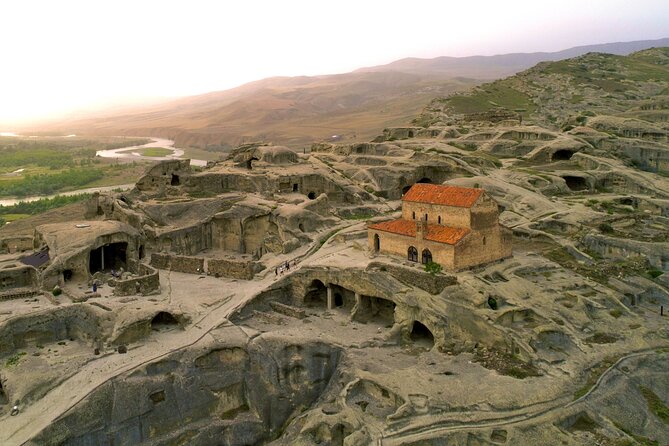
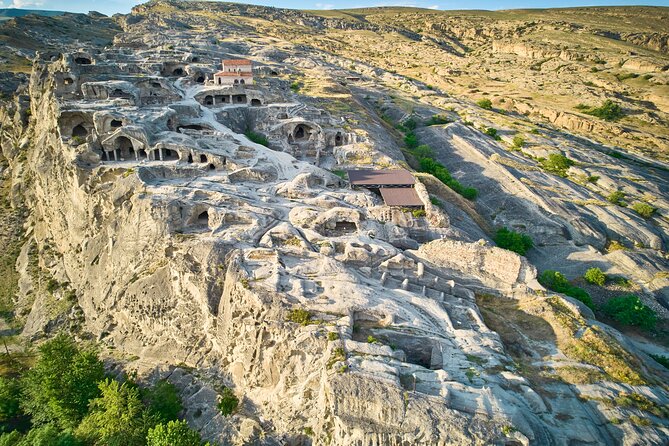
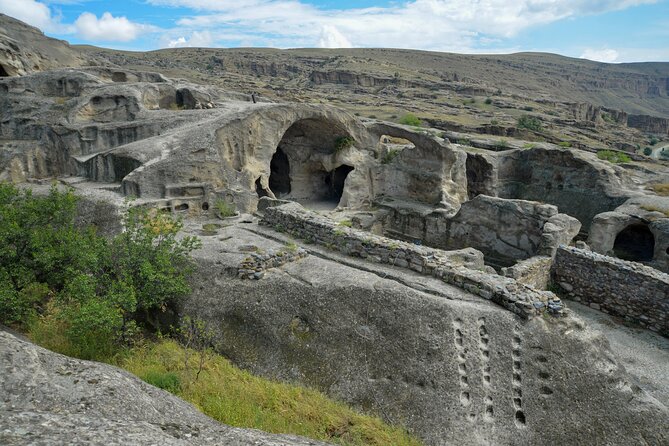
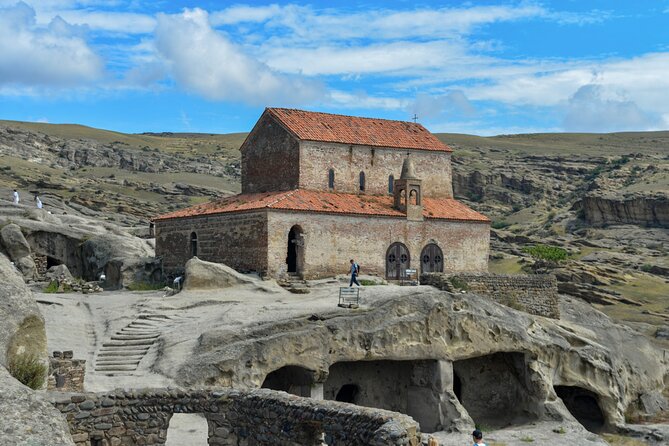
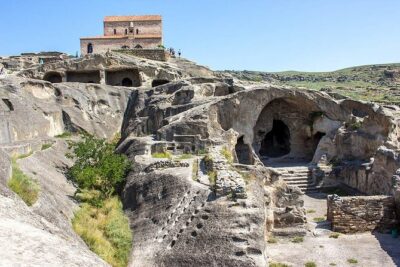
Uplistsikhe is an antique rock-hewn town on the left bank of the Mtkvari River. The big draw is scale and survival: you are not just looking at one viewpoint. You move through a carved landscape with evidence of how people lived across centuries, from the Early Iron Age into the Late Middle Ages.
What makes it more than a single “cave town” stop is the mix of influences. The site is known for a unique blend of rock-cut cultures, including traditions connected with Anatolia and Iran, plus both pagan and Christian architectural elements. In plain terms, the place feels like a timeline you can walk through.
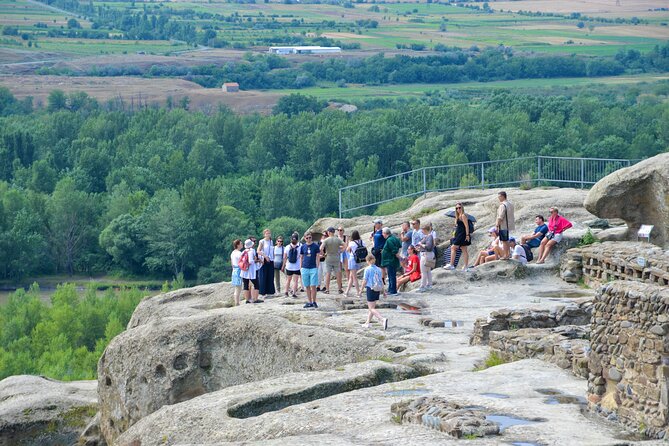
Practical reality check: the ground can be uneven, and there are steps. One review described the trek as challenging for older folk, but also manageable with sensible footwear and a hat. If you have knees that complain, bring shoes with grip and go slow. Also, bring your own bottled water, since none is provided, and you will appreciate it fast when the stairs heat up.
Give yourself time to wander without rushing. This is the stop where you will likely feel the most “what am I looking at?” moments, because the town’s layout forces you to slow down and read space with your eyes, not just your guidebook app.
Gori lunch hour: local food or free time in town
Around 13:00 you reach Gori, with time set aside for lunch or free time. If you take the lunch option, you are meant to eat at a local restaurant, in a way that feels more like eating with residents than grabbing a tourist plate.
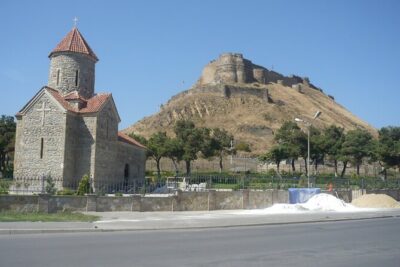
If you prefer to explore on your own, there is a free-time window in Gori. That matters here because Gori is not only a transit stop. The town has roots stretching back to the early Bronze Age. Medieval Georgian annals attribute its founding to King David IV, and there is mention of a fortress that appears to have been in use by the 7th century. Archaeology also points to an urban community in Classical Antiquity.
You also get a sobering modern context: during the 2008 Russo-Georgian war, Gori came under aerial attack. Even if your main goal is history, that kind of fact changes how you read the town when you are walking around.
On the practical side, one note from the day’s rhythm: the lunch location may not be in the center, and the flow of time in Gori can feel a bit dependent on where the restaurant is. If you want the most control, the free-time option is often the easiest way to keep the day on your own pace.
Stalin Museum in Gori: a Soviet detour you control
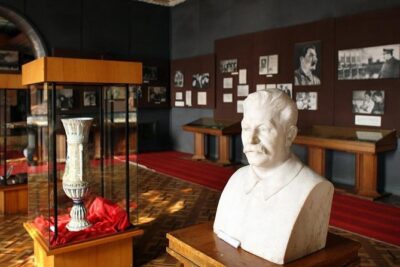
At about 14:45, you reach the Stalin Museum. This museum focuses on Joseph Stalin’s life, including his original house and a railway carriage. It also keeps that Soviet-era style feel, with museum rooms that do not try to soften the tone.
You should treat this stop as optional, emotionally and practically. Some people skip it and use the extra time to see other parts of Gori. Others say it was genuinely interesting, especially when the guide frames what you are seeing and why it mattered.
If you do go inside, give it time to land. This is not a museum that automatically clicks just because the subject is famous. It helps when your guide uses context, not just dates, and explains what Soviet symbolism looked like on the ground.
If you have any strong preferences either way, you can decide at the moment. The structure of the day gives you that chance.
Other runs west to Gori and the Uplistsikhe rock town
- Mtskheta-Jvari-Uplistsike-Chronicle of Georgia, PRIVATE Trip★ 5.0 · 105 reviews
- Day tour to Chronicles of Georgia, Gori city, Uplistsikhe cave★ 5.0 · 86 reviews
- Ancient Georgia Group Tour: Mtskheta,Jvari, Gori, Uplistsikhe★ 4.5 · 73 reviews
- Mtskheta – Jvari + Gori – Uplistsikhe Tour★ 5.0 · 49 reviews
- Mtskheta – Gori – Uplistsikhe caves • Private tour★ 5.0 · 24 reviews
Jvari Monastery: the Cross and the rivers’ meeting point
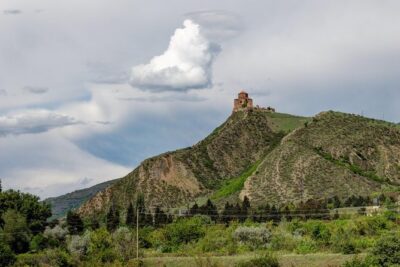
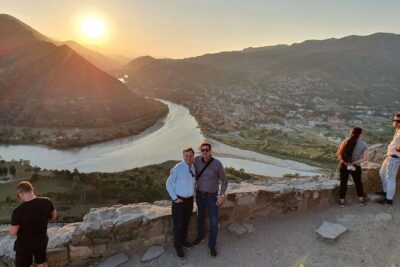
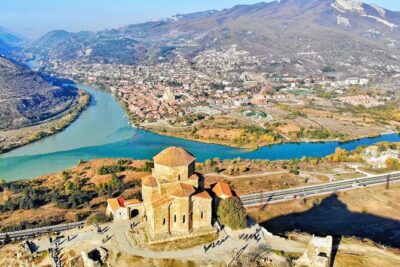
By around 16:35, you arrive at Jvari Monastery, the Monastery of the Cross. It is a 6th-century Georgian Orthodox site located near Mtskheta, famous for its placement. You get the views because you are on a rocky mountaintop overlooking the confluence of the Mtkvari and Aragvi rivers.
This is one of those stops where the setting does half the work. The monastery’s name alone points to what you are meant to notice: the cross as both religious symbol and marker of identity in Georgian Orthodox history.
Time here is shorter, about 30 minutes. That is enough if you treat it like a viewpoint stop, not a full museum visit. Wear something with wind resistance if weather turns. Higher spots can get chilly or gusty even when the city feels warm.
Svetitskhoveli Cathedral in Mtskheta: Christ’s robe and centuries of kings
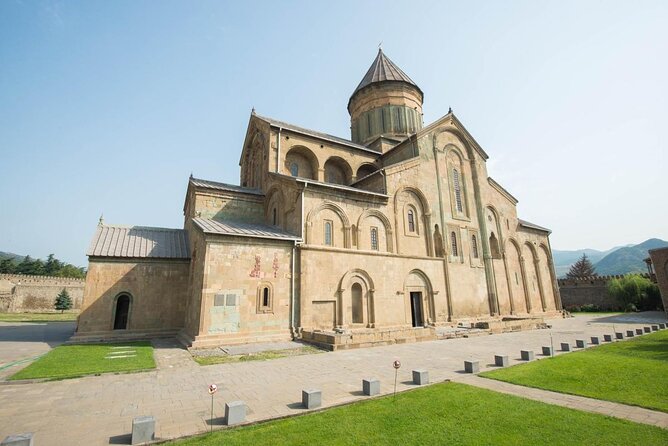
Next comes the UNESCO side of the day: Mtskheta, and specifically Svetitskhoveli Cathedral. Mtskheta is one of the oldest cities in Georgia, tied to the early Georgian kingdom of Iberia and remembered as a coronation and burial place for many kings up into the 19th century.
Svetitskhoveli is known as the Cathedral of the Living Pillar. It is also described as the burial site of Christ’s robe, and it is one of Georgia’s principal Orthodox churches. The scale is major too, with it noted as the second-largest church in Georgia, after the Holy Trinity cathedral.
If you are coming from Uplistsikhe’s rock-cut world, this feels like a different kind of carving, one made of faith and stone craftsmanship rather than tunnels and rooms. It also helps that you reach it at the end of the day. Several guests mention finishing the tour around sunset timing, which makes the approach into Mtskheta feel more cinematic.
Church etiquette matters here. Shorts are not allowed for anyone entering, and women need to cover their heads. If you do not pack a scarf, you might still be able to manage with something from your bag, but do not gamble. Plan to cover up before you arrive at the gate.
How much walking is this day really?
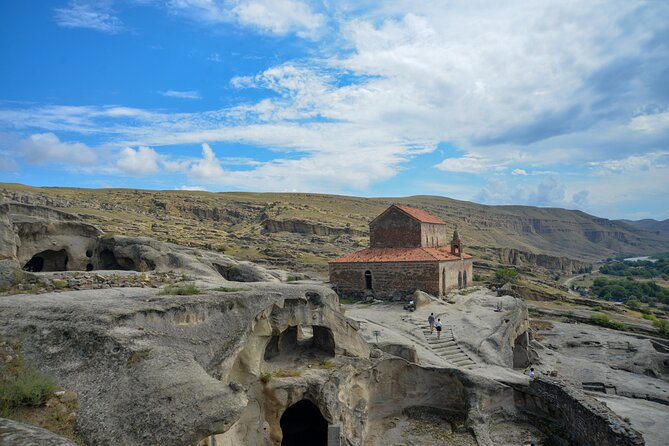
The total time on paper is about 10 hours, but the day can feel longer because you are traveling between sites and doing multiple viewpoint and walking segments. Expect a steady pace rather than quick-hit photo stops.
From the experiences shared by people who did the day, Uplistsikhe is the main “physical” moment, mainly because of uneven ground and steps. Jvari is a shorter time but still a viewpoint climb. Svetitskhoveli is usually easier on feet than Uplistsikhe, but you still want comfortable shoes for moving around the area.
If you bring the right gear, you will enjoy it more:
- Comfortable shoes with grip
- A hat for sun or rain protection
- A water bottle
- Church-appropriate clothes, including head covering for women
Group size and guide style: what makes it feel smooth
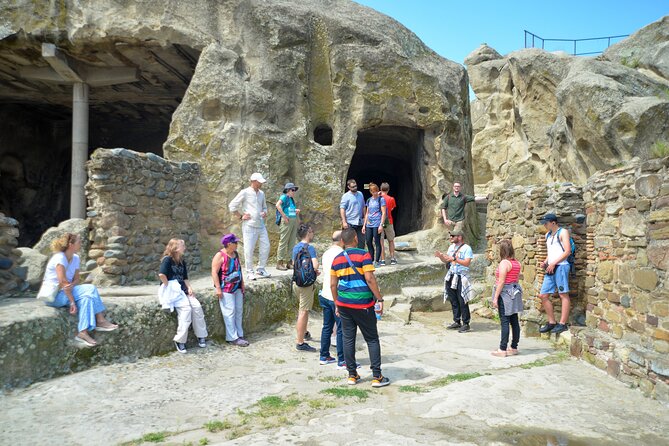
This tour runs with a maximum of 100 travelers, which is fairly standard for a big-day excursion. Many people seem to experience it in smaller van groups, with guides and drivers doing the scheduling work behind the scenes.
The guides are a major part of why the day is rated so highly. Multiple names come up in people’s notes, including Nini, Metroman, Dimitri, Tota, Tako, Toka, Paada, Niko, Nene, and Maria. The pattern is consistent: guides translate big history into something you can picture, and they keep the day moving without making you feel pushed.
One practical tip from timing notes: if everyone arrives early, the tour can depart earlier than you expect. So do not plan to arrive at the very last minute. Build a buffer and you will feel calmer when the group gathers.
Price and value: why $29 can work if you use it right
At $29 per person, you are mainly paying for three things: professional guiding, transportation from Tbilisi, and the structure that lets you see sites that are hard to stitch together on your own without extra hassle.
The “gotcha” to watch is optional spending. Entrance fees are not included for Uplistsikhe and Stalin Museum, listed at 15 GEL each (about $6 each). Lunch is optional and listed at 45 GEL (about $17). Add those up and the tour’s total cost can rise quickly.
Still, it can be good value because you are stacking UNESCO monuments and a major cave town in one go. Your money is buying access to the right route, not just a bus ride.
My advice: decide your add-ons before you go, based on your interest level.
- If you care about religious Georgian history most, you might prioritize the cathedral and monasteries and still pay for Uplistsikhe.
- If Stalin Museum is a must for you, budget for the entrance fee.
- If you want the freshest, cheapest meal, you can choose free time in Gori instead of the included lunch option.
Who should book this day trip from Tbilisi
Book this if you want a tight, well-spent history day without planning logistics. It is especially good for:
- First-timers who want UNESCO highlights near Tbilisi
- History lovers who like contrasts, ancient Georgia next to Soviet-era Gori
- People who would rather ride with a guide than piece together multiple departures
You might rethink it if:
- You have mobility limits, because Uplistsikhe involves steps and uneven surfaces
- You dislike long days, since it is a packed route with multiple segments
- You only want one type of site, like purely churches or purely museums
Quick practical tips that make the difference
Dress for churches in advance. No shorts inside. Women need head covering. It is better to come prepared than to scramble when you reach the entrance.
Wear good shoes and take it slow at Uplistsikhe. Uneven ground can make you tired fast, so treat it as a walking experience, not just a photo stop.
Bring water. One review specifically pointed out that bottled water is not provided.
If you care about crowds, the guides can shift the order of some stops to make the day smoother. That helps at busy times, especially for major UNESCO sites.
Should you book this tour?
I would book it if you want a high-value day trip that hits UNESCO Mtskheta plus the rock-cut reality of Uplistsikhe, with Gori as the contrast stop. The guide and transportation make it feel effortless, and the itinerary is built so you get different eras instead of repeating the same kind of sight.
If you are choosing between priorities, this is how I’d decide: pay for the sites you care about most (Uplistsikhe is usually the centerpiece), pick lunch or free time based on your appetite for flexibility, and only add the Stalin Museum entrance if it genuinely fits your interests. Get those choices right, and you will end the day with a memorable Georgia mix.
FAQ
What is the price of the Day Trip to Mtskheta, Gori, and Uplistsikhe?
The tour is $29.00 per person.
How long is the tour?
It runs for about 10 hours (approx.).
What is included in the price?
You get a professional guide service and transportation service, with the tour returning to the same meeting point.
Are entrance fees included for Uplistsikhe and the Stalin Museum?
No. Entrance to Uplistsikhe and the Stalin Museum are both listed as optional, with separate fees of 15 GEL each.
Is lunch included?
Lunch at a local restaurant is optional. It is listed at 45 GEL (about $17 per person).
Where do I meet for the tour?
You meet at M/S Avlabari in Tbilisi, Georgia. The tour also notes a return to the Traveler’s Meeting Point near Avlabari metro station.
What time does the tour start?
The start time is 9:00 am.
Does the tour run in bad weather?
Yes. The tour operates in all weather conditions, so dress for the forecast.
Are there rules for church visits?
Yes. Shorts are not allowed inside churches, and women need to cover their heads.
What is the minimum age to join?
The minimum age is 5.
Everything Else Across the Caucasus

West to Gori and the Rock Town
Mtskheta and the Hill Above It
Other Georgian tours we have been through, from the Black Sea to the Kakheti vineyards
- Private Adorable City Tour of Tbilisi
★ 5.0 · 3 reviews - Tbilisi Airport to Gudauri, Bakuriani, Batumi, Tbilisi
★ 5.0 · 3 reviews - Private Wine Tour In Kakheti Region with 7 Wines and Lunch
★ 5.0 · 3 reviews - Two Capitals in One Day: Tbilisi and Mtskheta Combo Tour
★ 5.0 · 3 reviews - Private Effortless transfer from Tbilisi to Gudauri ski resort
★ 5.0 · 3 reviews - Tbilisi to Gudauri Stepantsminda Private Transfer
★ 5.0 · 3 reviews
Mtskheta & Jvari Monastery, compared.
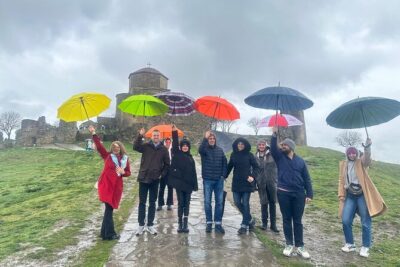 ★ 5.0Mtskheta,Jvari,Bazaar,wine tasting,Chronicles of GeorgiaFrom $20730 reviews
 ★ 5.0Mtskheta-Gori-UplistsikheFrom $90112 reviews
 ★ 4.5Mtskheta, Jvari, gori, uflistsikhe, history and panorama (group tours)From $19107 reviews
 ★ 5.0Mtskheta-Jvari-Uplistsike-Chronicle of Georgia, PRIVATE TripFrom $68105 reviews
 ★ 4.5Tbilisi – Mtskheta – Jvari. Full City Tour on Hop On Hop Off BusFrom $4091 reviews
 ★ 4.5Ancient Georgia Group Tour: Mtskheta,Jvari, Gori, UplistsikheFrom $2473 reviews
 ★ 5.0Ancient Mtskheta and Chronicle of Georgia half day tourFrom $6566 reviews
 ★ 5.0Private Day Trip to Gudauri and Kazbegi from Tbilisi via Jvari and MtskhetaFrom $11457 reviews
Browse the lists this tour appears in