
REVIEW · MTSKHETA & JVARI MONASTERY
Ancient Mtskheta and Chronicle of Georgia half day tour
Mtskheta feels like a living museum. In just a few hours, you get sweeping hilltop views, major Georgian church stops, and the famous Chronicles of Georgia monument with Bible scenes and city panoramas. I like that this is a true half-day escape from Tbilisi, with door-to-door pickup that keeps the day stress-free. The one thing to plan around is the dress code for churches and the short uphill walking between sites.
What I really enjoyed is how the guides bring the places to life with practical context, not just dates. On tours with guides such as Khato, Tamar, and Aleksi, the narration tends to include legends and details you can actually use while you look around, which makes the stones feel personal. I also appreciate the built-in pacing, including time to pause, take photos, and actually take in the views.
The main consideration is that church areas are pedestrian-only, so you will do some walking even if you keep moving. Also, shoulders and knees must be covered at worship sites, and there are no shortcuts through it, so pack accordingly.
In This Review
- Key highlights at a glance
- A half-day route through Mtskheta and the Chronicles monument
- Price and what you get for about $65
- Pickup, departure times, and how the timing works
- Jvari Monastery: the hilltop viewpoint that frames the whole story
- Svetitskhoveli Cathedral: the 11th-century church and the Jesus-robes legend
- Antioquia Church: a quick visit to V-VI century basilica roots
- Chronicles of Georgia: 16 pillars, Bible scenes, and a city viewpoint
- Dress code, worship-site manners, and what to wear
- Lunch and pacing: keeping the half-day flexible
- Guides and why their stories change the tour
- Who should book this tour, and who might skip it
- Should you book the Ancient Mtskheta and Chronicles of Georgia half-day tour?
- FAQ
- FAQ
- How long is the Ancient Mtskheta and Chronicle of Georgia half-day tour?
- Where does the tour start and end?
- Is pickup included?
- What is included in the price?
- Are admissions required for the stops?
- What should I wear for church visits?
- Do vehicles drive into the church areas?
- What languages are available for guides?
- What happens if weather is poor?
Key highlights at a glance
- UNESCO church views from Jvari with wide panoramas over Mtskheta and the river area
- Svetitskhoveli Cathedral, a top 11th-century stop tied to a strong Jesus-robes legend
- Antioquia Church, a short visit to one of the oldest basilicas (V-VI centuries)
- Chronicles of Georgia monument with 16 pillars showing Georgia’s rulers, plus Bible scenes
- Free admission tickets at each of the listed major stops
- Pickup and bottled water included, so you spend your time sightseeing instead of planning
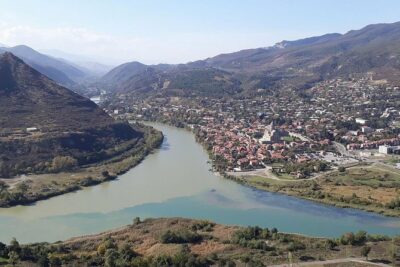
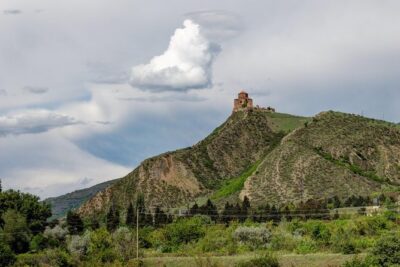
More of Mtskheta and the Jvari hill above the confluence
A half-day route through Mtskheta and the Chronicles monument
This tour is built for travelers who want the best of ancient Georgia without losing an entire day. You start from central Tbilisi, head straight toward Mtskheta, and then finish at the Chronicles of Georgia viewpoint before returning to the starting point. It is a compact route, which is exactly why it works well: you get the big emotional hits, then you still have time left for dinner and your own exploring back in Tbilisi.
I especially like that the itinerary mixes “stop and stare” with “learn while you walk.” Jvari gives you the view. Svetitskhoveli gives you the sacred weight. Antioquia adds the ancient timeline. And Chronicles gives you a bigger picture of Georgia, rulers, and Biblical scenes, all in one massive sculptural statement. You will feel like you covered a lot, but you won’t feel rushed like you’re sprinting from place to place.
Price and what you get for about $65
At $65 per person, the value is mostly in what is included. You get hotel pickup and drop-off (for private tours), plus bottled water. On top of that, each of the major sites listed on the route notes admission as free, so you are not hit with multiple entry fees.
That said, this price is still a choice. If you are traveling with someone who enjoys reading on your own and you’re comfortable taking public transport and taxis, you might not feel the same urgency to pay for a guide. But if you want your time handled for you, and you like having a guide explain what you are seeing while you are standing there, the cost starts to make sense fast.
In practice, you’re paying for three things:
- time saved on planning and getting to hilltop viewpoints
- interpretation that helps you understand legends and symbols while you look
- a smooth flow between sites, including the walking connections
Pickup, departure times, and how the timing works
The day runs about 3 to 5 hours, depending on the departure time you choose and how long you linger at each stop. You can pick from different departure times, so if you prefer softer light for photos, choose a slot that matches your schedule. Many people like the half-day format because it keeps the rest of the day open for markets, baths, or a relaxed meal.
If you book a private tour, you get the undivided attention part. That matters more than you might think at religious sites. If you have questions about legends, architecture, or what you’re looking at on a cross or a panel, you won’t have to wait for a group to catch up.
Also note the practical reality: church areas are pedestrian-only. Vehicles cannot enter these areas, so you will do short walks. The tour is not meant to be strenuous, but it is not a drive-through.
Jvari Monastery: the hilltop viewpoint that frames the whole story
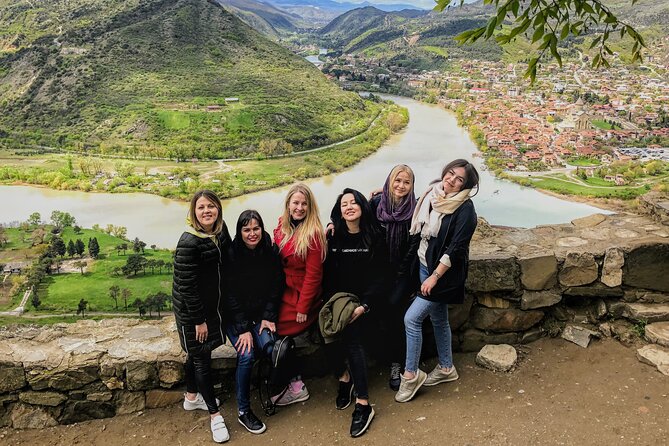
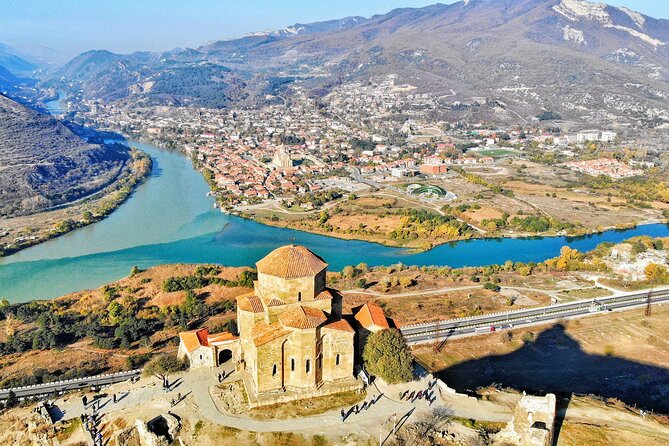
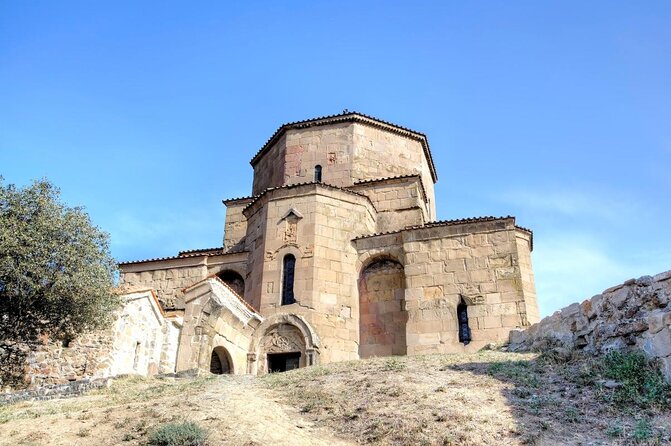
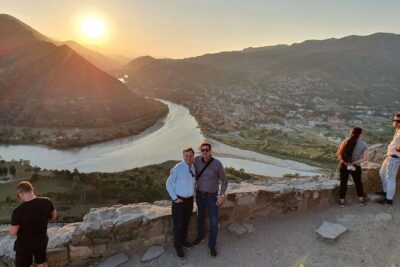
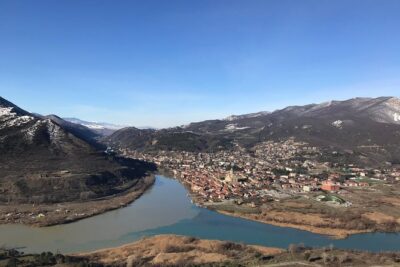
Jvari Monastery is where the day starts to feel cinematic. You travel to the hill near Mtskheta, and then you get the view that people come for. From here, you can see the ancient layout of the area and the natural setting that makes Mtskheta feel tucked into place. It is the kind of spot where the best move is to slow down for 5 or 10 minutes before you start taking photos.
The stop is listed at about 30 minutes, with admission noted as free. That time is usually enough to:
- walk to the best viewpoints
- read the guide’s key points
- take photos without feeling like you’re rushing
One practical tip: bring a layer if it’s breezy. Hilltop viewpoints can feel cooler than you expect, even when the city is warm. And if your phone storage is tight, this is the place where you’ll want space, because the view is hard to stop photographing.
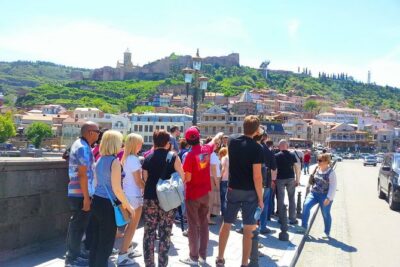
More of the monuments on the ridge above Tbilisi
- Day tour to Chronicles of Georgia, Gori city, Uplistsikhe cave★ 5.0 · 86 reviews
- Ancient Mtskheta and Chronicle of Georgia half day tour★ 5.0 · 66 reviews
- Mtskheta – Jvari Private Tour + Chronicles of Georgia★ 5.0 · 31 reviews
- Tbilisi: Sabaduri Forest, Georgian Stonehenge & Bear Sanctuary★ 5.0 · 21 reviews
- Sabaduri forest, Chronicles of Georgia, wolves and bears Zoo★ 5.0 · 20 reviews
Svetitskhoveli Cathedral: the 11th-century church and the Jesus-robes legend
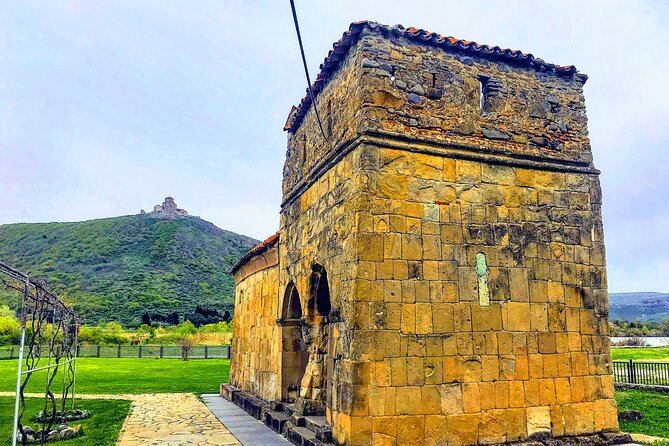
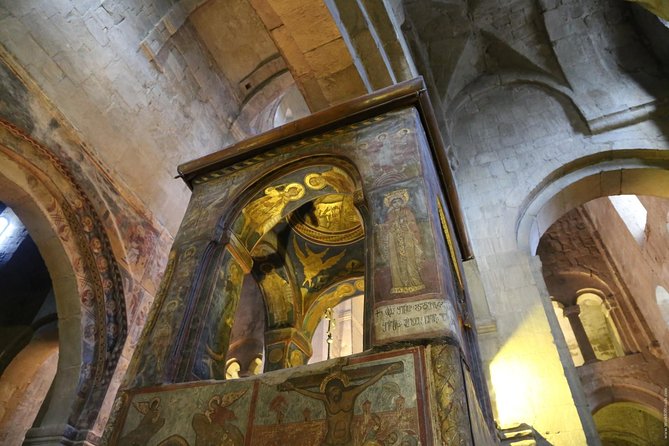
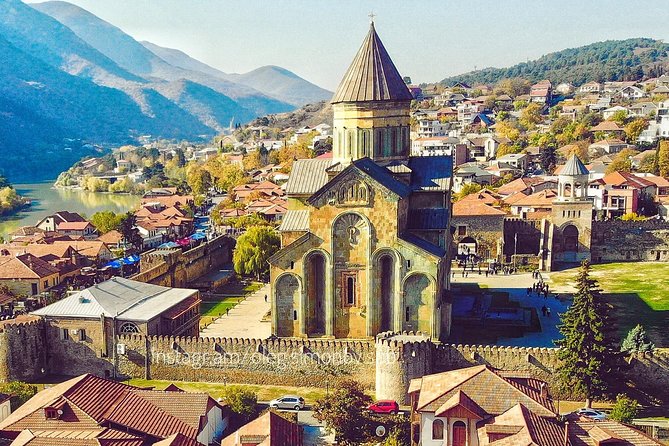
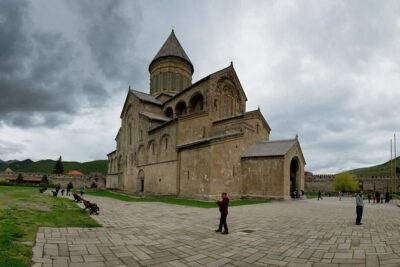
Next comes Svetitskhoveli Cathedral, an 11th-century site chosen because of its famous legend. The idea is simple to remember: the cathedral was built at a holy site connected to the burial of the robe of Jesus. Whether you approach this as a believer, a history lover, or both, the legend gives you a frame for why this building matters.
Expect about 1 hour here. Admission is noted as free. In my experience, that length is ideal because cathedrals need time. You cannot properly look at stonework, proportions, and interior details if you only stop for a quick photo.
Two things to keep in mind while you’re there:
- you will likely encounter pilgrims or groups, depending on timing
- the dress code applies, and you should dress with confidence before you arrive
Even if you don’t read Georgian religious history fluently, a good guide can connect what you see to the larger story of the country and Christianity. Guides like Aleksi and Khato are often praised for making these sites feel meaningful rather than abstract.
Antioquia Church: a quick visit to V-VI century basilica roots
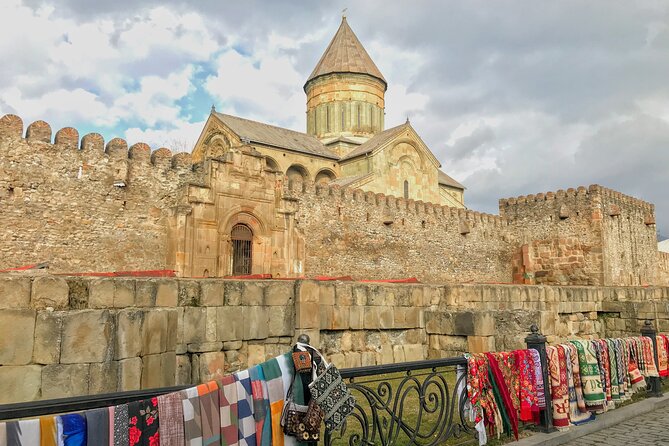
After Svetitskhoveli, the itinerary moves to Antioquia Church, described as the oldest basilica from the V to VI centuries. This is a shorter stop, about 20 minutes, with admission listed as free.
Even though it is brief, this stop is useful. It anchors the day on a longer timeline than just medieval Georgia. You go from an iconic 11th-century landmark into something older, and suddenly the architecture feels like it has depth, not just style.
In a short stop like this, you get the most value by:
- looking at the overall form before focusing on details
- letting your guide point out what’s distinctive
- respecting the fact that this is a working sacred site, not a museum set
Chronicles of Georgia: 16 pillars, Bible scenes, and a city viewpoint

Then you reach the monument that many people come to photograph: Chronicles of Georgia. The structure is described as 16 massive pillars showing Georgia’s history, its rulers, and scenes from the Bible. It is a strange and powerful combination, like a national story told in stone and sculpture.
The stop is listed around 45 minutes, with admission free. This is enough time to walk the area, absorb the visuals, and also get to the viewpoint. The tour notes that from here you have a great view of the city and the Tbilisi sea.
My advice: treat this as more than an Instagram stop. Yes, the monument is photogenic, and yes, you will take pictures. But also pause and look for narrative flow. If your guide explains a few key figures or scenes, you will feel the difference between “I saw pillars” and “I understood what the monument is telling me.”
Many guides are praised for giving helpful cultural context during this part of the day, including explanations of symbols and stories that connect back to the church stops you saw earlier. When the pieces click, the whole half-day tour starts to feel like one coherent route instead of separate sights.
Dress code, worship-site manners, and what to wear
This is the practical part that can make or break the day. For churches and selected museums, you need a dress code: no shorts or sleeveless tops. Knees and shoulders must be covered for both men and women. If you show up without it, you can risk being refused entry.
You do not need to pack formal clothes, but you do need to pack correctly. A simple solution:
- long pants or a skirt that covers your knees
- a T-shirt or shirt with sleeves
- a light scarf or layer if you tend to wear sleeveless tops
Also remember that you will do some walking between sites because the areas are pedestrian-only. Wear shoes you trust on uneven ground. If you’re the type who brings sandals, bring something sturdier.
Lunch and pacing: keeping the half-day flexible
Lunch is not included, which is actually helpful. It lets you choose where you want to eat based on your appetite and where you want to be after the tour. Also, because the tour ends back at the meeting point, you can plan lunch near your own route through Tbilisi.
The pacing is generally described as smooth, with enough time to take photos and sit briefly to take in the surroundings. That matters when you are doing multiple religious sites. If you are traveling with family or you want a tour that feels calm instead of frantic, this half-day format is a good match.
Guides and why their stories change the tour
One of the most praised parts of this experience is the guide. The common thread in feedback is not just facts, it is the way guides connect what you see to Georgian lifestyle and bigger historical context. People highlight guides like Tamar, Khato, Khatuna, Oksana, Marina, and Aleksi for being engaging, energetic, and responsive.
You will feel the difference most at two moments:
- when you stop at Jvari and your guide gives you a way to read the view
- when you stand at Svetitskhoveli and understand what the legend means in local culture
Guides also tend to answer questions that go beyond the exact monuments. If you ask about food, daily life, or how faith shaped traditions, you’ll usually get more than a script. That flexibility is a big part of why the tour gets high marks.
Who should book this tour, and who might skip it
This tour fits best if you want:
- a compact half-day that covers multiple top-tier sites near Tbilisi
- a guided explanation that helps you understand legends and symbols
- a smooth pickup and drop-off format so you can stay focused on sightseeing
It may not be the right pick if:
- you already know Georgian Christian history very well and prefer self-guided travel
- you dislike walking on uneven ground, even for short stretches
- you cannot meet the dress code requirements
If you’re a first-time visitor to Georgia, this is a strong way to build context fast. You’ll leave with a clearer sense of what Mtskheta is and why the Chronicle monument matters.
Should you book the Ancient Mtskheta and Chronicles of Georgia half-day tour?
Yes, I would book it if you want maximum meaning in a few hours. The main strengths are the route design, the fact that site admission is noted as free, and the included pickup plus bottled water. You also get great photo potential, but you should go in with curiosity, because the stories and symbols add real value to the viewing.
If you are careful with what you wear and you’re ready for short walks, this tour feels like a smart, low-hassle way to experience some of Georgia’s most important places without turning your day into a logistics project.
FAQ
FAQ
How long is the Ancient Mtskheta and Chronicle of Georgia half-day tour?
The duration is about 3 to 5 hours.
Where does the tour start and end?
It starts at Europe Square, Tbilisi, Georgia, and ends back at the same meeting point.
Is pickup included?
Pickup is offered for private tours, and the guide will contact you the evening before with the phone number and car number. For private bookings, pickup is from your hotel or apartment within Tbilisi.
What is included in the price?
The tour includes hotel pickup and drop-off (for private tours) and bottled water.
Are admissions required for the stops?
Admission tickets are listed as free for Jvari Monastery, Svetitskhoveli Cathedral, Antioquia Church, and the Chronicles of Georgia monument.
What should I wear for church visits?
A dress code is required: no shorts or sleeveless tops. Knees and shoulders must be covered for both men and women.
Do vehicles drive into the church areas?
Access to churches, temples, and monuments is pedestrian-only, so you should be ready for short walks.
What languages are available for guides?
The group tour can be conducted by a guide in two languages at the same time: English and Russian.
What happens if weather is poor?
This experience requires good weather. If it is canceled due to poor weather, you will be offered a different date or a full refund.
Everything Else Across the Caucasus


The Monuments on the Ridge

Mtskheta and the Hill Above It
Other Georgian tours we have been through, from the Black Sea to the Kakheti vineyards
- Private Adorable City Tour of Tbilisi
★ 5.0 · 3 reviews - Tbilisi Airport to Gudauri, Bakuriani, Batumi, Tbilisi
★ 5.0 · 3 reviews - Private Wine Tour In Kakheti Region with 7 Wines and Lunch
★ 5.0 · 3 reviews - Two Capitals in One Day: Tbilisi and Mtskheta Combo Tour
★ 5.0 · 3 reviews - Private Effortless transfer from Tbilisi to Gudauri ski resort
★ 5.0 · 3 reviews - Tbilisi to Gudauri Stepantsminda Private Transfer
★ 5.0 · 3 reviews
Mtskheta & Jvari Monastery, compared.
 ★ 5.0Day Trip to Mtskheta Gori and UplistsikheFrom $291,801 reviews
 ★ 5.0Mtskheta,Jvari,Bazaar,wine tasting,Chronicles of GeorgiaFrom $20730 reviews
 ★ 5.0Mtskheta-Gori-UplistsikheFrom $90112 reviews
 ★ 4.5Mtskheta, Jvari, gori, uflistsikhe, history and panorama (group tours)From $19107 reviews
 ★ 5.0Mtskheta-Jvari-Uplistsike-Chronicle of Georgia, PRIVATE TripFrom $68105 reviews
 ★ 4.5Tbilisi – Mtskheta – Jvari. Full City Tour on Hop On Hop Off BusFrom $4091 reviews
 ★ 4.5Ancient Georgia Group Tour: Mtskheta,Jvari, Gori, UplistsikheFrom $2473 reviews
 ★ 5.0Private Day Trip to Gudauri and Kazbegi from Tbilisi via Jvari and MtskhetaFrom $11457 reviews
Browse the lists this tour appears in