
REVIEW · MTSKHETA & JVARI MONASTERY
Mtskheta, Jvari, gori, uflistsikhe, history and panorama (group tours)
Jvari and Svetitskhoveli hit like a history movie. This full-day group tour strings together 2 centuries of Christianity with the shock of Georgia’s earlier pagan past in Uplistsikhe. You get a driver-guide and a set route that takes you out of Tbilisi for big views and real places, not quick photo stops.
What I like most is the way the day’s story is built in layers, from Jvari’s 6th-century monastery to the sacred relics at Svetitskhoveli, then down into carved-out stone rooms at Uplistsikhe. I also appreciate the practical pace: multiple stops with time to walk, plus a chance to refuel at a local restaurant (paid). One consideration: English commentary can be short on some days, so if you care a lot about narration, pick a day with good weather and be ready to ask follow-up questions.
In This Review
- Key Highlights You Can Actually Plan Around
- A Church-to-Cave Day Trip From Tbilisi
- Jvari Monastery: A 6th-Century Climb With Mtskheta in View
- Svetitskhoveli Cathedral: Relics, Status, and the Heart of Orthodox Georgia
- Uplistsikhe Cave City: Pagan Power, Stone Labyrinths, and Kura Valley Panoramas
- Gori and the Stalin Museum: A Separate Chapter Your Group Might Add
- Price and Logistics: Where the Value Really Comes From
- The Group Tour Experience: Comfort, Time Use, and English Clarity
- What to Wear and Bring for a Smooth Day
- Who This Tour Fits Best (and Who Might Feel Frustrated)
- Should You Book This Tour?
- FAQ
- What does the tour include?
- How long is the tour?
- Is the tour offered in English?
- Are entrance tickets included?
- How much are the extra tickets?
- Is dinner included?
- Where is the meeting point?
- What time does the tour start?
- What if the weather is bad?
Key Highlights You Can Actually Plan Around
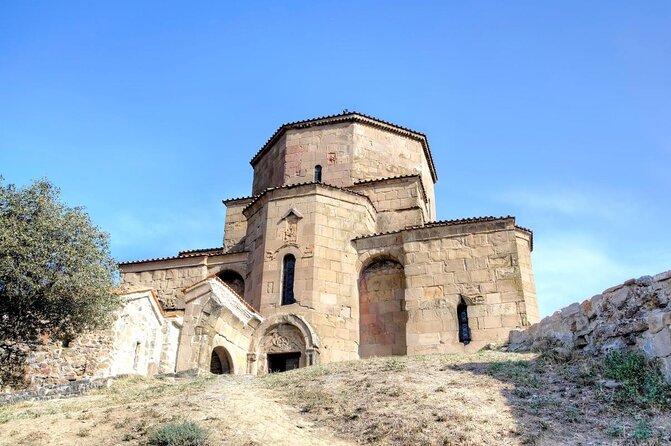
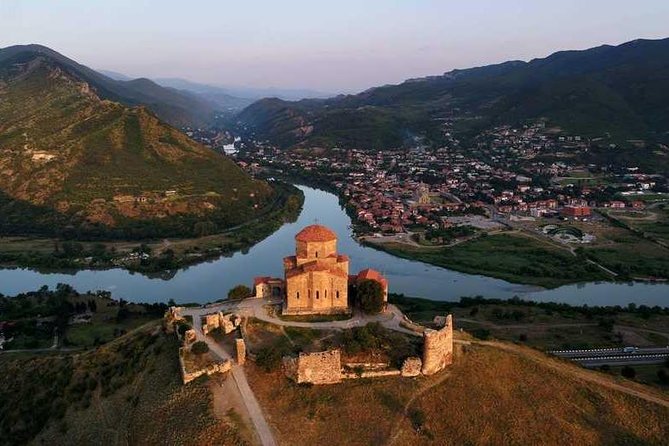
- Jvari Monastery views over the meeting of the Aragvi and Kura rivers
- Svetitskhoveli Cathedral relics, including Jesus tunic and Elijah’s mantle (among other shrines)
- Uplistsikhe cave city with stone labyrinths and Kura Valley panoramas
- Optional Stalin Museum in Gori if your group wants to go
- Small group size (up to 15) that makes questions easier
- Church entrance tickets included for Jvari and Svetitskhoveli, with only some add-ons at extra cost
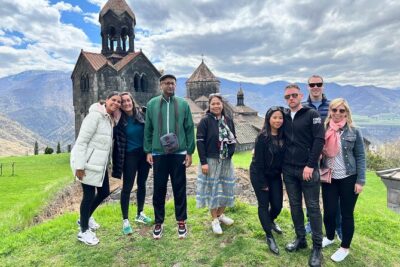
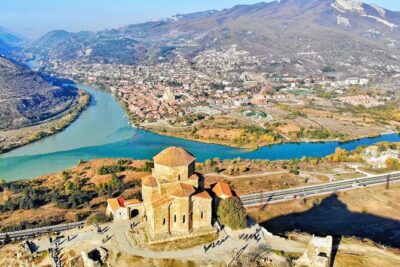
More of Mtskheta and the Jvari hill above the confluence
A Church-to-Cave Day Trip From Tbilisi
This is a classic “big ideas in one day” outing. You start in the Tbilisi area at 9:00 am and spend about 9 hours on the go, ending back at the meeting point. The route is built around 2 Georgian eras that can feel worlds apart: the Orthodox Christian tradition that shaped Mtskheta, and the earlier pagan era you still see carved into Uplistsikhe.
It helps that the tour is structured as a guided day with a driver-guide, not just a bus ride. In many group tours, the guide turns into a megaphone. Here, the guide format is one of the main reasons people praise it, with names like Luca, Paata, Emilia, and Tornike coming up as standouts. If you end up with a strong guide, this day becomes much more than the sum of stops.
Jvari Monastery: A 6th-Century Climb With Mtskheta in View
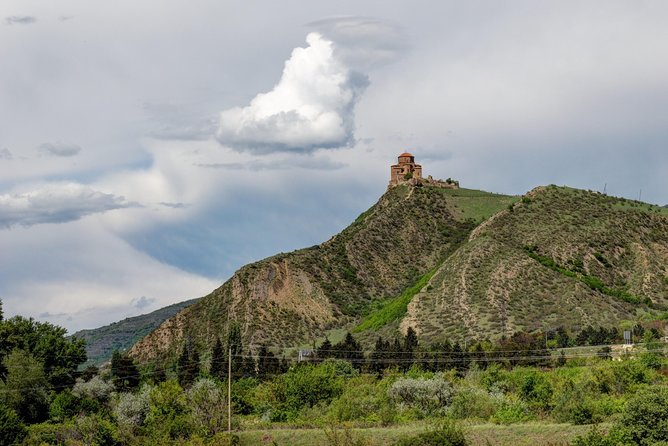
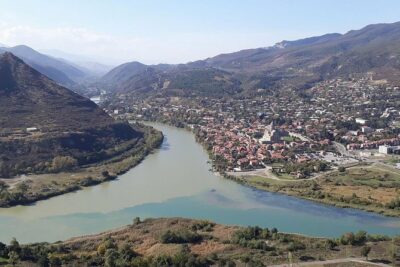
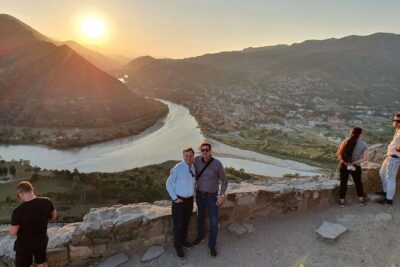
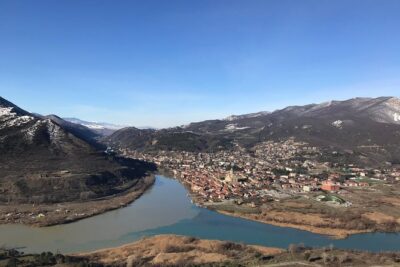
Jvari is the first real payoff. You walk up to a 6th-century temple and, once you’re there, you get the kind of view that makes you stop talking. The famous scene is Mtskheta stretched out below, where the Aragvi and the Kura rivers merge. On a clear day, it’s an easy place to understand why this location mattered.
What’s also smart here is the way the walk is described. The route starts near streets and landmarks connected with figures like Pushkin, Lermontov, Tchaikovsky, Dumas, and Tolstoy. Then you’re pointed toward the places tied to Lermontov’s poem Mtsyri, which adds a literary layer before you even reach the monastery. Even if you’re not a literature person, it gives the hill a story, not just a slope.
Time and ticket: you get about an hour at Jvari, and the admission ticket is included. Practical tip: bring shoes you can trust on uneven stone. You’ll do more walking than you expect from a “church stop.”
Svetitskhoveli Cathedral: Relics, Status, and the Heart of Orthodox Georgia
After the heights, the day moves into the weighty center of Georgian Orthodox faith. Your next stop is the Mtskheta Church of the Holy Cross, specifically Svetitskhoveli Cathedral. This is described as the patriarchal cathedral of the Georgian Orthodox Church, so it’s not just pretty architecture. It’s a place built to matter.
The cathedral’s big hook is its shrines. The tour highlights that it’s the burial place of Christian relics such as the tunic of Jesus Christ and the mantle of Elijah the Prophet, along with relics of St. Andrew the First-Called. Even if you view this more from a cultural angle than a religious one, it helps explain why Mtskheta became such a power center.
You’ll have around an hour here, with the entrance ticket included. I like that the tour gives you time to look without rushing you into the gift shop vibe. Still, do expect a steady flow of visitors and a site where people come in reverent mode. Keep your voice low, and you’ll blend in better.
Uplistsikhe Cave City: Pagan Power, Stone Labyrinths, and Kura Valley Panoramas
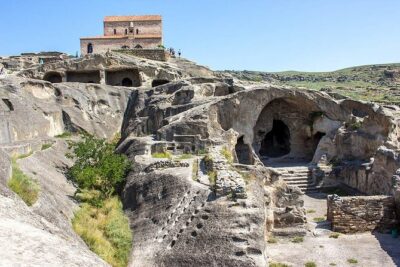
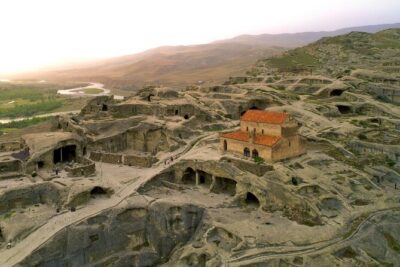
Then the mood flips. Instead of churches, you go to Uplistsikhe, a cave city dating to the end of the 2nd millennium BC into the beginning of the 1st millennium BC. Think carved rooms, stone corridors, and the odd feeling of being inside a settlement that was built before your modern landmarks existed.
What makes this stop memorable is that it’s not presented as a random bunch of holes in the ground. You’re shown how the stone labyrinths included spaces used for living and utility, so you can imagine daily life and cult rites. The tour also frames Uplistsikhe in regional trade, linking it to ancient states including Urartu and Media. That context is useful. A cave city can feel like a set piece, but trade routes turn it into a living economy.
Your time at Uplistsikhe is long enough to make you feel like you actually explored, not just glanced. On top of that, there are wonderful panoramas of the Kura Valley, which is one of the reasons even people who are not into ancient religion still tend to enjoy the stop.
Extra cost: the Uplistsikhe ticket is not included, listed at 17 GEL. You’ll also spend about 2 hours 20 minutes total at this stretch, including time at a local restaurant where you taste local products. The restaurant itself is paid separately. If you’re food-sensitive, go easy and choose simpler items since the description notes food tends to be on the oil-heavy side.
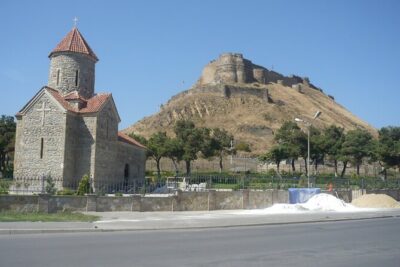
Other runs west to Gori and the Uplistsikhe rock town
- Mtskheta-Jvari-Uplistsike-Chronicle of Georgia, PRIVATE Trip★ 5.0 · 105 reviews
- Day tour to Chronicles of Georgia, Gori city, Uplistsikhe cave★ 5.0 · 86 reviews
- Ancient Georgia Group Tour: Mtskheta,Jvari, Gori, Uplistsikhe★ 4.5 · 73 reviews
- Mtskheta – Jvari + Gori – Uplistsikhe Tour★ 5.0 · 49 reviews
- Mtskheta – Gori – Uplistsikhe caves • Private tour★ 5.0 · 24 reviews
Gori and the Stalin Museum: A Separate Chapter Your Group Might Add
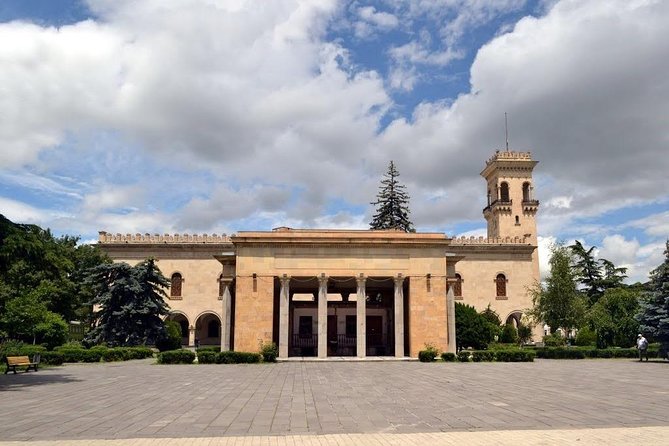
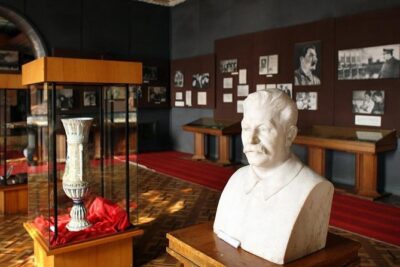
In the second part of the trip, you may get an optional stop in Gori, Stalin’s hometown. The program says it happens at the request of the group, so don’t assume everyone will go. If your group is in a “yes, show us everything” mood, you’ll have about an hour at the Stalin Museum with an excursion guide.
The tour describes the museum as having preserved pieces, including Stalin’s personal belongings and furniture, plus a preserved sculpture. Since this topic is politically charged, the best advice is straightforward: decide before you arrive whether you want this part of the day, and don’t let it distract from the rest of the route.
Extra cost: the Stalin Museum ticket is not included, listed at 17 GEL.
Price and Logistics: Where the Value Really Comes From
At $19 per person for a roughly 9-hour day, the value is strongest when you count what’s included, not just the headline price. The tour includes guide service and comfortable transportation, plus admission tickets for Jvari and Svetitskhoveli.
The costs that can surprise you are the add-ons. Uplistsikhe is 17 GEL, and the Stalin Museum (if you add it) is also 17 GEL. Dinner is not included either. You’ll have a lunch window connected to a restaurant stop, where the products are tasted but the meal is paid.
So your real budget ends up being:
- Base price: $19
- Built-in included admissions for 2 major religious sites
- Add-on admissions for Uplistsikhe, possibly the Stalin Museum
- Paid lunch/restaurant
For me, that trade makes sense. You’re paying for transportation and guiding across multiple major sites. You’re not just buying access to two buildings and calling it a day.
The Group Tour Experience: Comfort, Time Use, and English Clarity
This is a group tour capped at 15 travelers, which is the sweet spot for a day like this. It’s small enough that the guide can manage questions without losing everyone, but it’s still large enough to keep the day moving.
The other thing I’d watch is guide language balance. Some people loved the English explanations and praised guides by name, including Luca, Paata, Emilia, and Tornike. Others complained that English can be brief and that Russian may dominate at times. The good news is that the tour is offered in English. The real-world advice is to treat the day as guided, not narrated like a private museum tour. If you want richer explanations, ask one question early at each stop. You’ll likely get better follow-up than waiting for perfect timing.
Timing is another factor. One complaint pointed to a rushed feel, especially at Uplistsikhe. I can’t promise every day will match that feedback, but it is a reminder: Uplistsikhe is where you’ll want time. Bring your own energy for walking, and if your group starts to feel hurried, focus on the viewpoints and the key cave rooms rather than trying to memorize every corridor.
What to Wear and Bring for a Smooth Day
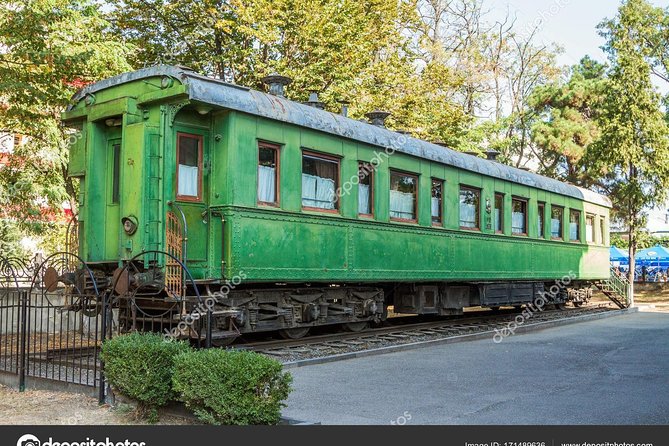
This day combines steepish walking, stone surfaces, and open-air viewpoints. That means you should plan like a practical traveler, not a postcard collector. Wear comfortable shoes with traction. Bring a light layer, since you’ll be outside much of the time.
Weather matters. The tour notes it requires good weather, and if it’s canceled for poor conditions you should be offered another date or a full refund. Even if it doesn’t get canceled, rain can make slippery paths at the monastery or cave areas less pleasant. I’d pack a small rain shell, just in case.
If you care about getting the best out of guided time, keep a small notebook or phone notes. Jvari’s view plus Svetitskhoveli’s relics plus Uplistsikhe’s timeline can blur together later in the day if you don’t anchor them with quick notes.
Who This Tour Fits Best (and Who Might Feel Frustrated)
This tour fits you best if you want a structured day that teaches you something, not just “see the sites.” It’s excellent for:
- People who want to understand Christianity in Georgia through Mtskheta’s center
- History-minded travelers who like context, not just dates
- Anyone who enjoys a contrast day, churches in the morning and cave city in the afternoon
- Travelers who appreciate small groups with room for questions
It might be less ideal if you:
- Need long, detailed English explanations at every stop (language quality can vary)
- Hate optional add-ons like the Stalin Museum decision
- Are very sensitive to lunch quality, since the restaurant is paid and described as oil-heavy in at least one experience
Should You Book This Tour?
I’d book this if you want the core Georgian story in one day, and you like the idea of pairing sacred Mtskheta with the earlier pagan world of Uplistsikhe. The included admissions for Jvari and Svetitskhoveli help the value, and the small group size keeps it from feeling like cattle transport.
Skip it or approach with care if you’re strict about English narration depth, because some days can feel short on English compared with Russian. If you do book, choose your day carefully for weather, wear solid shoes, and ask questions early. When the guide is strong, this trip earns the praise it gets.
FAQ
What does the tour include?
You visit Jvari Monastery, the Svetitskhoveli Cathedral in Mtskheta, and the Uplistsikhe cave complex. A visit to the Stalin Museum in Gori can be added depending on the group’s request.
How long is the tour?
It runs about 9 hours.
Is the tour offered in English?
Yes, it’s offered in English.
Are entrance tickets included?
Tickets for Jvari Monastery and Svetitskhoveli Cathedral are included. Uplistsikhe has a separate ticket fee, and the Stalin Museum ticket is also extra.
How much are the extra tickets?
Uplistsikhe is listed at 17 GEL, and the Stalin Museum is listed at 17 GEL.
Is dinner included?
No, dinner is not included. There is a restaurant stop where you taste local products, but the restaurant is paid.
Where is the meeting point?
The tour meeting point is 3 Vakhtang Gorgasali St, T’bilisi 0105, Georgia.
What time does the tour start?
The start time is 9:00 am.
What if the weather is bad?
This experience requires good weather. If it’s canceled due to poor weather, you should be offered another date or a full refund.
If you want, tell me your travel dates and whether you’re planning to add the Stalin Museum. I can help you decide what to prioritize that day and how to budget for the extras.
Everything Else Across the Caucasus

West to Gori and the Rock Town
Mtskheta and the Hill Above It
Other Georgian tours we have been through, from the Black Sea to the Kakheti vineyards
- Private Adorable City Tour of Tbilisi
★ 5.0 · 3 reviews - Tbilisi Airport to Gudauri, Bakuriani, Batumi, Tbilisi
★ 5.0 · 3 reviews - Private Wine Tour In Kakheti Region with 7 Wines and Lunch
★ 5.0 · 3 reviews - Two Capitals in One Day: Tbilisi and Mtskheta Combo Tour
★ 5.0 · 3 reviews - Private Effortless transfer from Tbilisi to Gudauri ski resort
★ 5.0 · 3 reviews - Tbilisi to Gudauri Stepantsminda Private Transfer
★ 5.0 · 3 reviews
Mtskheta & Jvari Monastery, compared.
 ★ 5.0Day Trip to Mtskheta Gori and UplistsikheFrom $291,801 reviews
 ★ 5.0Mtskheta,Jvari,Bazaar,wine tasting,Chronicles of GeorgiaFrom $20730 reviews
 ★ 5.0Mtskheta-Gori-UplistsikheFrom $90112 reviews
 ★ 5.0Mtskheta-Jvari-Uplistsike-Chronicle of Georgia, PRIVATE TripFrom $68105 reviews
 ★ 4.5Tbilisi – Mtskheta – Jvari. Full City Tour on Hop On Hop Off BusFrom $4091 reviews
 ★ 4.5Ancient Georgia Group Tour: Mtskheta,Jvari, Gori, UplistsikheFrom $2473 reviews
 ★ 5.0Ancient Mtskheta and Chronicle of Georgia half day tourFrom $6566 reviews
 ★ 5.0Private Day Trip to Gudauri and Kazbegi from Tbilisi via Jvari and MtskhetaFrom $11457 reviews
Browse the lists this tour appears in