
REVIEW · MTSKHETA & JVARI MONASTERY
Ancient Georgia Group Tour: Mtskheta,Jvari, Gori, Uplistsikhe
One day, lots of Georgia. This trip strings together Old Georgian Christianity, a Soviet-era flashback in Gori, and the jaw-dropping rock-carved world of Uplistsikhe. I like the tight small-group feel (up to 15 people), and I also like how guides such as David keep the day organized so you actually get time to look, not just rush. The main downside to plan for is the long day, and it may feel longer if your group ends up split into two languages.
I also like the practical comfort details for a 9 to 10 hour outing, like an A/C vehicle and WiFi on board, plus a clear start time at 9:00 am. You’ll hit four major sites, with free entry at Jvari and Svetitskhoveli, while the paid stops are straightforward add-ons. One more consideration: Uplistsikhe is physical, with climbing on rocky surfaces, so you’ll want solid shoes and a realistic view of your mobility.
For the history-heads and photo-hounds, the mix is the whole point. Jvari gives you the spiritual origin story and river confluence scenery, Gori adds the controversial human story behind Stalin, and Uplistsikhe shows Georgia as a crossroads of cultures through rock-cut architecture. If you do churches with extra clothing rules, bring a plan for covering up, because Svetitskhoveli and other sacred sites often require it.
In This Review
- Key highlights you will notice fast
- A 9 to 10 hour plan that starts smart in Tbilisi
- Jvari Monastery at the river confluence, and why the stop is short
- Gori’s Stalin Museum: history you can’t ignore, and how to see it well
- Uplistsikhe Cave Town: the part you’ll remember, and the part you should wear for
- Lunch at the local restaurant, and how to make it work with the schedule
- Svetitskhoveli Cathedral in Old Mtskheta, the free finale
- What this mix of Jvari, Gori, Uplistsikhe, and Svetitskhoveli teaches
- Price and logistics: where your money goes, and what costs extra
- Practical tips that make the day smoother (and more fun)
- Should you book this Ancient Georgia Group Tour?
Key highlights you will notice fast
- Small group cap (15 travelers), which usually means better pacing and less crowd chaos
- Free time at Jvari and Svetitskhoveli, so your money goes to the paid museums and cave town
- Gori’s Stalin Museum context, including the birthplace house and the museum opening timeline
- Uplistsikhe’s rock-cut layers, from early Iron Age structures through later medieval periods
- Guides who run logistics well, with smoother transitions between stops
- A long day with real walking, especially at Uplistsikhe
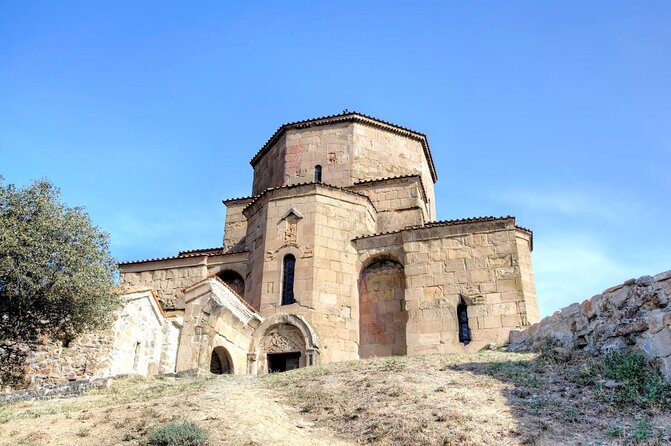
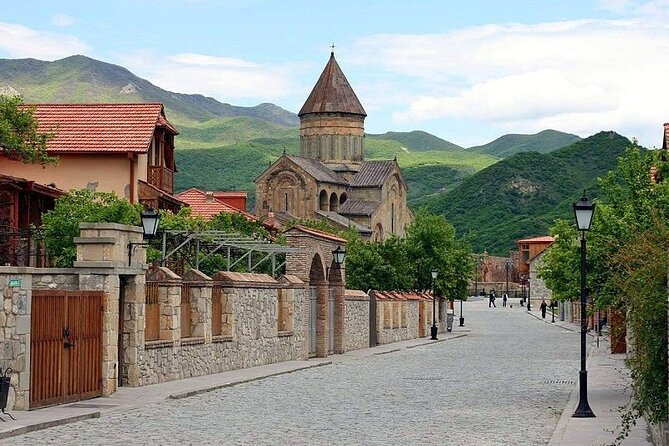
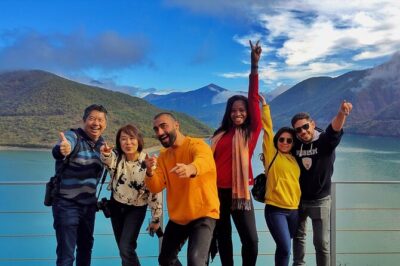
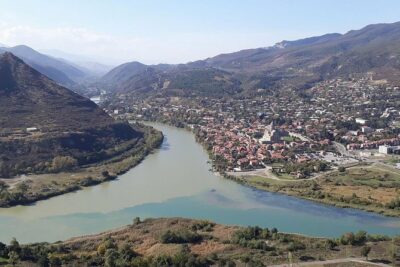
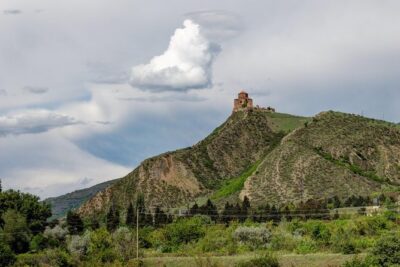
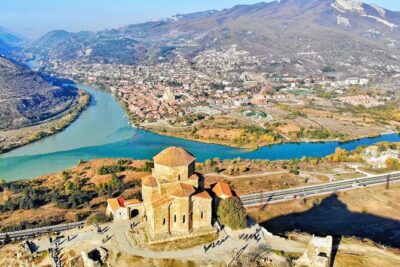
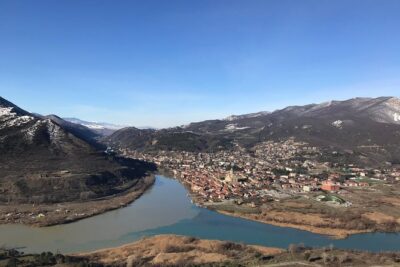
More of Mtskheta and the Jvari hill above the confluence
A 9 to 10 hour plan that starts smart in Tbilisi
This is a full morning-to-afternoon day with pickup starting at 15 Abano St in Tbilisi at 9:00 am. Expect roughly 9 to 10 hours total, with transportation time built in, so you can plan your day around it instead of guessing what travel will cost you.
What you get upfront matters for value. The tour includes WiFi on board and an air-conditioned vehicle, which is not a small deal in Georgia, especially if you’re going from indoor sites to hot or breezy outdoor viewpoints. There’s also a mobile ticket, so you’re not wasting time printing or hunting for paper confirmations.
The day is built around four big stops. Jvari and Svetitskhoveli are free, while the Stalin Museum and Uplistsikhe both have separate paid admissions (each listed at 15 GEL per person). Lunch is also not included as tour food, and you’ll be directed to a local restaurant at the end of the morning portion. If you’re good at budgeting your time and small extras, this format can feel efficient.
One reality check: this is not a short, sit-down-only tour. You’ll walk, climb, and move between sites, and the cave town takes effort. If you want a relaxed, mostly flat day, this one may test your patience. If you want a single day that covers major “must-see” themes across Georgia, it’s a strong fit.
Jvari Monastery at the river confluence, and why the stop is short
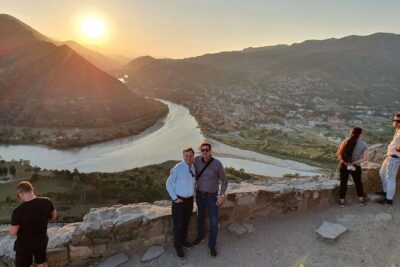
Your first major stop is Jvari Monastery, timed for about 40 minutes. The big draw here is the setting at the confluence of the Mtkvari and Aragvi rivers, a spot that makes the whole area feel both strategic and sacred. Even if you are not a full-time church-history nerd, the viewpoint and atmosphere do the heavy lifting.
Jvari is also a budget-friendly start because admission is free. That means your time is about observing and learning, not lining up or paying another ticket right away. In a one-day itinerary, those small cost wins help.
What I suggest you do in that 40 minutes: don’t treat it like a photo stop only. Look at the river meeting point first, then take a slow lap around your route so you can understand what the monastery is oriented toward. If you only shoot pictures and move on, you’ll miss the way the location tells part of Georgia’s long story of faith and settlement.
Dress rules can matter here, since it is a church site. If you’re planning to wear shorts, expect you may need leg covering, and if you’re wearing a head covering, bring one you are comfortable with. At these kinds of Georgian sites, scarf availability can vary, so it’s smarter to come prepared.
Gori’s Stalin Museum: history you can’t ignore, and how to see it well
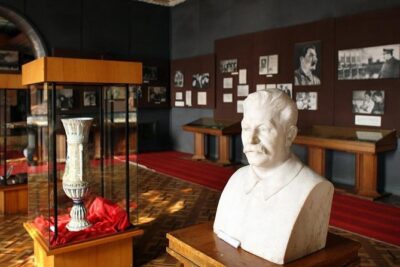
Next you head to Gori for the State Stalin Museum. Plan for about 1 hour here. Admission is not included, and you should budget 15 GEL per person.
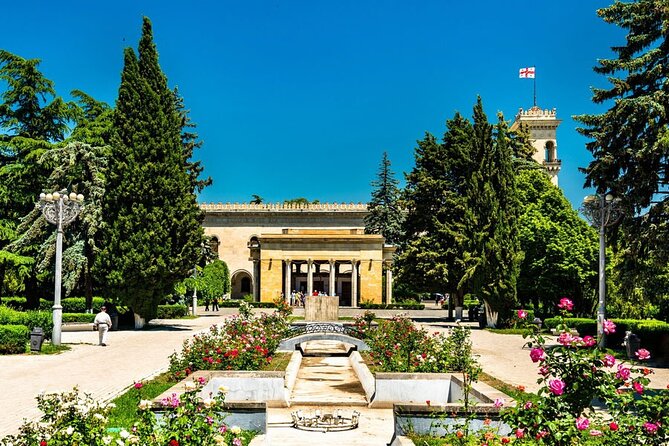
This museum is not a generic Soviet exhibit. It is tied directly to where Stalin was born. The complex includes a memorial museum that opened in 1937, during Stalin’s lifetime, inside the house where he was born. The wider museum complex opened later, in 1957.
That means your guide narration becomes important, because the subject is politically charged and emotionally complicated. I find it works best when you approach it like history, not like a debate. Think about what the building choices and display choices are trying to communicate, and how Georgia’s own narrative intersects with the Soviet period.
A practical note: one review mentioned that audio options could have been better at the museum, so don’t count on a headset experience to carry the explanations. Use the guide’s time well. If you have questions, ask. If you don’t, at least read the main labels and let your guide connect the dots.
If you dislike politically heavy stops, this is the moment to decide if the schedule still fits you. The upside is that it gives you a human scale to Georgian history that you cannot get from architecture alone.
Uplistsikhe Cave Town: the part you’ll remember, and the part you should wear for
Uplistsikhe is the physical highlight of the day. You spend time here in two parts (with lunch in between), so you’re not rushed in and out. The entry is not included, and admission is listed at 15 GEL per person.
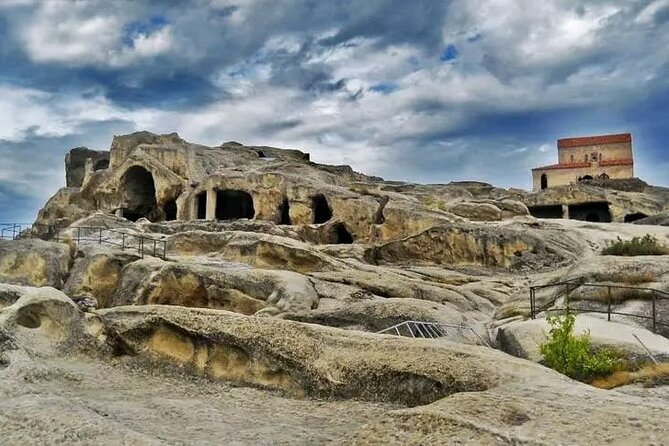
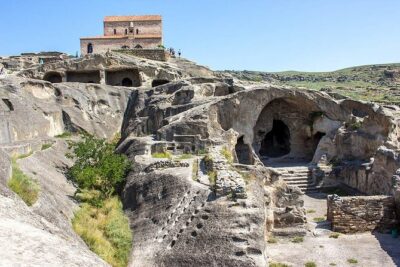
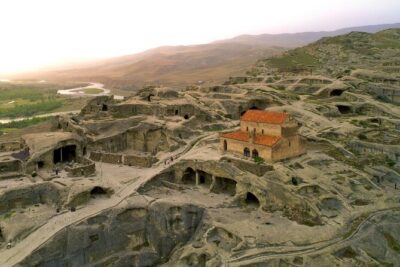
Uplistsikhe sits on a high rocky left bank above the Mtkvari River. What makes it special is the time span and cultural mix. The site contains structures from the Early Iron Age through the Late Middle Ages. It’s also known for a unique combination of styles from rock-cut cultures tied to Anatolia and Iran, plus the coexistence of pagan and Christian architecture.
That sounds academic, but on the ground it means you’re walking through layers. Different spaces feel different: some suggest older ritual or domestic use, others feel more connected to later religious life. When your guide explains what you’re seeing, it stops being random caves and becomes a story you can follow with your eyes.
Now the caution that actually matters: Uplistsikhe involves climbing on rocks. On a wet day, the surfaces can be treacherous. I’d bring shoes with real traction and plan for uneven steps. If your feet are already sensitive, this stop is where you feel it.
Also think about mobility. One review made it clear this tour is not a great match for people who struggle with climbing and uneven ground. If you have limited mobility, you may miss out on the exploration that makes Uplistsikhe worth it in the first place.
Other runs west to Gori and the Uplistsikhe rock town
- Mtskheta-Jvari-Uplistsike-Chronicle of Georgia, PRIVATE Trip★ 5.0 · 105 reviews
- Day tour to Chronicles of Georgia, Gori city, Uplistsikhe cave★ 5.0 · 86 reviews
- Ancient Georgia Group Tour: Mtskheta,Jvari, Gori, Uplistsikhe★ 4.5 · 73 reviews
- Mtskheta – Jvari + Gori – Uplistsikhe Tour★ 5.0 · 49 reviews
- Mtskheta – Gori – Uplistsikhe caves • Private tour★ 5.0 · 24 reviews
Lunch at the local restaurant, and how to make it work with the schedule
Lunch happens during the Uplistsikhe portion, at a local restaurant. The important detail: lunch is not included as tour food and drink. So you’ll want to bring some cash or have a payment plan you trust.
This is one of those times where a simple strategy helps. Eat something filling but not too heavy, then keep water for the next walking segment. With a day like this, digestion-heavy meals plus lots of steps can turn into a rough afternoon.
Also, because the tour keeps moving, don’t count on a long sit-down experience. The restaurant stop is there to fuel you for the second Uplistsikhe exploration and then the final church stop.
If you’re sensitive to spice or strong flavors, ask in advance or choose safe options from the menu. Georgia’s food is generally accessible, but every restaurant’s style differs.
Svetitskhoveli Cathedral in Old Mtskheta, the free finale
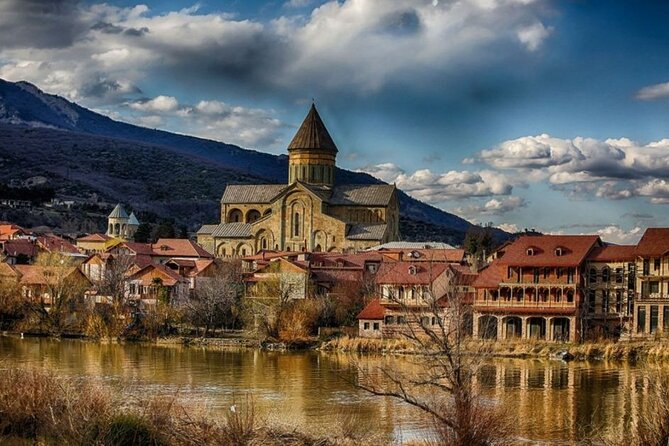
Your final major stop is Svetitskhoveli Cathedral, in the heart of Old Mtskheta. Plan for about 30 minutes and note admission is free.
This is not just another church. It’s described as historically significant even beyond Jvari, and it is often tied to early Georgian Christian identity. The tradition says the cathedral stands on the spot chosen by Saint Nino herself. Inside, you’ll hear about major relics, including what is believed to be Christ’s Mantle, a 4th-century baptismal font, and a piece of cedar wood salvaged from the original structure.
That blend of physical relic stories plus place-based tradition is why this stop hits. In 30 minutes, you probably won’t absorb everything, but you can get the core idea: Mtskheta was a religious center long before Georgia was a modern tourism map.
Practical dress rules again matter. Expect that you may need leg covering, and women may need a head covering. Scarves are often available at sites, but I still prefer bringing one that fits comfortably, so you can follow instructions without scrambling.
What this mix of Jvari, Gori, Uplistsikhe, and Svetitskhoveli teaches
This tour works because it forces contrasts in a good way. You start with a sacred origin feeling at Jvari, then you shift to the political biography at Stalin’s museum, then you end up in a long-lived site where faith and older traditions overlap at Uplistsikhe, and finish with a cathedral tied to early Christian tradition.
I love that you don’t get one-note Georgia. Instead, you see how the country’s identity can hold multiple layers at once: religious beginnings, imperial pressure and propaganda, and older cultural networks visible in rock-cut architecture.
The day also gives you a useful pattern for how to understand Georgia as you travel. Don’t treat buildings and stories as separate. In this itinerary, place and narrative are linked. Jvari’s location is part of why the monastery matters. Uplistsikhe’s rock spaces help explain why cultures could overlap. Svetitskhoveli’s relic stories show why this town became a spiritual magnet.
Price and logistics: where your money goes, and what costs extra
The headline price is $24 per person. For a 9 to 10 hour guided day with an A/C vehicle and WiFi on board, that can be good value on its own.
Where your budget needs a reality check is the paid items. You’ll pay:
- 15 GEL for the Stalin Museum
- 15 GEL for Uplistsikhe Cave Town
Lunch is also not included.
The good news is that the other two major sites are free (Jvari Monastery and Svetitskhoveli Cathedral). That helps balance the extra admissions. Also, the group size is limited to 15 travelers max, which generally keeps the experience manageable compared with bigger bus crowds.
If you’re the type who hates surprise add-ons, this is still pretty predictable, because the two paid admissions are clearly listed. If you’re budget-savvy and you plan for lunch, this can feel like a solid “see a lot in one day” deal.
Practical tips that make the day smoother (and more fun)
This is where I try to save you from small hassles.
- Bring a scarf or head covering plan. Many church visits require it, and it can be easiest to have your own rather than hunting for a borrowed one.
- Wear pants or bring leg covering. Men may need extra covering for church entry, and finding the right size can be harder than you’d expect on the spot.
- Shoes with traction for Uplistsikhe. The cave town involves climbing on rocks, and wet conditions can make it slippery.
- Pack light. You’ll store things and move through multiple sites, and the more you carry, the more annoying it gets.
- Ask questions during narration. Guides such as David and others mentioned in past days are strong at managing logistics and keeping people engaged, and that’s where the history sticks.
- Expect a long day. Even when the schedule is well organized, you are out from morning to late afternoon. Build in patience.
Also, a quick “taste test” for the language issue. This tour is offered in English, but one person reported a dual-language experience. If language switching is a concern for you, I’d treat that as a reason to confirm what your group will sound like on the day.
Should you book this Ancient Georgia Group Tour?
I think you should book it if you want a single-day sampler that hits the big themes of Georgia: early Christian identity (Jvari, Svetitskhoveli), the heavy Soviet shadow in Gori, and the physical, mind-stretching cave world of Uplistsikhe. The small group cap, the A/C vehicle, and the free admissions to two key sites help make the value feel real.
Skip it, or at least reconsider, if you hate physical walking and climbing, or if you need a fully mobility-friendly plan. Uplistsikhe is the deciding factor. Also reconsider if you struggle with long days, because this is not a quick hop around town.
If you’re comfortable with a few extra costs (15 GEL each for the two paid stops, plus lunch), and you want a guided day where you can actually connect stories to places, this is a worthwhile way to spend your time around Tbilisi.
Everything Else Across the Caucasus
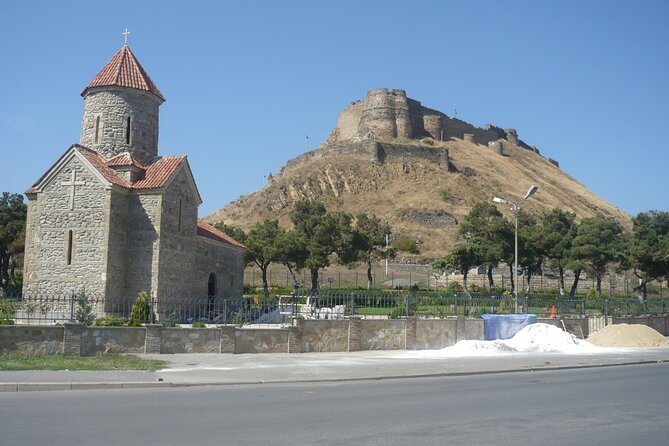
West to Gori and the Rock Town
Mtskheta and the Hill Above It
Other Georgian tours we have been through, from the Black Sea to the Kakheti vineyards
- Private Adorable City Tour of Tbilisi
★ 5.0 · 3 reviews - Tbilisi Airport to Gudauri, Bakuriani, Batumi, Tbilisi
★ 5.0 · 3 reviews - Private Wine Tour In Kakheti Region with 7 Wines and Lunch
★ 5.0 · 3 reviews - Two Capitals in One Day: Tbilisi and Mtskheta Combo Tour
★ 5.0 · 3 reviews - Private Effortless transfer from Tbilisi to Gudauri ski resort
★ 5.0 · 3 reviews - Tbilisi to Gudauri Stepantsminda Private Transfer
★ 5.0 · 3 reviews
Mtskheta & Jvari Monastery, compared.
 ★ 5.0Day Trip to Mtskheta Gori and UplistsikheFrom $291,801 reviews
 ★ 5.0Mtskheta,Jvari,Bazaar,wine tasting,Chronicles of GeorgiaFrom $20730 reviews
 ★ 5.0Mtskheta-Gori-UplistsikheFrom $90112 reviews
 ★ 4.5Mtskheta, Jvari, gori, uflistsikhe, history and panorama (group tours)From $19107 reviews
 ★ 5.0Mtskheta-Jvari-Uplistsike-Chronicle of Georgia, PRIVATE TripFrom $68105 reviews
 ★ 4.5Tbilisi – Mtskheta – Jvari. Full City Tour on Hop On Hop Off BusFrom $4091 reviews
 ★ 5.0Ancient Mtskheta and Chronicle of Georgia half day tourFrom $6566 reviews
 ★ 5.0Private Day Trip to Gudauri and Kazbegi from Tbilisi via Jvari and MtskhetaFrom $11457 reviews
Browse the lists this tour appears in