
REVIEW · TBILISI OLD TOWN WALKS
Tbilisi Explorer: Essential Walking Tour for First-Timers
Freedom Square to viewpoints, all in one walk.
This Tbilisi Explorer tour is interesting because it gives you quick orientation, then layers in meaningful stops without dragging. I like the way guides actively match your pace, and I like that you get a one-way cable car add-on without extra planning. One drawback to plan for is the strict dress code at religious sites, so pack light but cover up.
You start at the heart of the city, then glide through Old Tbilisi, churches, mosques, and modern landmarks. The pacing stays friendly for first-timers, and the tour is private, so it feels more like time with a local than a loud group shuffle. If you hate walking or dislike crowds at popular streets like Shardeni, you might want to adjust expectations.
In This Review
- Key things to know before you go
- Price and what you are really paying for
- Starting at Freedom Square and getting bearings in minutes
- Wall ruins, then the oldest church in town
- Bridge of Peace and Sayat-Nova: modern landmark plus Armenian roots
- Old Town Tbilisi and the pedestrian power of Shardeni Street
- Rezo Gabriadze Marionette Theater and the film legend stop
- Rike Park and the one-way cable car to Narikala
- Sioni Cathedral and Jumah Mosque: churches and mosques in one tight loop
- Kartlis Deda and the Legend Fountain moments
- The Toaster sculpture and Meidan Bazaar for quick local flavor
- Dzveli Tbilisi Sulphur Waterfall: the unexpected wow moment
- Metekhi Cathedral and finishing back where you started
- What makes the guides stand out for real, not just on paper
- Should you book the Tbilisi Explorer for first-timers?
- FAQ
- How long is the Tbilisi Explorer walking tour?
- Where do we meet, and does the tour end nearby?
- What is included and what is not?
- Is the tour private?
- What language is the tour offered in?
- Do we need to pay admission tickets for the stops?
- What should I wear to visit churches and mosques?
- Do I need hotel pick-up?
- What if the weather is bad or I need to cancel?
Key things to know before you go
- A first-timer route that mixes old and new: Freedom Square, ancient churches, plus the Bridge of Peace and Rike Park.
- Short stops that help you choose what to revisit: you get a look at many icons in about 2 hours.
- Guides who flex to your group: people mention guides like Gio and Jonah matching pace and timing to real schedules.
- Cable car ticket is included (one-way): it links Rike Park with Narikala, giving you an instant “wow” from above.
- Dress code matters more than you think: knees and shoulders must be covered in places of worship.
- You will walk on sidewalks and through pedestrian areas: moderate fitness is recommended.
Other walks through the balconies and backstreets of old Tbilisi
Price and what you are really paying for
At $41 per person for about 1.5 to 2 hours, this tour is good value if your goal is orientation fast. Most of the stops are listed with free admission, so your money goes mostly to the guide, the route flow, and the one included cable car ride.
Here is what you should judge when comparing tours: do you want to spend your first day figuring out where to start, what matters, and how to avoid missing key sights? This tour is built to solve that. You leave knowing the city structure, the major neighborhoods, and which names you will hear again later on your trip.
Also, this is a private tour, meaning it is only your group. That usually improves comfort, especially if you have questions, a slower walker, or just want less pressure.
Starting at Freedom Square and getting bearings in minutes
Your walk kicks off at 2 Freedom Square, right in central Tbilisi. Freedom Square is the kind of place where you can feel history layered on history. Under Imperial Russia it was known as Erivansky or Paskevich-Erivansky Square. Under the Soviet period it was Beria Square and Lenin Square. Seeing the same spot renamed over and over helps you understand why Tbilisi can feel both modern and old at the same time.
A practical tip: stand on the square edges and look for sight lines down Rustaveli Avenue. Your guide will use this area to connect the route, so you will get more out of the rest of the day.
Wall ruins, then the oldest church in town
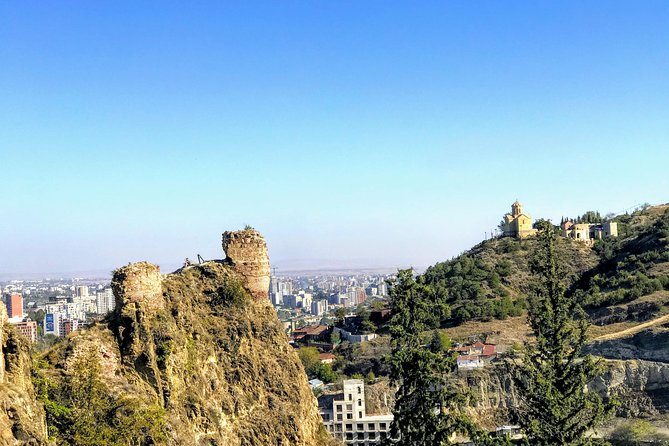
Next up are the Tbilisi Wall Ruins, a quick stop in the older part of the city. Even if you do not read every detail of the stones, these ruins do something useful. They give you a tangible sense of how the city used to be shaped, before the current street grid and modern landmarks.
Then you head to Anchiskhati Basilica of St Mary, described as the oldest surviving church in Tbilisi, dating to the 6th century. This stop is valuable because it is not just a pretty building. It is a time marker. A guide can point out how Georgian Orthodox tradition shaped church life over centuries, and what that means for Tbilisi as a living religious city.
Watch for this: with churches, you need to follow the dress code rules. Plan to cover knees and shoulders, even if you are sweating from walking.
Bridge of Peace and Sayat-Nova: modern landmark plus Armenian roots

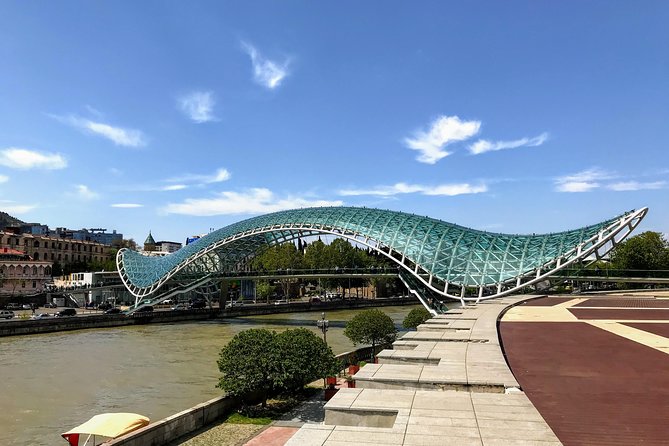
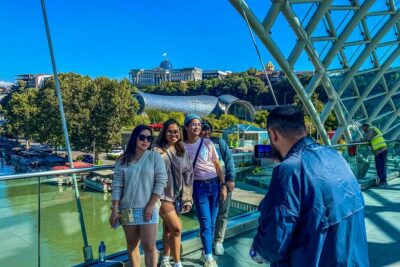
The Bridge of Peace is one of the newest attractions on the route, opened in 2010 over the Mtkvari River (also known as the Kura). Even in a short stop, it is worth slowing down. The bridge is a clean modern line cutting across the river, and it helps you connect the old core to the newer park and viewpoint areas.
After that, you visit the Monument of Sayat-Nova, dedicated to the Armenian poet and musician. This stop is especially good for first-timers because it turns a statue into a story you can remember. The monument is near the northern wall of St Kevork Armenian Church. The church is tied to Sayat-Nova’s final years, including his hiding during an attack in 1795, his death on the doorstep, and his burial there.
This is also a helpful lesson in how Tbilisi works culturally. Georgian, Armenian, and other communities share space here in visible ways, not just in paperwork or museum labels.
More on foot, mostly in Tbilisi and Kutaisi
- Tbilisi Walking Tour Including Cable Car and Traditional Bakery★ 5.0 · 1,310 reviews
- Tbilisi:Evening Walking & Talking Tour with Wine & Boat Ride★ 5.0 · 572 reviews
- Old Tbilisi Highlights walking tour with wine & 10 tastings★ 5.0 · 276 reviews
- Old Tbilisi Tour: Private Walking Tour With Wine Tasting★ 5.0 · 273 reviews
- Private Tbilisi Food Tour: 9 Tastings Walk in Bohemian District★ 5.0 · 227 reviews
Old Town Tbilisi and the pedestrian power of Shardeni Street
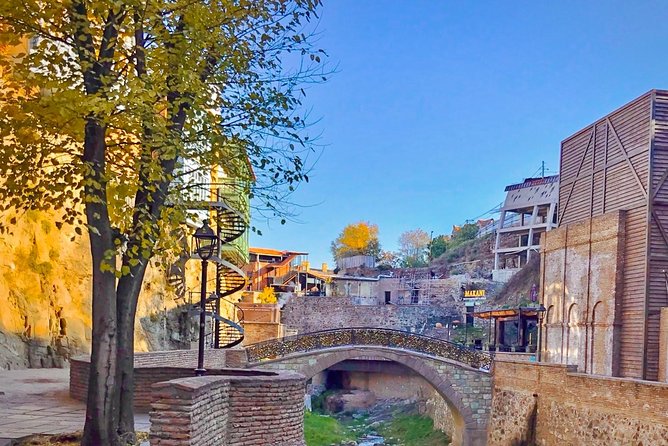
The route then shifts into the heart of Old Town Tbilisi, with its mix of old buildings, restaurants, and little theaters. This is where you start seeing the city as more than landmarks. You feel the everyday energy: side streets, small storefronts, and the kind of street life that makes you want to wander even after the tour ends.
Then comes Jan Shardeni Street, a pedestrian street that is famous enough that most first-timers hear about it before they arrive. It is a great place to walk slowly and get photos without needing to cross busy roads. You will also see how the city handles tourism, with shops and sellers close to the street. If shopping is not your thing, Shardeni is still worth it for the atmosphere and architecture.
If you do want souvenirs, I like that this tour includes time in areas where you can actually browse, not just pass by quickly.
Rezo Gabriadze Marionette Theater and the film legend stop
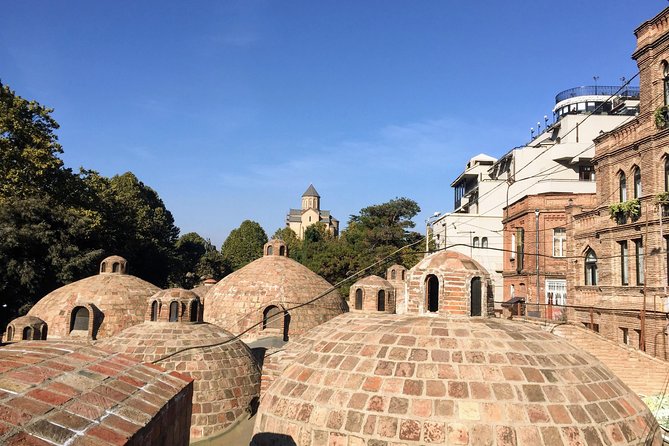
You stop at the Rezo Gabriadze Marionette Theater, opened in 1981. Marionettes might not be on everyone’s travel priority list, but in Tbilisi this theater has become a real part of local culture. This is a good moment to look at how institutions carry identity, even when you are mostly doing a walking route.
Then you visit a Sergey Parajanov monument. It honors an Armenian film director whose work earned world praise, including Shadows of Forgotten Ancestors, The Colour of Pomegranates (Sayat-Nova), The Legend of Suram Fortress, and Ashik-Kerib. If you enjoy cinema, this stop adds a different angle to your Tbilisi day. Instead of only architecture and religion, you get art and film as another thread in the city’s story.
Rike Park and the one-way cable car to Narikala

One of the best value points on this tour is the aerial tramway. The cable car ride is not included in the stop admission, but it is listed as included on a one-way basis.
The tram connects Rike Park across the river from Old Town with Narikala, the fortress that overlooks the city. In practical terms, it saves time and effort while still giving you the elevated view that makes Tbilisi feel like a real destination, not just a city you passed through.
Rike Park itself is worth a short wander. It is a public recreation area, popular with families and tourists. It also gives you a natural transition between the river, the older streets, and the viewpoint energy of Narikala.
What you should plan for: this portion is all about timing and walking a bit between points. Wear comfortable shoes, because you will be on your feet during the whole tour, not sitting in a vehicle.
Sioni Cathedral and Jumah Mosque: churches and mosques in one tight loop
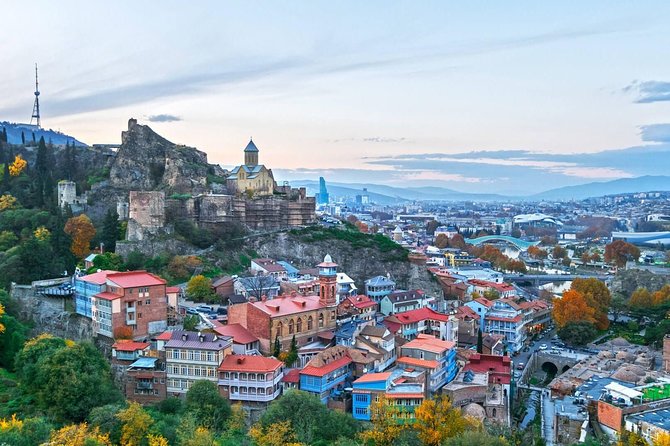
Next the tour hits Sioni Cathedral Church, officially the Sioni Cathedral of the Dormition. It is a Georgian Orthodox cathedral in Tbilisi. The name is tied to a medieval Georgian tradition of naming churches after places in the Holy Land, in this case Mount Zion in Jerusalem.
After that comes Jumah Mosque, the Friday Mosque. This stop is unique because the architecture can look like something else at first glance. The site notes that Shias and Sunnis pray together there, and that the mosque is open for visitors of all religions or beliefs.
This pair of stops matters because you see how varied religious life is in the same city space. It also reinforces the dress code requirement. Even if the buildings look different, you still need to show the same respect in how you dress.
Kartlis Deda and the Legend Fountain moments
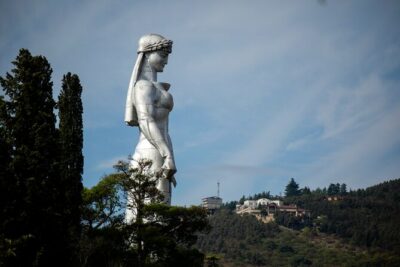
Then you walk to Kartlis Deda, a monument on top of Sololaki hill. It was erected in 1958, the year Tbilisi celebrated its 1500th anniversary. The statue was designed by sculptor Elguja Amashukeli and is a large 20-meter aluminum figure of a woman in Georgian national dress.
This stop works for first-timers because it is big and visible. When you later look for it from other viewpoints, you will know you are seeing the right place.
From there, you visit a monument fountain called the Falcon and Pheasant. It symbolizes a legend about how Tbilisi was established in the 5th century by King Vakhtang Gorgasal. If you like travel days that turn into stories you remember, this is one of the better ones to pay attention during.
The Toaster sculpture and Meidan Bazaar for quick local flavor
Between major monuments, the tour includes playful stops. One is the Sculpture the Toaster, a man holding a horn, modeled on an ancient Colchian statuette nicknamed tamada.
Do not skip it, even if it sounds silly on paper. Public art like this is how a city shows its humor, and it gives you a clean break from churches and monuments.
Then you head to Meidan Bazaar, the kind of place you will appreciate if you are pressed for time. It is a convenient spot for souvenirs without needing to hunt around for long. If shopping is not your priority, you can still use the area to test what pricing feels like before you buy anything later.
Dzveli Tbilisi Sulphur Waterfall: the unexpected wow moment
Then comes a stop that people love for its pure surprise factor: Dzveli Tbilisi Sulphur Waterfall. It is described as a real waterfall in the city center. You are not just looking at a historical monument here. You are seeing water move right where you would expect streets and buildings.
This stop is short in time, but it is the type of place that makes your photos look more “Tbilisi” instantly than another church exterior ever could.
Metekhi Cathedral and finishing back where you started
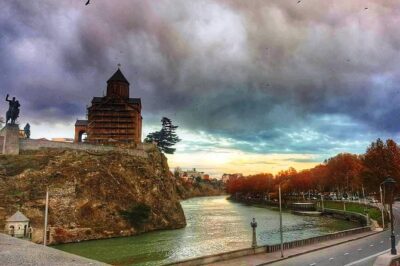
You end with Metekhi Cathedral, a 12th-century temple near the rocky bank of the Kura River. It is another church stop, but with a different feel than the earlier basilica. Being closer to the riverbank changes the setting. You get a sense of Tbilisi’s older geography, where the river shaped where people built and lived.
The tour then returns to the meeting point at Freedom Square. This matters, because your last impression lands in a central area where you can easily find a meal, a taxi, or your next activity.
What makes the guides stand out for real, not just on paper
Across the provided reviews, the strongest theme is how guides shape the experience to your group.
- Gio is specifically praised for keeping the walking pace matched, which is a big deal when you have hills and you want your tour to feel smooth.
- Jonah is praised for customizing the tour around family timing, including making room for what you need most, like old town plus the peace bridge and more.
- Koba is praised for making a solo experience feel like time with a friend, not a scripted lecture.
- Aleksi is praised for patience with a toddler, plus practical help dealing with lots of sellers near tourist areas.
- Tamar is praised for passion about the city and for being honest about food, with one review noting a finish that included wine tasting.
That last part is worth taking seriously. A good guide makes the city feel navigable. They help you spot what is worth lingering at, and what is mostly there to catch your attention for money.
Should you book the Tbilisi Explorer for first-timers?
Book it if you want your first day in Tbilisi to feel organized. This is a smart choice when you only have a few hours and you want a route that hits major sights, Old Town streets, and a proper cable car ride.
Pass or adjust if you:
- Hate walking long enough that you might get tired before the cable car segment
- Do not want to deal with dress code rules at places of worship
- Plan to spend most of your time in museums or want a deep dive into one site (this is designed for breadth, not extended stays)
For most first-timers, I think this tour earns its cost by doing the hardest part for you: picking the right order, giving context, and keeping you moving at a human pace.
FAQ
How long is the Tbilisi Explorer walking tour?
It runs about 1 hour 30 minutes to 2 hours, depending on the pace of your group and how long you pause at each stop.
Where do we meet, and does the tour end nearby?
You meet at 2 Freedom Square in Tbilisi. The tour ends back at the same meeting point.
What is included and what is not?
The tour includes a local guide, a private tour, and a one-way cable car ride. Hotel pick-up is not included.
Is the tour private?
Yes. This is a private tour, and only your group will participate.
What language is the tour offered in?
The tour is offered in English.
Do we need to pay admission tickets for the stops?
The stops listed on the route show free admission, but the aerial tramway ticket is specified as not included there. The cable car is included as a one-way ride in the tour features.
What should I wear to visit churches and mosques?
A dress code is required. No shorts or sleeveless tops are allowed. Knees and shoulders must be covered for both men and women, or entry may be refused.
Do I need hotel pick-up?
No. Hotel pick-up is not included, so plan to get to the meeting point yourself.
What if the weather is bad or I need to cancel?
This experience requires good weather. If it is canceled due to poor weather, you will be offered a different date or a full refund. Free cancellation is available if you cancel at least 24 hours in advance.
More Georgian Tours We Have Read Closely



Everything Else Across the Caucasus

Old Tbilisi, Three More Ways
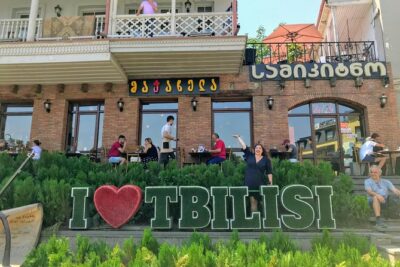
Other Georgian tours we have been through, from the Black Sea to the Kakheti vineyards
- Private Adorable City Tour of Tbilisi
★ 5.0 · 3 reviews - Tbilisi Airport to Gudauri, Bakuriani, Batumi, Tbilisi
★ 5.0 · 3 reviews - Private Wine Tour In Kakheti Region with 7 Wines and Lunch
★ 5.0 · 3 reviews - Two Capitals in One Day: Tbilisi and Mtskheta Combo Tour
★ 5.0 · 3 reviews - Private Effortless transfer from Tbilisi to Gudauri ski resort
★ 5.0 · 3 reviews - Tbilisi to Gudauri Stepantsminda Private Transfer
★ 5.0 · 3 reviews
Tbilisi Old Town Walks, compared.
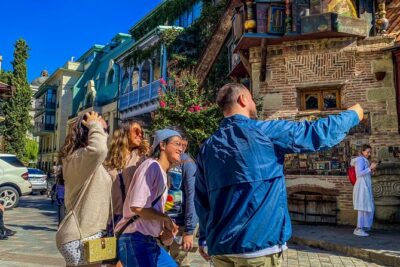 ★ 5.0Tbilisi Walking Tour Including Cable Car and Traditional BakeryFrom $191,310 reviews
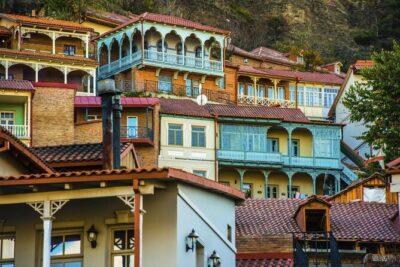 ★ 5.0Old Tbilisi Highlights walking tour with wine & 10 tastingsFrom $15276 reviews
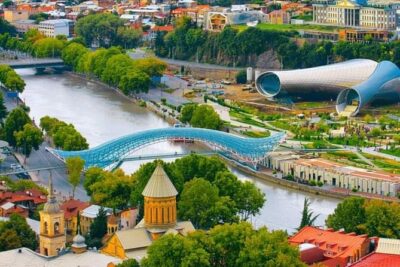 ★ 5.0Old Tbilisi Tour: Private Walking Tour With Wine TastingFrom $39273 reviews
 ★ 5.0Tbilisi Old Town Walking Tour with a Local GuideFrom $38168 reviews
 ★ 5.0Tbilisi old town & soviet heritage – Private driver-guided TourFrom $7783 reviews
 ★ 5.0Private Walking Tbilisi City Tour (Day Trip)From $5969 reviews
 ★ 5.0Old Town and Beyond: A Tbilisi Silk Road Feast with Culinary BackstreetsFrom $12562 reviews
 ★ 5.0Private Walking Tbilisi City TourFrom $4536 reviews
Browse the lists this tour appears in