
REVIEW · TBILISI OLD TOWN WALKS
Discover Tbilisi: Hidden Gems and Iconic Sights Walking Tour
Old Town Tbilisi has layers you can feel. This small-group walk (max 15) with guides like Jonah, Oksana, and Koba makes the big icons click, and I love the photo-ready viewpoints around Freedom Square and the Bridge of Peace. Just note this is a steady walk, and you’ll need to cover knees and shoulders at worship stops.
With a price around $9, it’s one of the easiest ways to get oriented fast, especially if you only have a day or two in the city. You’ll move through major sights plus quieter corners, with most stops free to enter.
In This Review
- Key Things You’ll Appreciate
- Why This 2.5 to 3.5 Hour Old Town Walk Fits Almost Any Trip
- Freedom Square to the Oldest Church: A Quick History Shortcut
- Bridge of Peace and Shardeni Street: Where the Photos Actually Work
- Churches, Jumah Mosque, and the Great Synagogue: A City That Shares Space
- Narikala Views Without the Stress: Rike Park and the Optional Tram
- Monuments, Theater, Legends, and the Sulphur Waterfall
- Little Stops That Save Time, and One Dress-CODE Reminder
- Should You Book This Tbilisi Walking Tour?
- FAQ
- How long is the walking tour in Tbilisi?
- How much does it cost?
- Is the tour offered in English?
- Is the aerial tramway or cable car included?
- Where do I meet the guide?
- What dress code do I need for stops during the walk?
- What fitness level is needed?
- What if the weather is poor?
Key Things You’ll Appreciate
- Freedom Square orientation with changing names from Imperial and Soviet eras, right at the start
- Bridge of Peace photos plus views over the Mtkvari River
- Old Town on foot, including Shardeni Street and the lanes around the pedestrian core
- A jump across faiths, from Georgian Orthodox churches to Jumah Mosque and the Great Synagogue
- Real city steam in the middle of it all, at the Dzveli Tbilisi Sulphur Waterfall
Other walks through the balconies and backstreets of old Tbilisi
Why This 2.5 to 3.5 Hour Old Town Walk Fits Almost Any Trip
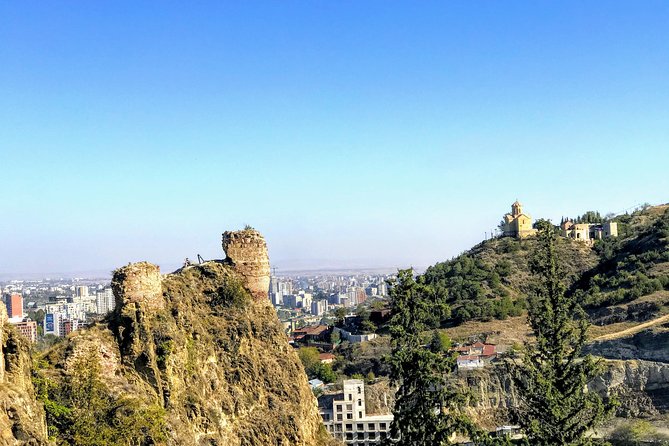
Tbilisi is the kind of city where you can wander for hours and still miss the point. This walk keeps you moving, but not in a frantic way. It’s paced around a tight cluster of Old Town sights, so you get a clear mental map without needing to study a guidebook like it’s a final exam.
The format matters. You’re with a local guide, and the group stays small (listed as up to 12 in one place and up to 15 in another). In the reviews that stand out, the guides are praised for turning “what am I looking at?” into “oh, I get it.” Jonah gets called out for storytelling and photo spots. Gio and Nini are mentioned for pointing out details people would otherwise walk past. Koba is praised for sharing history without turning it into a lecture.
At about $9 per person, the value is mostly about coverage. You hit Freedom Square, the Old Town core, major churches, and cultural landmarks in one go. It also helps that most stops are free to enter, so you’re not paying an admission fee at every turn. The only time you might pay extra is if you choose the aerial tramway ride later in the route.
Freedom Square to the Oldest Church: A Quick History Shortcut
You start at Freedom Square, a natural launchpad because it sits at the center of the city and connects to Rustaveli Avenue. The square’s story is part of the fun. Names changed under different rulers, and that’s exactly the kind of context that helps Old Town make sense. Instead of seeing a plaza, you start seeing layers.
From there, you head toward the Tbilisi Wall Ruins. These are brief, but they’re the right kind of stop for first-timers. Even when you only spend a few minutes, ruins like this give you a sense of how the city protected itself long ago, before the streets turned into today’s maze.
Then comes Anchiskhati Basilica of St Mary, often described as the oldest surviving church in Tbilisi, dating to the 6th century. Even if you’re not a church-architecture expert, this stop has an emotional effect. It’s old in a way that feels concrete, not just “old on paper.” Also, because it’s Georgian Orthodox, you’ll be glad you packed the right outfit for places of worship.
Practical note: a dress code is required for places of worship and selected museums. That means no shorts or sleeveless tops, and your knees and shoulders must be covered for both men and women. If you forget, you might be refused entry.
Bridge of Peace and Shardeni Street: Where the Photos Actually Work
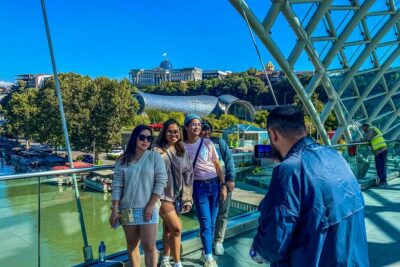
If Freedom Square sets the stage, the Bridge of Peace is where the camera earns its keep. The bridge opened in 2010 and crosses the Mtkvari River. In practice, this stop gives you a perfect “Tbilisi from above” moment without needing to climb anything.
Next is Jan Shardeni Street, a pedestrian street that’s famous for a reason. It’s the kind of street where you can take one photo and then immediately notice five more things: courtyards, stonework, small lanes feeding off the main pedestrian flow, and the overall rhythm of Old Town life. Your guide’s job here is to slow you down just enough to notice the details.
After Shardeni Street, you spend real time in Old Town. That longer stretch is where the walk turns from a list of sights into a place. You’ll see restaurants and eateries, older buildings, and the sense that Tbilisi’s center is built for people who linger. If you’re the type who wants a city walk that includes time to look around, snack, and reset your legs, this is a good section.
Churches, Jumah Mosque, and the Great Synagogue: A City That Shares Space
Old Town isn’t just one religion or one era. It’s a layered mix, and you’ll feel that as the walk moves toward Sioni Cathedral and beyond.
Sioni Cathedral Church of the Dormition is a Georgian Orthodox cathedral in the city. It follows a medieval Georgian tradition of church naming, linking it to Mount Zion in Jerusalem. This is a good stop for understanding how Georgian Orthodox traditions shape the identity of the city.
Then you visit Jumah Mosque, the Friday Mosque in the heart of Old Town. What makes it especially interesting is that its architecture doesn’t scream mosque at first glance, and it’s one of the few mosques where Shias and Sunnis pray together. The tour data also says it’s open for visitors of all religions or beliefs, as long as you respect the dress code and site rules.
Later, you’ll reach the Great Synagogue of Tbilisi, also known as the Georgian Synagogue. It was built from 1895 to 1903 in an eclectic style, and the name ties it to Georgian Jews who migrated to Tbilisi from Akhaltsikhe in the late 19th century. This stop broadens the story in a way that feels honest. Instead of only seeing monuments from one community, you see how many groups shaped the city.
For all of these stops, the value isn’t only what the buildings are. It’s what your guide helps you connect, like how the city’s streets became a shared home across different faiths and eras.
More ways to see Tbilisi in a day, cable car included
- City tour Tbilisi on red bus★ 4.5 · 139 reviews
- Discover Tbilisi: Hidden Gems and Iconic Sights Walking Tour★ 5.0 · 138 reviews
- Private Walking Tbilisi City Tour (Day Trip)★ 5.0 · 69 reviews
- Tbilisi city tour PRIVATE excursion Airport and hotel pickup INCL★ 5.0 · 68 reviews
- Tbilisi City Tour, Most Popular Tourists Destinations In The Capital Of Georgia★ 5.0 · 58 reviews
Narikala Views Without the Stress: Rike Park and the Optional Tram
Rike Park is a public recreation area that sits just across the Mtkvari from Old Town. It’s the kind of place where families, tourists, and residents mix for a stroll. On a walk like this, it works as a reset. You step out of the tight old streets and get a bit more breathing room.
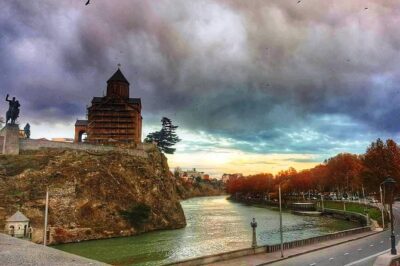
This is also where the aerial tramway comes into the story. The tramway opened in 2012 and connects Rike Park with Narikala, the fortress that overlooks the city. The tour data is clear that the tramway is not included, so if you want the ride, you’ll need to pay separately.
Even if you skip the aerial tramway, you still benefit from the perspective. You’ll get the sense that Narikala is the natural high point above Old Town, and you can plan the rest of your day around that view.
If you’re traveling with limited time, I like thinking of this section as your decision point: if you want a shortcut to higher views, budget for the tramway. If you want to keep it all strictly on foot, you can still enjoy the riverfront and park atmosphere.
Monuments, Theater, Legends, and the Sulphur Waterfall
This tour doesn’t only chase “big names.” It also makes room for quirky stops that make Tbilisi feel human.
Rezo Gabriadze Marionette Theater is one of those. It opened in 1981 and became a beloved part of Tbilisi’s cultural life. Even if you’re not planning to watch a performance, the theater is a character stop. It tells you the city values playful art alongside serious architecture.
You’ll also see a Sergey Parajanov Monument. Parajanov is known internationally for film masterpieces like Shadows of Forgotten Ancestors, The Colour of Pomegranates, Sayat-Nova, The Legend of Suram Fortress, and Ashik-Kerib. This kind of monument matters because Tbilisi shaped artists and artists shaped how the world saw the region.
Near the St Kevork Armenian church area, you encounter the Monument to Sayat-Nova. This is a layered stop. Sayat-Nova was an Armenian poet and musician, and the monument ties him to the church story, including the tradition that he hid during the shah Aga Mohamed Kadjar’s attack in 1795. The data also notes that he was killed at the church’s doorstep and buried there. If you like places that connect people to real events, this is the kind of stop you’ll remember later.
Then there are the more playful icons. The Sculpture the Toaster is a man holding a horn, modeled on an ancient Colchian statuette and nicknamed tamada. You might also see the Monument to Sofiko Chiaureli, a Soviet Georgian actress. And there’s even a Monument Fountain Falcon and Pheasant, tied to a legend about the establishment of Tbilisi in the 5th century by King Vakhtang Gorgasal. Legends can feel silly until you see how they’ve shaped the city’s symbols in real space.
Finally, the Дзveli Tbilisi Sulphur Waterfall is the standout payoff. You get a real waterfall right in the city center, and the effect is pure surprise. It’s the kind of sight you can explain in one sentence, then immediately need to point at it to make it believable. If you’ve ever wanted proof that Tbilisi is weird in the best way, this is it.
Little Stops That Save Time, and One Dress-CODE Reminder
Meidan Bazaar is an efficient stop if you want souvenirs without losing your whole afternoon. It’s also a useful break from heavy sightseeing because it puts you into everyday movement.
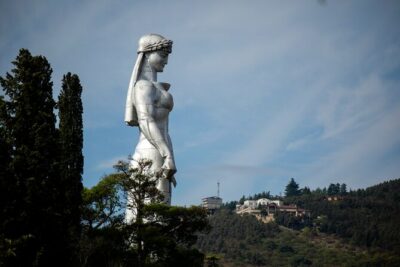
Other quick icons round out the route, including Kartlis Deda, the woman in Georgian national dress erected on Sololaki hill in 1958. It’s designed as a landmark for the 1500th anniversary of Tbilisi, and it’s a good “this city has pride” stop. It also helps you connect the old streets with the idea of views from higher ground, especially since Narikala is part of the larger panorama.
And again, repeat this to yourself before you go: the dress code. For churches and some museums, your knees and shoulders must be covered. Plan for that even if you’re only popping in for a few minutes. If you don’t, you risk being refused entry.
Because the walk is mostly about Old Town on foot, bring comfortable shoes and expect a moderate physical effort. The tour data also notes it’s near public transportation, so if you’re tired, you’re not totally stuck far from a way out.
Should You Book This Tbilisi Walking Tour?
Book it if you want a fast, friendly way to understand Tbilisi. The $9 price paired with a route that touches Freedom Square, Bridge of Peace, major churches, the Jumah Mosque, the Great Synagogue, and the Sulphur Waterfall is hard to beat. It’s especially smart for a first visit, or for travelers who want orientation without spending the day stuck in transit.
Skip it or choose a slower plan if you dislike walking, have tight mobility limits, or you already know the city and prefer long museum time over street-level context. Also, if you’re set on a tram ride to Narikala views, remember the aerial tramway is not included, so you’ll need extra budget.
For me, the deciding factor is the guides. Reviews highlight leaders like Jonah, Nini, Oksana, Koba, Aleksi, Sofia, Tamara, and Liza for explaining what you’re seeing, keeping the mood relaxed, and even helping with photos and restaurant ideas like where to find great Georgian food and khinkali. When a guide can make a city feel legible, the whole trip gets easier.
FAQ
How long is the walking tour in Tbilisi?
The tour runs about 2 hours 30 minutes to 3 hours 30 minutes.
How much does it cost?
It costs $9.00 per person.
Is the tour offered in English?
Yes, the tour is offered in English.
Is the aerial tramway or cable car included?
No, the aerial tramway/cable car is not included.
Where do I meet the guide?
Meet at Freedom Square, listed as BurberryFreedom Square on Shalva Dadiani Street (Mtatsminda 0105, Georgia).
What dress code do I need for stops during the walk?
For places of worship and selected museums, you must cover knees and shoulders. Shorts or sleeveless tops are not allowed for both men and women.
What fitness level is needed?
The tour is suitable for travelers with a moderate physical fitness level.
What if the weather is poor?
The experience requires good weather. If it is canceled due to poor weather, you’ll be offered a different date or a full refund.
Everything Else Across the Caucasus


Still in Tbilisi? Keep Going




Old Tbilisi, Three More Ways
Other Georgian tours we have been through, from the Black Sea to the Kakheti vineyards
- Private Adorable City Tour of Tbilisi
★ 5.0 · 3 reviews - Tbilisi Airport to Gudauri, Bakuriani, Batumi, Tbilisi
★ 5.0 · 3 reviews - Private Wine Tour In Kakheti Region with 7 Wines and Lunch
★ 5.0 · 3 reviews - Two Capitals in One Day: Tbilisi and Mtskheta Combo Tour
★ 5.0 · 3 reviews - Private Effortless transfer from Tbilisi to Gudauri ski resort
★ 5.0 · 3 reviews - Tbilisi to Gudauri Stepantsminda Private Transfer
★ 5.0 · 3 reviews
Tbilisi Old Town Walks, compared.
 ★ 5.0Tbilisi Walking Tour Including Cable Car and Traditional BakeryFrom $191,310 reviews
 ★ 5.0Old Tbilisi Highlights walking tour with wine & 10 tastingsFrom $15276 reviews
 ★ 5.0Old Tbilisi Tour: Private Walking Tour With Wine TastingFrom $39273 reviews
 ★ 5.0Tbilisi Old Town Walking Tour with a Local GuideFrom $38168 reviews
 ★ 5.0Tbilisi old town & soviet heritage – Private driver-guided TourFrom $7783 reviews
 ★ 5.0Private Walking Tbilisi City Tour (Day Trip)From $5969 reviews
 ★ 5.0Old Town and Beyond: A Tbilisi Silk Road Feast with Culinary BackstreetsFrom $12562 reviews
 ★ 5.0Private Walking Tbilisi City TourFrom $4536 reviews
Browse the lists this tour appears in