
REVIEW · TBILISI OLD TOWN WALKS
Old Tbilisi Tour: Private Walking Tour With Wine Tasting
Old Tbilisi is better with a guide.
This private walk turns the city’s main sights into a smooth, story-driven route, with a cable-car climb up to Narikala and Georgian wine tasting built right into the experience. You get the kind of attention that helps you move at your pace, and guides like Luka or Lela are especially praised for balancing clear history with a relaxed vibe.
What I like most is the hands-on mix of viewpoints and culture. Narikala gives you a dramatic sense of the city split between urban energy and quiet green, and the wine tasting is a friendly, local way to end the walk without feeling rushed.
One thing to consider is that this is still a walking tour with some uneven ground and hills, so you’ll want moderate physical fitness. It also depends on good weather, and the cable car portion can be a timing variable if conditions change.
In This Review
- Key things you will notice on this Old Tbilisi wine walk
- Where the story starts: Narikala Fortress and the cable car views
- Narikala’s split-screen view: city noise and botanical quiet
- Kartlis Deda: the statue that explains the city’s attitude
- Down into Abanotubani: sulfur baths and the 47 C detail
- A cool escape in Leghvtakhevi Gorge and the inner-city waterfall
- Chardin Street (Jan Shardeni): color, names, and late-night energy
- Sioni Cathedral: St. Nino’s cross and centuries in one building
- The Bridge of Peace: why 10,000 lamps matter
- Metekhi and the left bank: St. Mary’s Cathedral and a riverside finale
- Wine tasting in Georgian culture: what to do with it
- Price value: why $39 can feel like more than a bargain
- Pacing, timing, and the summer heat reality
- Should you book this Old Tbilisi wine walk?
Key things you will notice on this Old Tbilisi wine walk
- Narikala Fortress views split the city into two moods, busy below and calm green nearby
- Kartlis Deda, a 1958 statue with a two-part message, wine for friends, sword for enemies
- Abanotubani’s warm sulfur water is not just a legend, it’s part of daily life (around 47 C)
- A small waterfall escape inside Old Tbilisi, cool and walkable when it’s hot
- Bridge of Peace lighting turns the river walk into a nighttime photo stop, even if you are there in daylight
- Wine tasting is included, and guides are praised for making it feel genuinely local
Other walks through the balconies and backstreets of old Tbilisi
Where the story starts: Narikala Fortress and the cable car views
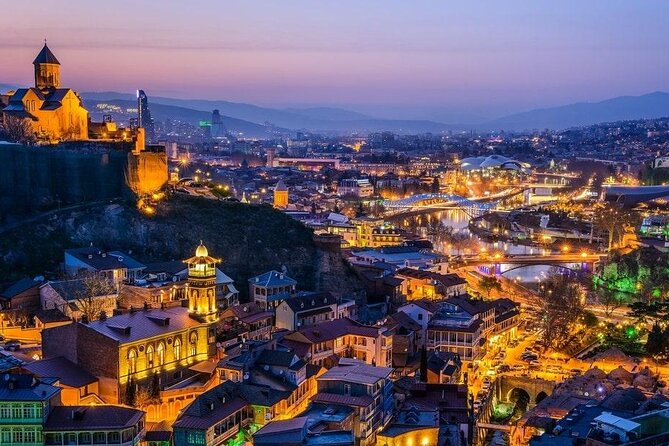
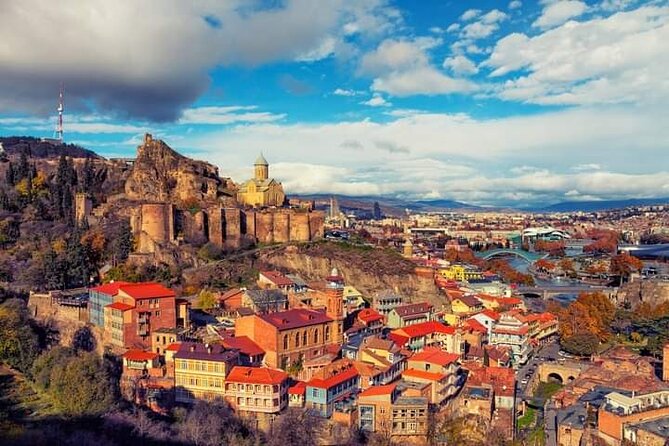
If you only see one viewpoint in Tbilisi, make it Narikala. The cable car ride is short, but it does something important: it gives you instant context. From up high, Old Tbilisi stops feeling like random streets and starts feeling like a real city with layers, defenses, and viewpoints.
Once you reach the fortress area, you can explore on foot around the castle grounds. Narikala itself has a deep timeline, starting as a 4th-century Sasanian citadel called Shuris-tsikhe. Later, it was expanded by the Umayyads in the 7th century, and David the Builder (1089 to 1125) added more. The Mongols renamed it Narin Qala, meaning Little Fortress, and you can still see fortifications dating mostly to the 16th and 17th centuries.
There was also a major disruption. Parts of the fortress were damaged in an earthquake in 1827 and demolished. That mix of survival and change is exactly what makes this stop feel real, not like a movie set.
Practical tip: plan for the fortress portion to be a little uneven and expect some steps. You do not need to be an athlete, but you should be comfortable walking uphill. If you’re traveling in summer, ask your guide about the best time for the cable car, because golden-hour views can be spectacular when heat is lower.
Narikala’s split-screen view: city noise and botanical quiet
One of my favorite parts here is the contrast you notice without even trying. From the fortress wall, you can look in one direction and see a busy, active city. Turn the other way and you get a quieter, greener scene tied to the Botanical Garden.
That “two views from one place” effect helps you understand Tbilisi fast. Old town is close to nature, and the city’s geography shapes how neighborhoods feel. It also makes it easier to pick where you want to wander later on your own.
This is also why the cable car ticket included with your tour is more than a perk. It saves you the mental math of logistics and puts you in position to see the city all at once. When you get the big picture early, the rest of your walking day feels lighter.
Kartlis Deda: the statue that explains the city’s attitude
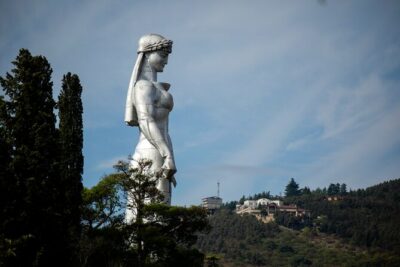
From the fortress area, you move toward Sololaki hill, where Kartlis Deda stands. This is not just a photo stop. The statue is built to communicate. Erected in 1958 for Tbilisi’s 1500th anniversary, the 20-metre aluminium figure was designed by sculptor Elguja Amashukeli.
Kartlis Deda is dressed in Georgian national clothing. The symbolism is simple and memorable: the left hand holds a bowl of wine to greet those who come as friends, and the right hand holds a sword for those who come as enemies. It’s a modern statue, but it’s using a theme people still recognize, hospitality on one side and defense on the other.
Even if you do not read everything at ground level, the statue helps you “decode” the rest of your walk. Tbilisi has a way of blending warmth, stubbornness, and history without trying too hard. This stop gets you into the right mindset before you head into older, more spiritual places.
Down into Abanotubani: sulfur baths and the 47 C detail

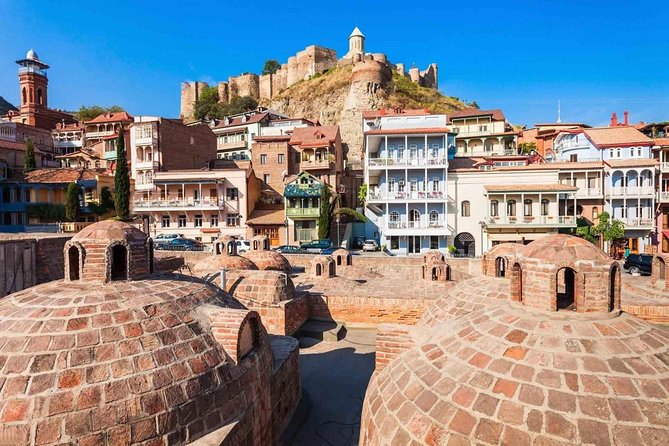
The walk down to Abanotubani is one of the classic Tbilisi transitions. You leave the height and viewpoints and step into a district shaped by water. Here, sulfur water rises naturally from the soil and supplies about 3,000,000 liters daily. The average temperature is around 47 C, which explains why people historically gathered here and why the area still feels like a living tradition.
There’s also a founding legend tied to this place, with sulfur springs linked to the city’s beginning in the 5th century AD. You will see the steaming, bath-focused atmosphere up close, and it’s the kind of setting that makes you slow down for a minute, even if the tour keeps a steady pace.
This stop also helps with pacing. After Narikala’s walking and views, Abanotubani gives you a softer, sensory pause. Take a few photos, look for how the baths are set into the district, and then be ready to move again.
If you’re the type who likes small breaks, this is your moment. If you hate waiting, keep it quick. Either way, Abanotubani is one of the stops that makes the tour feel distinct from a generic city highlights walk.
More on foot, mostly in Tbilisi and Kutaisi
- Tbilisi Walking Tour Including Cable Car and Traditional Bakery★ 5.0 · 1,310 reviews
- Tbilisi:Evening Walking & Talking Tour with Wine & Boat Ride★ 5.0 · 572 reviews
- Old Tbilisi Highlights walking tour with wine & 10 tastings★ 5.0 · 276 reviews
- Old Tbilisi Tour: Private Walking Tour With Wine Tasting★ 5.0 · 273 reviews
- Private Tbilisi Food Tour: 9 Tastings Walk in Bohemian District★ 5.0 · 227 reviews
A cool escape in Leghvtakhevi Gorge and the inner-city waterfall
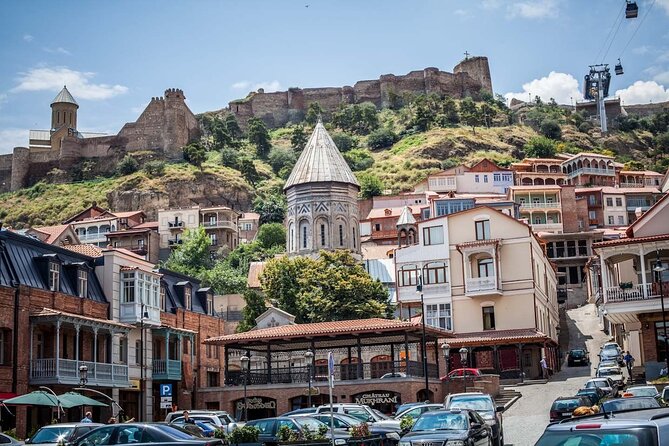
Right in the middle of Tbilisi, you get a gorge and waterfall moment. Leghvtakhevi Gorge and the nearby Leghvtakhevi Waterfall is small, but it works because it’s so close to everything else. On a hot day, it’s a genuine relief. The walkways connecting parts of the old town make it accessible, so you’re not trekking out of your way for a brief scene.
This stop is the kind of “reset” that makes a 2- to 3-hour walking tour feel enjoyable instead of exhausting. You get a visual break from churches, bridges, and streets. And because it’s an active outdoor area, it also adds movement and energy.
If you like photographing details, focus on the textures of the gorge and the path crossing nearby bridges. If you mainly want the big sightseeing, just enjoy the cool air for a few minutes and keep going.
Chardin Street (Jan Shardeni): color, names, and late-night energy
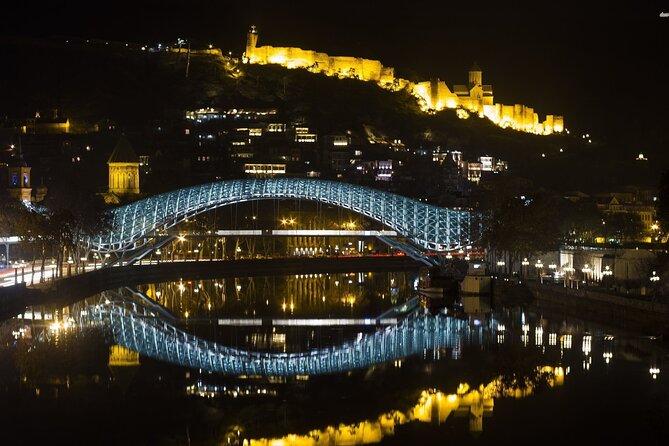
After the waterfall, the tour heads toward Jan Shardeni Street, also known as Chardin Street. This is one of the most colorful areas of Old Tbilisi, and it has a name with a story attached.
It’s named for Jean Chardin, a French traveler who came to Georgia in the 18th century and later returned home with deep fascination. That connection gives the street a layered feel. You’re in a nightlife-focused lane now, but the name points back to an earlier era when visitors were writing about Georgia for European audiences.
One practical thing to know: this area is famous for nightlife lasting until 5 a.m. That matters if you’re sensitive to sound. Even if you are walking there earlier in the day, it’s good to know the vibe runs late.
This is also a helpful stop for your future plans. After the tour, you will know where this street sits, which makes it easy to come back for dinner or a casual drink without needing to re-navigate Old Tbilisi from scratch.
Sioni Cathedral: St. Nino’s cross and centuries in one building

Sioni Cathedral is one of Georgia’s holiest sites, and it shows why this country treats faith as part of everyday identity. The first church here dates to the 5th century, built by order of Vakhtang Gorgasali. The current temple is a 17th-century building, and it keeps a link to earlier Christianity: the fourth-century St. Nino’s original cross.
This is the kind of stop where a guide’s storytelling really matters. A cathedral visit can otherwise feel like a quick look, but the meaning here is specific. When you understand that the building you see is newer, yet contains a much older relic, you get a clearer sense of continuity.
Plan to spend enough time to look carefully, not just walk through. If you are someone who likes inscriptions and architecture, you will enjoy taking a moment to orient yourself inside and around the site before moving back to the streets.
The Bridge of Peace: why 10,000 lamps matter
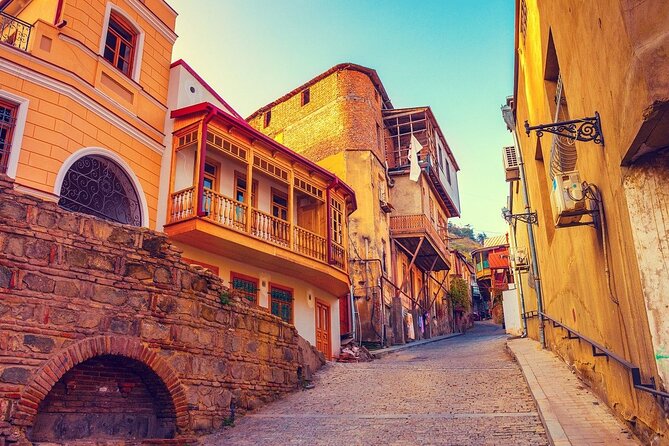
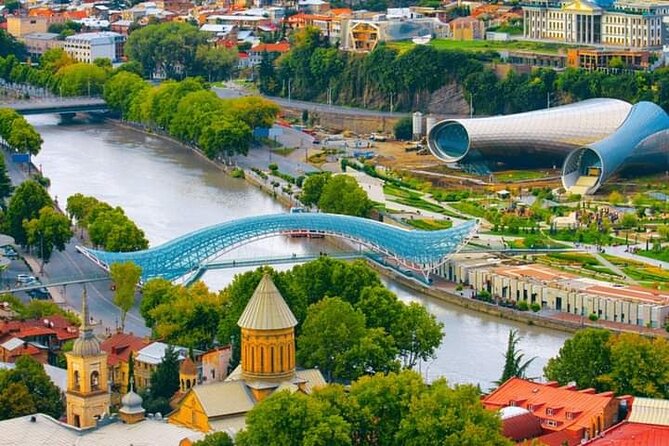
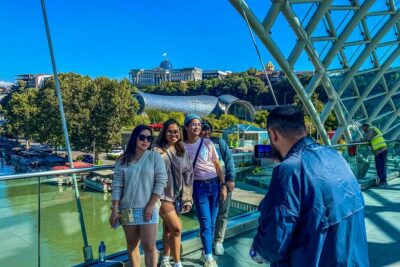
Then you get the river crossing, and yes, it’s one of the best “sit back and look” stops. The Bridge of Peace is a walking glass bridge, opened in 2010, and it runs 156 meters long. It’s also designed to be light. There are 10,000 lamps, which is why it can feel especially striking in the evening.
Even in daylight, you’ll feel the bridge’s purpose. It connects viewpoints and gives you a clean line of sight over the Mtkvari River. It’s also a natural divider between parts of Old Tbilisi. After spending time with churches and fortress walls, the geometry of the bridge gives you a fresh kind of framing.
Practical tip: if you like photos, pause mid-bridge. The angle changes quickly as you move. If you’re timing your walk with sunset, ask your guide, because the best light depends on the season.
Metekhi and the left bank: St. Mary’s Cathedral and a riverside finale
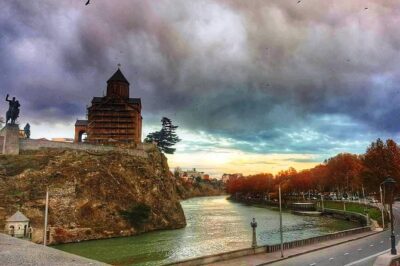
The tour finishes with Metekhi Cathedral area, reached through Rike Park. St. Mary’s Cathedral of Metekhi sits on the left bank of the Mtkvari. It has its own legends too. One tradition places the remains of St. Shushanik here.
In the cathedral yard, you’ll also see a statue of Vakhtang Gorgasali. That matters because it closes a loop. You’ve seen Vakhtang’s name earlier connected to early church-building, and now you see him visually tied to Metekhi. The guide can connect those dots in a way that makes the city feel less like disconnected landmarks and more like one story.
This is also a good ending point because the vibe near the river feels open compared with the tight alleys of older streets. You’re back near the meeting area by the end, so you can shift easily into whatever you want next, dinner, a slow stroll, or a museum stop.
Wine tasting in Georgian culture: what to do with it
The wine tasting included on this tour is not just a label check. Georgian wine culture is a big deal, and a good guide uses the tasting as a bridge between history and present-day life. In the same walk where you’re talking about ancient fortifications and old churches, the tasting makes the modern city feel tangible.
Here’s how to get more from it. During the tasting, ask simple questions. How do they describe their grapes? What makes Georgian styles different in plain terms? A guide who is good at pacing will answer without turning it into a lecture.
This is also where your tour feels most social. If you’re with a friend, you’ll have something shared to talk about besides the photos. If you’re traveling solo, it gives you an easy conversation opener without needing to “perform” friendliness.
If you do not drink alcohol, make a quick request in advance and see how the tasting is handled. The tour data confirms wine tasting is included, but it does not spell out substitutes.
Price value: why $39 can feel like more than a bargain
At $39 per person, this tour sits in the value zone because it bundles three things that add cost if you price them separately: guide service, wine tasting, and a cable car ticket. You’re also getting entry tickets included for Narikala Fortress and Sioni Cathedral, which helps you avoid surprise add-ons.
The duration matters too. At around 2 to 3 hours, you get a lot of spatial coverage in a short window. That’s ideal if you want to get oriented after arrival, or if you’re trying to fit Old Tbilisi into a tight schedule.
Private matters as well. This is a private tour for your group, which usually means the guide can slow down when you want questions answered, or speed up if you prefer quick viewing. That flexibility is repeatedly praised, and it’s exactly what you want when walking through a neighborhood where details are easy to miss.
Pacing, timing, and the summer heat reality
Tbilisi heat can sneak up on you in summer, especially when you’re climbing, then walking down, then moving between districts. Guides are known for tailoring the pace to your interests, and the best ones help you avoid turning sightseeing into a slog.
A specific timing tip that comes up often is choosing a later cable car slot in summer, around 7:30 p.m., for better comfort and views. If you’re unsure, ask. A good guide will give advice that makes practical sense for the day you’re there.
Also watch the day length. The tour includes outdoor walking to waterfalls and river areas, so your comfort depends on weather. Good weather is required. If conditions are poor, the experience can be rescheduled or refunded, so plan for the possibility of a date shift.
If you want maximum enjoyment, wear breathable shoes and leave time for a slow sit-down somewhere afterward. The tour sets you up for independent exploring, but you still need a buffer to enjoy it.
Should you book this Old Tbilisi wine walk?
Book it if you want a high-impact introduction to central Tbilisi without renting a car or doing route math. It’s especially a good fit for first-time visitors who want the big highlights plus context, and for wine lovers who like the idea of ending with a taste of Georgia instead of only photos.
Skip it, or adjust expectations, if you dislike walking or you get frustrated by changing outdoor conditions. The tour includes a moderate physical level of walking, and it depends on good weather.
My practical advice: choose this tour early in your trip so you can use the route and food and culture recommendations to plan the rest of your days. And if you see a guide name like Luka, Lela, Mirian, Mariam, or Laila on the roster, consider requesting one. People consistently praise them for friendly, flexible pacing and for making the history feel understandable, not heavy.
More Georgian Tours We Have Read Closely



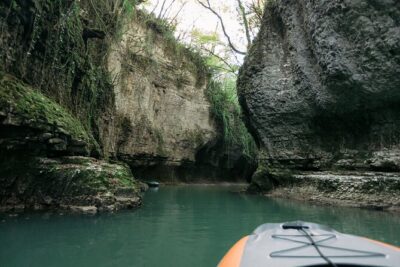

Everything Else Across the Caucasus
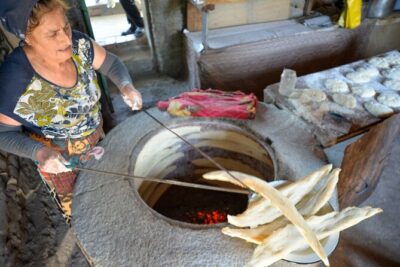

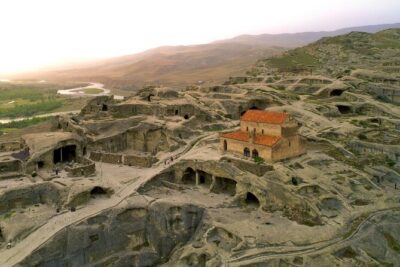
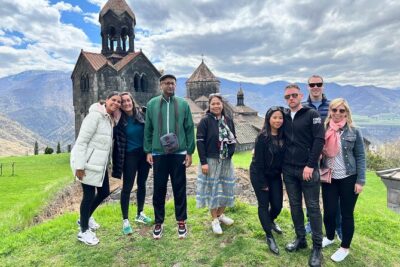
Old Tbilisi, Three More Ways
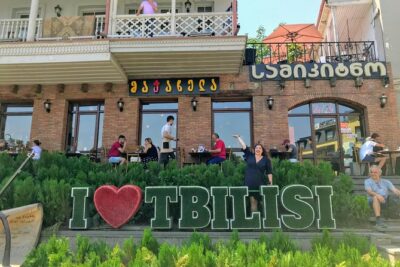
Other Georgian tours we have been through, from the Black Sea to the Kakheti vineyards
- Private Adorable City Tour of Tbilisi
★ 5.0 · 3 reviews - Tbilisi Airport to Gudauri, Bakuriani, Batumi, Tbilisi
★ 5.0 · 3 reviews - Private Wine Tour In Kakheti Region with 7 Wines and Lunch
★ 5.0 · 3 reviews - Two Capitals in One Day: Tbilisi and Mtskheta Combo Tour
★ 5.0 · 3 reviews - Private Effortless transfer from Tbilisi to Gudauri ski resort
★ 5.0 · 3 reviews - Tbilisi to Gudauri Stepantsminda Private Transfer
★ 5.0 · 3 reviews
Tbilisi Old Town Walks, compared.
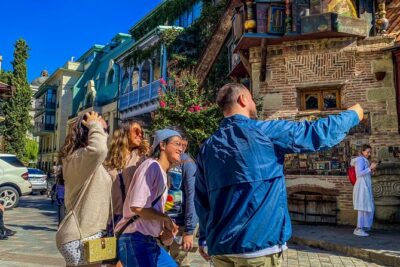 ★ 5.0Tbilisi Walking Tour Including Cable Car and Traditional BakeryFrom $191,310 reviews
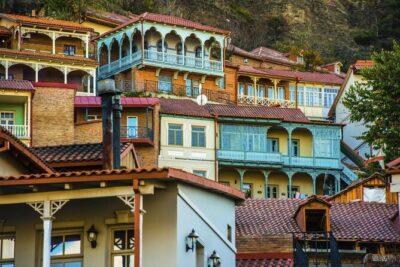 ★ 5.0Old Tbilisi Highlights walking tour with wine & 10 tastingsFrom $15276 reviews
 ★ 5.0Tbilisi Old Town Walking Tour with a Local GuideFrom $38168 reviews
 ★ 5.0Tbilisi old town & soviet heritage – Private driver-guided TourFrom $7783 reviews
 ★ 5.0Private Walking Tbilisi City Tour (Day Trip)From $5969 reviews
 ★ 5.0Old Town and Beyond: A Tbilisi Silk Road Feast with Culinary BackstreetsFrom $12562 reviews
 ★ 5.0Private Walking Tbilisi City TourFrom $4536 reviews
 ★ 5.0Tbilisi Explorer: Essential Walking Tour for First-TimersFrom $4122 reviews
Browse the lists this tour appears in