
REVIEW · GEORGIAN COOKING CLASSES
7-Day Georgian Wine and Culinary Private Tour with Cooking Class
Georgia runs on wine, bread, and conversation.
This private 7-day tour is built for people who want more than tastings and photos, you get Georgian wine woven together with a hands-on cooking class, plus real visits to wineries and family cellars. I like that it mixes food-first learning with unforgettable places like a winery built in a former bomb shelter. One thing to consider is the pace, you are looking at long days in a minivan, with plenty of activities packed into each region.
Because it is limited to up to 6 people, the trip feels like a small circle, not a mass tour, and you spend more time asking questions. I also like that you start and finish in Tbilisi with a clear flow across eastern and northern Georgia, so you see how wine culture changes by region. If you prefer slow travel and lots of free time, this schedule may feel a bit busy.
In This Review
- Quick hits before you book
- A Tbilisi start that sets the tone
- Sarajishvili brandy, then Chateau Mukhrani and a lunch you will remember
- Kakheti day: monasteries, Napareuli cellars, and the Khareba underground tasting
- Kakheti cooking and Signaghi: churchy streets, cheese and bread, and modern wine dining
- Kutaisi and the cave-town day: wine with a side of ancient stone
- Racha region: Bugeuli, Ambrolauri, and monasteries between mountains
- Shaori Lake and Prometheus Caves: a lighter day that still counts
- Back to Tbilisi via upper Imereti Road, Katshki Pillar, and Mtskheta
- Price and value: what $784.62 buys you in real terms
- What included meals and tastings feel like day to day
- Practical tips so you enjoy the packed days
- Who this tour suits best
- Should you book this Georgian Wine and Cooking Tour?
- FAQ
- What is the duration of the Georgian Wine and Culinary Private Tour?
- Where does the tour start, and what time does it start?
- Is this a private tour, and how large is the group?
- What is included in the tour price?
- Are drinks included during meals and tastings?
- What kind of accommodations are provided?
- Is free cancellation available?
Quick hits before you book
- Small private group (max 6), easier conversations with your guides
- Multiple regional tastings, from Kakheti cellar stops to Racha wine visits
- A true cooking class focused on Georgian dishes, not just watching
- Memorable winery settings, including a tasting in a former bomb shelter
- History stops that match the food story, from monasteries to old cave towns
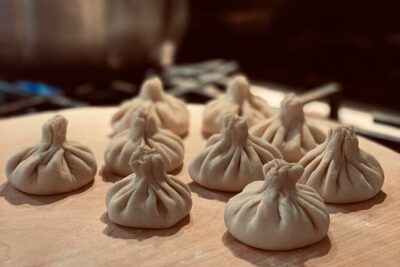
More kitchens that will put you to work on khinkali
A Tbilisi start that sets the tone
The tour begins in Tbilisi, with hotel pickup and a climate-controlled minivan ready for you. Your start time is listed as 9:00 pm, so plan for an evening beginning in the city and then a proper start the next day. Either way, this is a great setup for easing into the trip, because Georgian dining and wine culture are at their best when you do not rush.
Tbilisi matters here. It is where modern Georgia meets older traditions, and it is also where you get introduced to the tastes and habits that show up later in Kakheti and beyond. One of the biggest value points of a guided plan is that you do not waste your first hours figuring out what to order or where to go. Instead, you get pushed straight into brandy, wine, and regional dishes.
Also, you are not traveling in a giant bus. With a maximum of 6 travelers and a private format, the guide can pace the day to your group. That makes a big difference on a food and wine itinerary, because questions come fast: What’s in this, how is it made, and why does this region do it this way?
Sarajishvili brandy, then Chateau Mukhrani and a lunch you will remember
Day one leans into Georgian spirits and estate wine right away. In Tbilisi, you visit the Sarajishvili brandy factory. Even if you already know Georgia has a strong alcohol tradition, this helps connect the dots between local production and the broader wine culture you will see later. You are also meeting the idea that Georgia is not one style of drink. It is a whole world of methods and tastes.
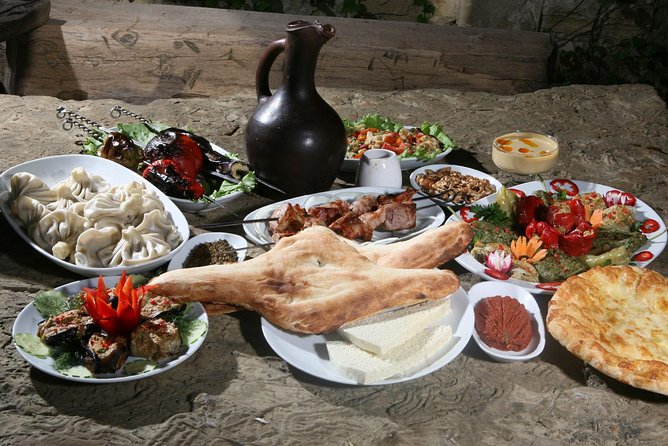
Next up is Chateau Mukhrani, a restaurant with its own vineyard. That combination is practical: you taste wine in the same ecosystem that grows it, so it feels less like a sales stop and more like a lived-in place. You have lunch there, and you will taste their wines, which gives you a clear baseline for what the region tastes like when the estate controls more of the process.
Then comes the cooking part. After lunch, you take a masterclass to learn Georgian delicacies. This is one of the most praised parts of this kind of trip for a reason. Tastings teach your palate, but cooking teaches your muscle memory, so you remember the flavors long after the last sip. You do not need to be a serious home cook. You just need curiosity and a willingness to get your hands a little messy, Georgian cooking is not delicate in the way some cuisines are.
Kakheti day: monasteries, Napareuli cellars, and the Khareba underground tasting
The second day is when the tour starts feeling like a real Georgian road trip across wine country. You leave Tbilisi for the Kakheti region in eastern Georgia, stopping in Telavi, then moving through famous monastery and wine sites.
In Telavi, you explore the Alexander Chavchavadze Estate Museum. This gives context for the culture around estates and wine, and it helps explain why vineyards and history often show up together in this part of the country. From there, you visit Alaverdi Monastery and Gremi Monastery. Monasteries can feel like a detour on a food tour, but here they are useful. They show how food culture and community life are tied to religious and historical routines, not just tourism.
Then you hit Napareuli for the Twins Wine Cellar. It is described as a rustic vineyard and museum, which matters. You are not only tasting, you are learning how people explain wine heritage in their own words and spaces. That is a different experience than a sleek tasting room.
After that, you enjoy lunch at Ikano Winery, followed by a wine tasting. Lunch is a key moment in a full-day itinerary. It keeps the day from becoming just stops and sips, and it gives you a calmer window to try local dishes while your tastings are still anchored to the meal.
Later, you visit Khareba Winery, located in a former bomb shelter, and you have a special tasting in an underground tunnel. This is the kind of stop that sticks in your head, because the setting changes the whole mood of tasting. Underground, cooler air and stone surroundings make the experience feel like you are inside the winery’s logic, not just visiting it.
Kakheti cooking and Signaghi: churchy streets, cheese and bread, and modern wine dining
On the third day, you savor churchkhela, a traditional Georgian sweet made from grape juice. It is one of those foods that helps you understand why grapes are not just for wine in Georgia. They are for sweets, for snacks, and for everyday treats.
You then taste wine at Teliani Valley Winery. After that, you do another masterclass at Shumi Winery. This is a smart pairing. A tasting tells you what to look for, and then the cooking class helps you translate those flavors into food you can recreate later.
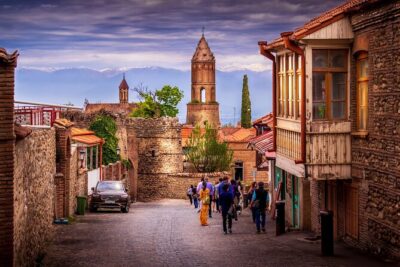
You then head to Signaghi, known for red-roofed streets and its position in the heart of the wine region. Signaghi is a place you can enjoy at a walk pace, and it breaks up the heavier agricultural and cellar days. After sightseeing, you get interpretive modern cuisine at Pheasant’s Tears Winery, along with a rich wine selection.
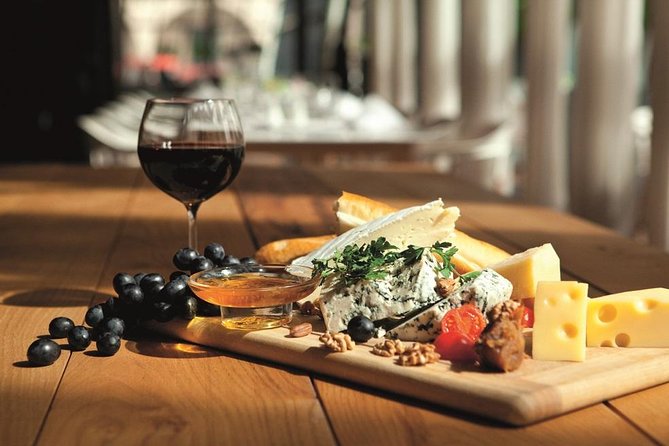
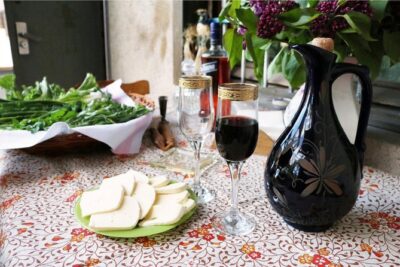
Before returning to Tbilisi, you sample local bread and cheese. I like this moment because it is simple and direct. After a day of tastings and classes, you get something grounded. It also gives you a reality check on what Georgian comfort food tastes like on an ordinary plate.
That evening, you finish with a traditional Georgian feast at Barbarestan, a home-style restaurant with seasonal ingredients in a stylish district of the city. A feast is not just dinner here. It is a chance to eat Georgia the way people actually talk and gather around food.
More hands-on afternoons, wine and bread and more
- Nana’s Kitchen – traditional Georgian cooking class at real Georgian family home★ 5.0 · 37 reviews
- Join a Local for a Market Tour, Cooking Class and Meal in her Tbilisi Home★ 5.0 · 15 reviews
- Georgian Dance Class in Tbilisi, Georgia★ 5.0 · 10 reviews
- Taste of Georgia. Cooking-Class Khinkali, Khachapuri and more★ 5.0 · 7 reviews
- 7-Day Georgian Wine and Culinary Private Tour with Cooking Class★ 5.0 · 5 reviews
Kutaisi and the cave-town day: wine with a side of ancient stone
On the fourth day, you drive west to Kutaisi for a tasting in a family wine cellar. Family cellars are where this kind of tour becomes more personal. The guide can explain how family production connects to local identity, and you get to experience wine as something passed down, not just processed and exported.
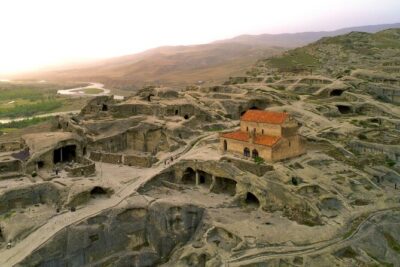
You then visit Uplistsikhe, an ancient cave town. This stop works well on a wine tour because it adds texture. You are seeing how people survived and organized life over centuries, often using natural features and existing rock. It makes today’s wine culture feel less random.
Stalin’s museum is also part of the mix. Whether you love that part of history or not, it is a reminder that Georgia’s story includes big political chapters. It is worth approaching it with curiosity rather than judgment, because it helps you understand what locals remember and how they frame the past.
Then you have an afternoon wine tasting, and you finish with Gelati Monastery. Gelati is visually striking, and it gives you a mental pause between drinking and driving. Monasteries also tend to slow groups down naturally, which helps if you are trying to pace your own energy.
Overnight stays are in 3-star hotels or guesthouses in Kutaisi. This is a good value setup for a tour like this. You get comfortable sleep without paying luxury prices, and the day still starts early enough to make the itinerary feel worthwhile.
Racha region: Bugeuli, Ambrolauri, and monasteries between mountains
Day five brings you north to the Racha region, specifically around Ambrolauri, with overnight in the historic town of Oni. Racha is a strong contrast from Kakheti. The wine culture is still the headline, but the environment feels more rugged and less polished.
You experience wine first at Bugeuli Winery, then at a family wine cellar near Ambrolauri. This two-step plan is smart. It shows you how estate producers and family producers might explain their wines differently, even when the goal is the same, drinking and sharing.
Between tastings, you visit Barakoni Monastery, tucked between wild green mountains. Monasteries in places like this often feel like they were built for a view and a purpose at the same time. It also helps break up the schedule so you are not going from one tasting room to the next.
The night in Oni gives you a quieter base to reset. After multiple days of tastings and touring, that kind of overnight matters. It lets your group digest what you have learned, literally and mentally.
Shaori Lake and Prometheus Caves: a lighter day that still counts
On day six, you head to Shaori Lake, a clear body of water high in the mountains. This is the nature reset day. You get a view that is not connected to wine production, which is nice because it prevents your brain from staying in tasting-mode all the time.
You also visit Nikortsminda Cathedral and then Prometheus Caves. These stops balance scenic appreciation with a dose of Georgian geology and history. In other words, it is not just pretty scenery, you are looking at the places that shaped settlement and travel routes.
Then you return to Kutaisi for a city tour. That final day in the middle of the trip is helpful. It gives you a bit of structure before the last push back to Tbilisi, and it helps you feel like you have seen more than just wineries.
Back to Tbilisi via upper Imereti Road, Katshki Pillar, and Mtskheta
Your final day is about route and meaning. You head back to Tbilisi by the scenic upper Imereti Road and stop at Katshki Pillar, where a church sits on top of a natural limestone formation. This stop is short, but it gives a strong visual payoff, and it helps the trip feel like a journey instead of a checklist.
You then stop in Mtskheta, Georgia’s ancient capital, and see Svetitskhoveli Cathedral, the second-largest church in the country. After that, you visit Jvari Monastery, located on a cliff’s edge. These are the kind of stops that make you slow down. Even with a full tour schedule, religious sites have a way of turning down the volume.
Once you return to Tbilisi, you celebrate with a gala dinner and a national folk show. This is where the tour’s “food and wine meets culture” idea lands. You have spent days tasting and learning, now you get the performance side of Georgian tradition. It is not just entertainment. It ties together what you ate, what you visited, and how Georgia expresses itself socially.
Price and value: what $784.62 buys you in real terms
The price is listed at $784.62 per person for about 7 days. On paper, that can sound steep, until you match it to what is included.
You get 6 nights of accommodation in 3-star hotels or guesthouses, plus hotel pickup and drop-off. You also get round-trip private transfer and transport by an air-conditioned minivan, which removes a lot of stress. On top of that, you have bottled water, breakfast and dinner included, plus food tasting and wine tasting, along with meals and activities that follow the itinerary.
Most importantly, you get guides. There is a local guide and a professional guide, which matters on a tour like this. Georgian wine and food culture is full of terms and regional differences, and a guide is what turns tastings into learning.
So the value question becomes: do you want a packed, guided, tasting-heavy format that covers multiple regions in one trip? If yes, this price can make sense because you are paying for access, planning, and context. If you prefer to travel at your own speed, you might spend less by DIY options, but you would also take on the coordination and language friction.
What included meals and tastings feel like day to day
The tour includes breakfast and dinner, plus food tasting and wine tasting. It also includes meals and activities per itinerary, and the schedule explicitly calls out lunches at Chateau Mukhrani and Ikano Winery.
If you worry about eating too much, do not. Georgian meals are often balanced with pauses, and the tastings are usually framed in a way that helps you pace. You are also stopping at a lot of sites that slow the group down, monasteries, monasteries plus museums, cave towns, and cathedral visits. That means the day is not only about tasting.
Also, bottled water being included helps. When you are tasting wine, you do not want dehydration to be the real villain of the trip.
Practical tips so you enjoy the packed days
This itinerary is active, so pack like you are going to wear your day. You will be in and out of cars, moving through historic sites, and spending time around underground and cellar settings.
Here are a few practical moves that fit the tour style:
- Wear shoes you trust on uneven stone and monastery paths.
- Expect days that feel long, especially in Kakheti and when returning to Tbilisi.
- If you are sensitive to alcohol, take it slow during tastings and stick to water between stops.
- Bring a small tote for bread, snacks, or anything you buy on your own.
If you are a foodie, you will probably want to take notes. Not recipes, just flavor cues like sweetness level, acidity, and which dish matched which wine. Your memory will thank you later.
Who this tour suits best
This is a great fit for:
- People who want Georgian wine and cooking in one organized package
- Food lovers who learn best by tasting and doing
- Travelers who prefer a guided small group over DIY logistics
- Anyone who enjoys a balance of wine, history stops, and local meals
If you are traveling just for casual sightseeing and you want lots of downtime, you may find the day-by-day schedule too full. The upside is that the tour gives you fewer decision headaches and more structured time with guides.
Also, the max 6 travelers per booking format tends to create a friendly environment. One of the strongest themes in the tour experience is the chance to connect, learn, and share tastes with others while the group stays small enough for real conversation.
Should you book this Georgian Wine and Cooking Tour?
Book it if you want a private, guide-led Georgian wine tour that actually teaches you how the food and drink fit together, with a real cooking class at the center. It also works well if you like variety, factories, estates, family cellars, monasteries, cave towns, and a gala finale in Tbilisi.
Skip it, or at least rethink it, if you need lots of free time or you get tired by highly packed days with frequent tastings and multiple stops in one route.
If your idea of a great trip is learning by doing, eating well every day, and driving through the parts of Georgia that shape its wine identity, this is one of the more focused ways to get there from Tbilisi.
FAQ
What is the duration of the Georgian Wine and Culinary Private Tour?
The tour is listed as 7 days (approx.) with 6 nights of accommodation included.
Where does the tour start, and what time does it start?
The start location is Tbilisi, Tbilisi, with a start time listed as 9:00 pm. Hotel pickup and drop-off are included.
Is this a private tour, and how large is the group?
It is a private tour, with a maximum of 6 people per booking.
What is included in the tour price?
Included items are 6 nights accommodation, bottled water, breakfast, dinner, food tasting, wine tasting, local guide and professional guide, hotel pickup and drop-off, round-trip private transfer, and transport by air-conditioned minivan.
Are drinks included during meals and tastings?
The tour notes that food and drinks are not included unless specified. Bottled water is included, and tastings are included, but other drinks may not be.
What kind of accommodations are provided?
You stay in 3-star hotels or guesthouses for the included nights.
Is free cancellation available?
Yes, you can cancel for a full refund up to 24 hours in advance of the experience start time.
Everything Else Across the Caucasus

Hands-On Afternoons

More Kitchens Worth an Afternoon
Other Georgian tours we have been through, from the Black Sea to the Kakheti vineyards
- Private Adorable City Tour of Tbilisi
★ 5.0 · 3 reviews - Tbilisi Airport to Gudauri, Bakuriani, Batumi, Tbilisi
★ 5.0 · 3 reviews - Private Wine Tour In Kakheti Region with 7 Wines and Lunch
★ 5.0 · 3 reviews - Two Capitals in One Day: Tbilisi and Mtskheta Combo Tour
★ 5.0 · 3 reviews - Private Effortless transfer from Tbilisi to Gudauri ski resort
★ 5.0 · 3 reviews - Tbilisi to Gudauri Stepantsminda Private Transfer
★ 5.0 · 3 reviews
Georgian Cooking Classes, compared.
 ★ 4.5Small-Group Khinkali and Khachapuri Cooking Class in TbilisiFrom $27224 reviews
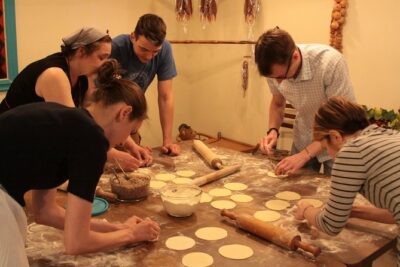 ★ 5.0Cook True Ajarian Khachapuri and Khinkali in Highlanders StyleFrom $3993 reviews
 ★ 5.0Maia and Nina’s Magic KitchenFrom $7049 reviews
 ★ 4.5Taste of Kakheti: Wine Tour Bread Baking & Churchkhela WorkshopFrom $1946 reviews
 ★ 5.0Nana’s Kitchen – traditional Georgian cooking class at real Georgian family homeFrom $11037 reviews
 ★ 5.0Join a Local for a Market Tour, Cooking Class and Meal in her Tbilisi HomeFrom $18915 reviews
 ★ 5.0Kakheti Wine Tour with 20+ Wine Tastings & Qvevri MasterclassFrom $1478 reviews
 ★ 5.0Taste of Georgia. Cooking-Class Khinkali, Khachapuri and moreFrom $987 reviews
Browse the lists this tour appears in