
REVIEW · TUSHETI & KHEVSURETI TREKS
Trekking Tour from Tusheti to Khevsureti via Atsunta Pass
Stone villages meet high mountain passes. This 6-day trek across the Greater Caucasus strings together Tusheti’s medieval stone communities and Atsunta Pass panorama in a way that feels remote and real. I like that you get a mix of guided history on the way, then real wilderness hiking where it’s just you and other hikers. I also like the pacing, long enough to matter, but guided so you are not constantly wondering where to step. One consideration: you are walking about 72 km total and the highest point hits over 3400m, so you need strong fitness and comfort with camping nights.
I still think the best part is how quickly the vibe changes. You start with guesthouses and towers, then you shift to a shepherd-trail feel with tents, basic camp setup, and big altitude moments. Expect a tour style that is practical and outdoorsy, not a luxury walk with frequent comforts.
If you are the kind of traveler who likes stone villages, clear trail logic, and days that end with sore legs and clean mountain air, you will probably love this. If you want lots of town time or quiet, easy grades every day, this is not your trek.
In This Review
- Key highlights to know before you go
- Tusheti to Khevsureti: why this route feels different
- Day 1 Omalo and Keselo Towers: the mountain drive intro
- Days 2 and 3 in Tusheti: Dartlo, Kvavlo, Chesho, Parsma, Girevi
- Dartlo to Kvavlo (Day 2)
- Up the Pirikiti Alazani gorge to Girevi (Day 3)
- Day 4 At the Atsunta gorge camp: where comfort drops away
- Day 5 Atsunta Pass at 3431m and the Khidotani ridge night
- Day 6 Mutso to Shatili: tower forts and the ride home
- Sleeping, food, and the real comfort level you should expect
- Fitness and altitude: what will actually make or break your week
- Price and value: is $1,620 worth it for your style?
- Who this trek suits best, and who should skip it
- Should you book this Tusheti to Khevsureti trek
- FAQ
- What time and where does the trek start?
- Where does the trek end?
- How long is the trek?
- What is the minimum age?
- How much hiking is involved?
- Do I need a passport for this trip?
- What lodging and camping are included?
- Is trekking gear provided?
- Are meals included?
- How big is the group?
Key highlights to know before you go
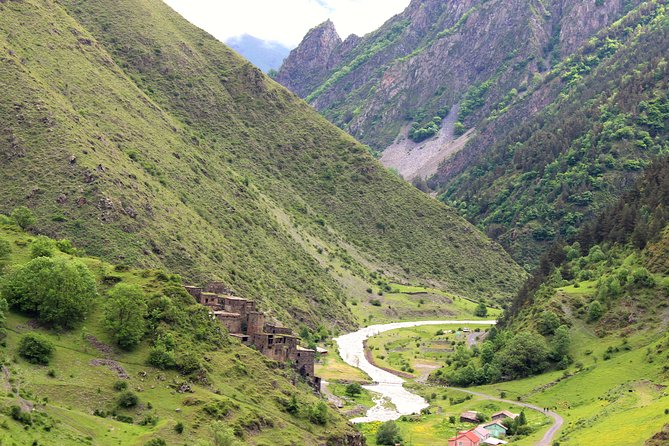
- Atsunta Pass views at 3431m with a snack stop and wide-open sightlines
- Stone village circuit in Tusheti, including Omalo, Dartlo, Kvavlo, Chesho, Parsma, and Girevi
- Three days in the high country feel with no huts and no people beyond hikers
- Camping setup included, plus horses to help move luggage
- Shatili and Mutso fortress areas, with dramatic tower buildings above narrow gorges
- Small group size (up to 15) and expert local guiding to keep the trek smooth
The long way in: more Tusheti and Khevsureti crossings
Tusheti to Khevsureti: why this route feels different
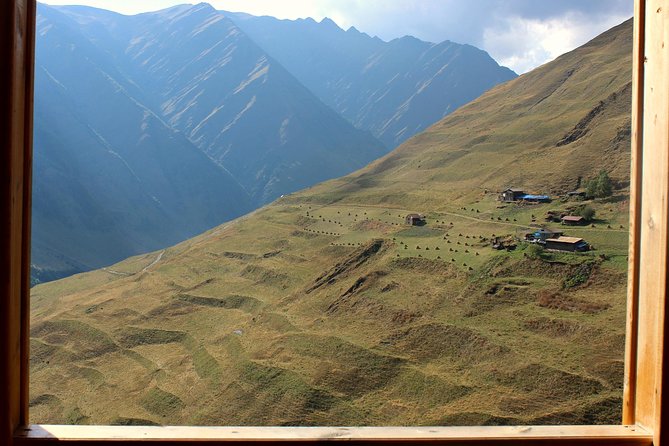
This trek is built around a big geographic switch. You begin in Tusheti, a high and rugged corner of Georgia where villages cling to slopes and stone towers act like landmarks. Then you cross the Atsunta Pass around 3400m and drop into Khevsureti, where the walking eases and the villages look even more defensive, especially in Shatili.
What makes it special is the blend of cultural stops and genuine backcountry time. You get to see and walk through medieval stone settlements like Omalo and the village cluster around Dartlo and Girevi. After that, the tour shifts into a more wilderness mode where there are no huts and very few signs of human life. That contrast is not just scenic, it changes how your day feels, from exploring to focusing on route and rhythm.
Another reason it stands out is the guided logistics. You get 4WD transfers from Tbilisi to the trail region, and your end is handled by vehicle from Mutso to Shatili and then back to Tbilisi. That reduces the usual headache of multi-day treks where you spend the first day just figuring out transport.
Day 1 Omalo and Keselo Towers: the mountain drive intro
Your day starts in Tbilisi at the Giant Bicycle monument in Rose Revolution Square, with a 9:00 am start. You meet your group at the hotel and then you drive toward Tusheti. The road is mountainous, and you cross a pass at 2850m along the way. After about 6 hours of driving, you reach Omalo and then explore Omalo and Keselo Towers.
I like this opening because it teaches you the lay of the land without rushing you. You are not thrown immediately into strenuous hiking. Instead, you get an arrival moment in a place where stone towers actually make sense. Even the walking around Omalo helps you understand Tusheti’s layout, before you start the longer trail days.
The drawback is that you are still doing a long day right after travel. Ten hours is listed for the day, and while part of that is driving and exploration, you should plan on being ready to move with limited downtime.
Days 2 and 3 in Tusheti: Dartlo, Kvavlo, Chesho, Parsma, Girevi
Tusheti is where the trek gets its strongest “story.” You hike between villages that still feel like they were built for defense, not comfort. Expect stone houses, tower structures, and viewpoints over deep river ravines.
Dartlo to Kvavlo (Day 2)
You start in the morning hiking toward Dartlo in the Pirikiti Tusheti valley. Dartlo is described as recently renovated and typical of Tusheti’s medieval stone style, with defensive buildings. From there you continue toward Kvavlo, which has mostly ruined towers and houses.
The hiking detail that matters here is the slope and time. The one-way segment is 3.2 km, with an ascent of about 400m, and it takes around 2 hours one way. In plain terms: this is not a flat stroll. You will feel it in your calves, but it is manageable if you pace.
Why it’s worth it: you are walking from a living village fabric into remnants that still give you the sense of how this region worked long ago. You get views over the Alazani river and surrounding mountains, and the ruins help you read the terrain.
Other walks, from Gveleti Falls to the Atsunta pass
- David Gareji and Real Rainbow Mountains Off-Road adventure + hike★ 5.0 · 129 reviews
- 8-Day Trekking Group Tour in Svaneti★ 5.0 · 21 reviews
- Kazbegi Tour with Gergeti Church, Waterfall Hike & Hidden Gems★ 5.0 · 19 reviews
- 3-Day Hiking Group Tour in Kazbegi★ 5.0 · 14 reviews
- Kazbegi Adventure Day Trip – Hike to Gveleti waterfall plus Gergeti, Ananuri★ 5.0 · 7 reviews
Up the Pirikiti Alazani gorge to Girevi (Day 3)
Day 3 continues upstream along the Pirikiti Alazani river through a narrow gorge. You visit Chesho and Parsma first, with houses and stone towers. After that, you take a narrow walking path until you reach Girevi.
This day is the bridge between “village trek” and “high-country trek.” You start with visible settlement and then you transition into trail sections that feel more like shepherd routes than village access roads. The scenery and the narrow gorge shape are the point: you feel the walls close in, then you feel space open up again as you near the next camp area.
Day 4 At the Atsunta gorge camp: where comfort drops away
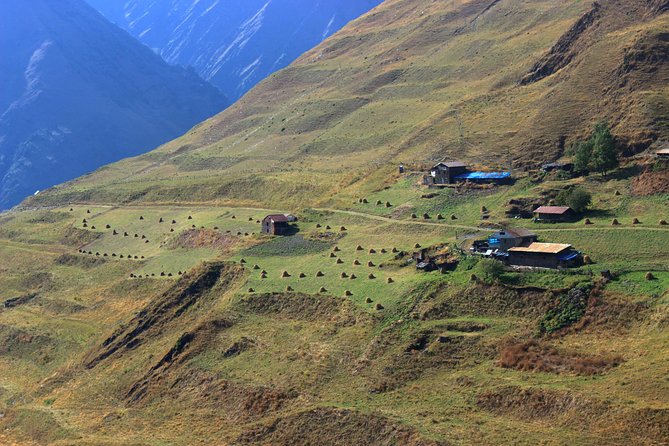
Day 4 begins after breakfast with the trek’s hardest stretch so far. You hike through the narrow gorge above Girevi, cross small mountainous rivers, and pass the ruined village Chontio. You then stop near Kvakhidi, where you camp in open green fields and alpine meadows.
This is one of the most praised aspects of the whole trip style: the “human scale” disappears. The tour description makes it clear that for the wilderness portion, there are no huts and no humans except hikers. That matters because it turns your priorities into hiking basics: good footing, steady pace, and efficient camp routine.
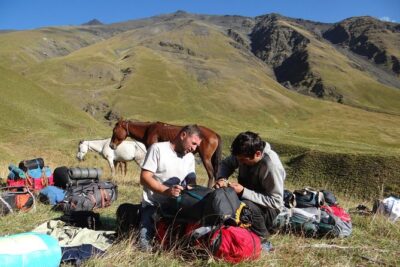
Your setup includes basic camping equipment like tents, sleeping bags, and sleeping mats, plus cooking gear. Also, horses handle luggage transportation, so you are not carrying everything on your back. You still hike, but you are not doing full pack hauling the way many self-guided treks do.
One consideration: this is the point where you should be emotionally ready for simpler accommodations. Guesthouses were part of the start, but here you are living in a campsite rhythm.
Day 5 Atsunta Pass at 3431m and the Khidotani ridge night
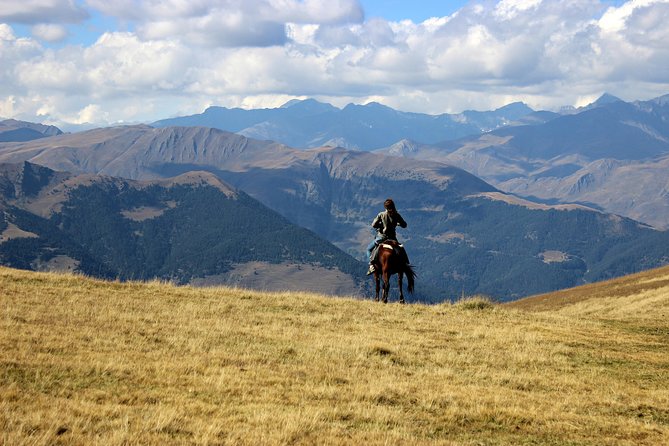
Day 5 is your big altitude day. You start early hiking up to the highest point of the trip and reach Atsunta Pass at 3431 meters. You stop for snacks there, with panoramic views over alpine meadows and mountains.
Then you descend into the Khidotani ridge, where you camp again in open alpine meadow. This combination, climb to a high point then drop to another camp zone, keeps the day from feeling like one long grind with no payoff. The snack and pause at the pass are not just a photo break. They give your group a timing checkpoint and help you take in the views while you are still fresh enough to enjoy them.
Practical tip from how this trek is structured: at 3431m, your breathing and effort levels feel different. The hike is guided, but you still need to follow your own pace. If you sprint the first part of the ascent, you will pay for it later.
Even the descent is part of the experience. You are changing environments, from pass air and open sky to ridge terrain that feels more sheltered. That shift is why the day feels long on paper, but satisfying in reality.
Day 6 Mutso to Shatili: tower forts and the ride home
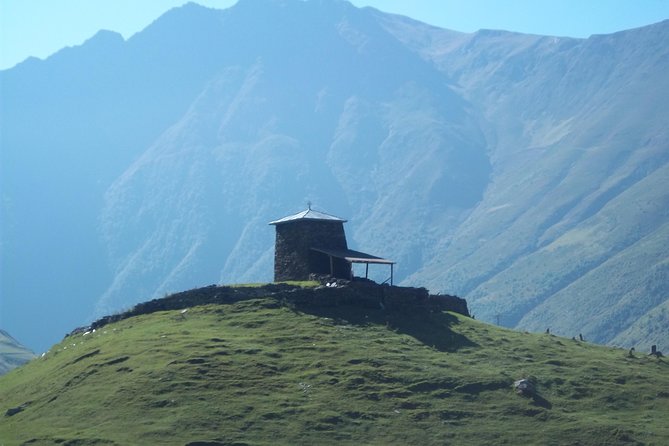
Day 6 shifts back toward village energy, and it does it with a strong visual payoff.
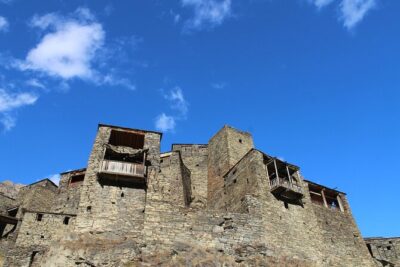
You start by hiking down through a narrow gorge to reach the first inhabited areas in Khevsureti. After passing village Khone, you walk to Mutso. Mutso is largely abandoned, but it still amazes with its towers and its architectural style. There is also a Mutso fortress complex that has been renovated, and the tour includes a detour to hike 2 km to the fortress.
Near Mutso, your transport waits for you. You drive from the Mutso area to Shatili, and then continue on to Tbilisi.
The Shatili part matters because the tour doesn’t just say towers. It emphasizes the dramatic positioning, with defensive medieval complexes built on rocky ground above narrow gorges. Even if you are not a medieval architecture super-fan, you will get why these places were hard to attack. The setting does the convincing.
By the end of the day, you are back at the meeting point area in Tbilisi, so you do not need to arrange your own final transfer.
Sleeping, food, and the real comfort level you should expect
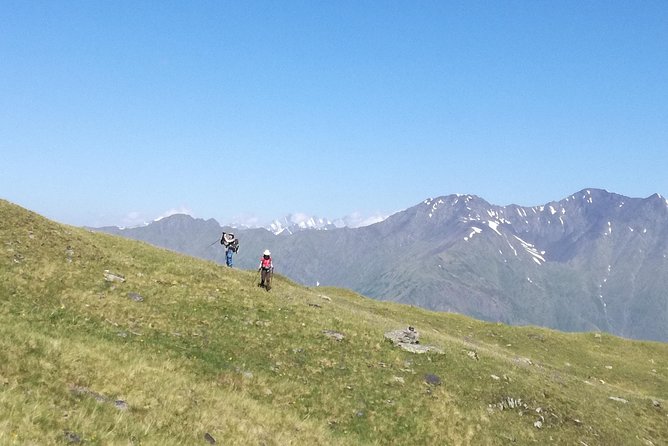
This trek includes a mix of guesthouses and camping, and it’s worth understanding the comfort level in advance.
You get four overnights with different facility types:
- Omalo: guesthouse with private facilities
- Dartlo: guesthouse with shared facilities
- Girevi: guesthouse with shared facilities
- Shatili: guesthouse with shared facilities
For the high-country days, you camp with basic equipment including tents, sleeping bags, sleeping mats, and cooking gear. Horses transport luggage, which helps your body stay focused on the hiking rather than heavy hauling.
Food is also planned. You have breakfasts for 5 days, lunch for 6, and dinners for 6 included. Drinks are not included, so plan for water and other beverages to come out of your own budget.
One small but important detail: trekking gear like backpack and trekking poles is not included. If you do not already own poles and a solid pack, factor that cost in before you book.
Fitness and altitude: what will actually make or break your week
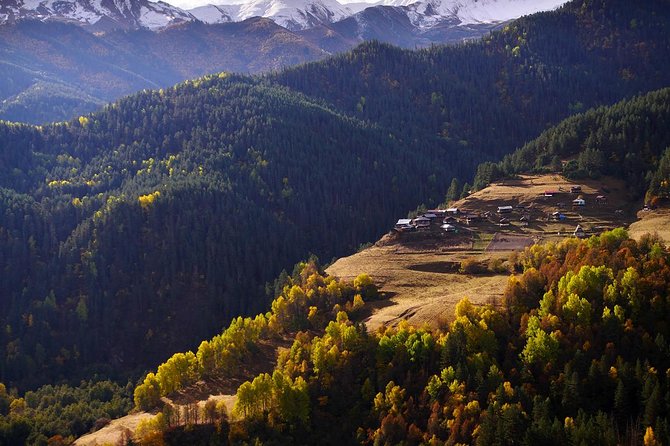
The tour data is blunt in the right way: you should have a strong physical fitness level, and there is 72 km of walking over about 6 days. Each day is listed at around 10 hours, so you need stamina, not just one or two strong hiking days.
Also plan for altitude. You cross a pass at 2850m on the drive day. Then you climb to 3431m at Atsunta Pass, and the trek crosses the pass area around 3400m overall.
You do not need mountain-climbing skills for this based on the info provided, but you do need hiking confidence: uneven ground, steep sections, and long walking hours.
If you are considering this with knee issues or low endurance, be honest. This is not the trek to “tough it out” without preparation.
Price and value: is $1,620 worth it for your style?
At $1,620 per person for an approximately 6-day trek, you are paying for a full support system plus a very specific remote route. For value, look at what is included, not just the number.
You are getting:
- Expert leadership from experienced adventure guides
- 4WD transfers from Tbilisi into the Tusheti region
- Vehicle transport at the end, from Mutso to Shatili to Tbilisi
- Fuel surcharge
- Multiple guesthouse nights and camping gear
- Horses for luggage transportation
- Meals across the trek: breakfasts, lunches, and dinners
- Group discounts (when applicable) and a mobile ticket
Not included is also clear: drinks, the last night in Tbilisi, and trekking gear like backpack and poles.
Compared to doing this route on your own, the biggest value is the friction removal. Getting into Tusheti, arranging multi-day accommodation types, organizing basic camp equipment, and keeping luggage manageable are the pieces that usually turn a “nice idea” into a logistical mess.
So, for the right traveler, this price can make sense. It is not a bargain price, but it is also not random pricing. You are buying the structure that lets you focus on hiking and the experience.
Who this trek suits best, and who should skip it
This tour is built for hikers who like:
- Medieval stone villages and mountain-town atmosphere
- Long hiking days, with a mix of climbs and descents
- Backcountry camping time with guided support
- Small-group energy, max 15 travelers, min age 14
It may not suit you if:
- You want daily comfort upgrades like private bathrooms every night
- You prefer short hikes or mostly flat walking
- You dislike camping nights, even with provided gear
Solo hikers can fit well too, because the group size stays small and the tour includes full support logistics. The included guide team is a big part of how the trek works smoothly.
Should you book this Tusheti to Khevsureti trek
I would book it if you want a Georgia trek that has both culture and real wilderness time. The Atsunta Pass moment and the shift from village life into hut-free camping days are the core reasons to choose this route. You also get a strong ending with Mutso and Shatili’s tower complexes, which is the kind of scenery that sticks.
I would think twice if you are chasing a light walking vacation. With 72 km of hiking, long days, and major altitude, this is a serious trek week.
If you do book, go prepared with a strong walking plan, decent gear (especially a pack and trekking poles if you need them), and a mindset that says yes to long days and simpler nights in the high country.
FAQ
What time and where does the trek start?
The tour starts at 9:00 am at the Giant Bicycle monument, Rose Revolution Square, Tbilisi, Georgia.
Where does the trek end?
The activity ends back at the same meeting point in Tbilisi.
How long is the trek?
The duration is 6 days (approx.).
What is the minimum age?
The minimum age is 14 years.
How much hiking is involved?
The tour includes 72 km of walking in total.
Do I need a passport for this trip?
Yes. You must provide passport name, number, expiry, and country at booking, and you need a current valid passport on the day of travel.
What lodging and camping are included?
You get guesthouse overnights in Omalo, Dartlo, Girevi, and Shatili (private facilities in Omalo, shared facilities in the others), plus camping for the high-country part. Camping basic equipment is included.
Is trekking gear provided?
No. Trekking gear such as your backpack and trekking poles are not included.
Are meals included?
Yes. Lunch (6), breakfast (5), and dinner (6) are included. Drinks are not included.
How big is the group?
The tour has a maximum of 15 travelers.
More Georgian Tours We Have Read Closely
Everything Else Across the Caucasus
The Long Way Into Tusheti
Other Georgian tours we have been through, from the Black Sea to the Kakheti vineyards
- Private Adorable City Tour of Tbilisi
★ 5.0 · 3 reviews - Tbilisi Airport to Gudauri, Bakuriani, Batumi, Tbilisi
★ 5.0 · 3 reviews - Private Wine Tour In Kakheti Region with 7 Wines and Lunch
★ 5.0 · 3 reviews - Two Capitals in One Day: Tbilisi and Mtskheta Combo Tour
★ 5.0 · 3 reviews - Private Effortless transfer from Tbilisi to Gudauri ski resort
★ 5.0 · 3 reviews - Tbilisi to Gudauri Stepantsminda Private Transfer
★ 5.0 · 3 reviews
Tusheti & Khevsureti Treks, compared.
 ★ 5.03 Day Tusheti Tour Explore Unspoiled WildernessFrom $33528 reviews
 ★ 5.0day trip to Shatili, Khevsureti, Mutso, Ananuri.From $15021 reviews
 ★ 5.0Five days tour to Khevsureti (Abudelauri lakes) & Kazbegi with hikes.From $10014 reviews
 ★ 4.57-day hiking expedition to Tusheti through the Atsunta passFrom $1,1903 reviews
Browse the lists this tour appears in