
REVIEW · MTSKHETA & JVARI MONASTERY
Tbilisi & Mtskheta city tour
Tbilisi hits fast, then keeps getting better. This Tbilisi and Mtskheta city tour stitches together dramatic viewpoints and two of Georgia’s biggest spiritual sites, with plenty of time to look around instead of just rushing through. The cable car time, old-town walks, and the Mtskheta river panorama are the kind of mix that helps you understand the geography and the faith behind it all.
Two things I really like: you get a cable car perspective early, then another set of aerial views from hilltop spots, so your brain builds a map quickly. I also love how the tour connects Tbilisi’s origins and old neighborhoods to Mtskheta’s status as a major Christian center, so it feels like one story, not two separate stops.
One possible drawback: the timetable is tight enough that it works best if you’re comfortable with some stairways and viewpoint walking. Also, only one stop’s admission is included, and the botanical garden entry is extra, so check your budget before you go.
In This Review
- Key highlights you should not miss
- Cable car up Mtatsminda: the fastest way to master Tbilisi
- Botanical Garden of Georgia: 30 minutes of plants plus city views
- Narikala Fortress: free admission, old Tbilisi from above
- Peace Bridge down to Abanot Ubani: walking into old-town Tbilisi
- Holy Trinity Cathedral: modern Georgia ends the Tbilisi chapter
- Jvari Church above Mtskheta: the river meeting panorama
- Svetitskhoveli Cathedral: four sanctities you can actually see
- Price and pace: is $54 good value for 5 to 7 hours?
- Pickup, meeting point, and how the day runs without stress
- Who this tour suits best, and who might want a different plan
- Should you book this Tbilisi and Mtskheta tour?
- FAQ
- How long is the Tbilisi and Mtskheta city tour?
- Is pickup available, and where does the tour start and end?
- What language is the tour offered in?
- Which stops include admission, and which are free?
- Is this tour private or shared with other groups?
- Can I cancel for a full refund?
Key highlights you should not miss
- Cable car views on Mtatsminda: you rise above Tbilisi and get big orientation fast.
- Botanical Garden variety: global plants and flowers with city-overlook views.
- Narikala Fortress viewpoints: old Tbilisi from 500 meters up, with free admission.
- Abanot Ubani stroll: an older district feel, plus waterfall views as you walk.
- Mtskheta river confluence at Jvari: wave-like hills and Aragvi meeting Mtkvari.
- Svetitskhoveli Cathedral relics: four major Orthodox sanctities inside.
More of Mtskheta and the Jvari hill above the confluence
Cable car up Mtatsminda: the fastest way to master Tbilisi
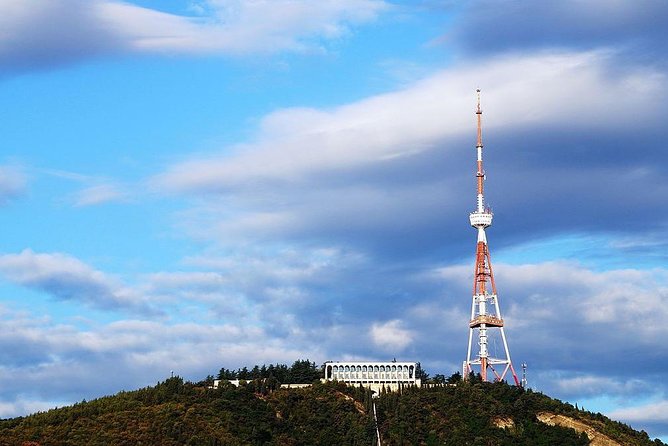
The tour starts by lifting you up toward Mtatsminda Amusement Park on a cable car. Mtatsminda sits roughly 380 to 600 meters above sea level, and that height makes a difference fast. From the cable car ride, you start seeing Tbilisi expand below you, with “wow” views starting almost immediately.
Once you arrive at the top area, you get about 30 minutes here, and the admission ticket for the amusement park part is included. Even if you do not care about rides, this stop is really about getting your bearings. From above, Tbilisi’s hills and the way the city spreads become obvious in a way that street-level wandering cannot quite match.
If you want a practical tip: bring something light you can layer. Cable car areas can feel cooler when you are above the city, and you will be glad you are not stuck in one temperature all day. Also, keep your camera ready during the ride, not just after you reach the top.
Botanical Garden of Georgia: 30 minutes of plants plus city views
Next up is the National Botanical Garden of Georgia, set around 500 meters above sea level. This is the point in the day where the tour shifts from city scale to a calmer pace. You get about 30 minutes, and the garden is known for plants and flowers from around the world.
One detail to plan around: botanical garden admission is not included. So if you are watching costs closely, treat this stop as an added expense and keep a little extra cash or card on hand.
What makes this garden stop worth your time is the view and the variety in one place. You are not just looking at greenery, you are looking down toward the city while you do it. It is a nice reset before you head to fortress steps and church interiors.
If you enjoy gardens, aim for the parts where the paths give you both plant views and wide city sightlines. With only half an hour, you want your steps to do double duty.
Narikala Fortress: free admission, old Tbilisi from above
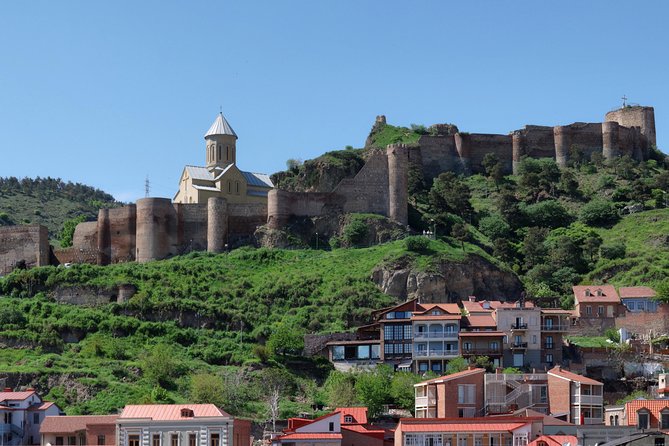
After the garden, the tour heads to Narikala Fortress. This fortress was established in the 4th century and expanded in the 11th century, including work in the era of King Davit Agmashenebeli. It sits around 500 meters above sea level, so it naturally rewards you with long sightlines over old Tbilisi.
The best part here is simple: admission is free, and you still get a meaningful historical viewpoint. About 30 minutes is enough time to walk to a couple of angles where the city layout and old quarter feel present. You will also likely notice the contrast between modern streets and the older shapes below.
The one consideration is comfort. Fortress areas tend to mean uneven ground and stairways. If you are traveling with limited mobility or you do not love steep climbs, wear supportive shoes and go slow. The payoff is worth it if you like photo views and layered centuries in one place.
Peace Bridge down to Abanot Ubani: walking into old-town Tbilisi
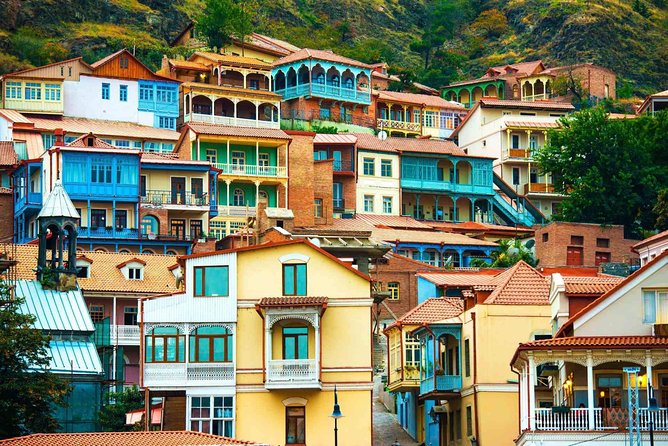
The mid-tour magic move is how you descend. You go down by cable car toward the city center, reaching the area called European Square, then you walk through Abanot Ubani. This district is described as one of Tbilisi’s oldest neighborhoods, and it is the kind of place where the vibe feels older than the surrounding streets.
You also get the Bridge of Peace stop, and that part is free. The way the tour strings together viewpoint descent plus an old-district walk is smart. It helps you stop thinking of the city as one big skyline photo and start seeing it as neighborhoods with character.
Expect around 30 minutes here. That is enough to absorb the “17th to 18th century Tbilisi” feel described for this area, and to look for the waterfall aspect while you walk. It is not a long stay, but the goal is atmosphere and orientation, not an all-day wandering session.
If you want the best experience, do not treat this as just a transit moment. Take a slow pace. Look back uphill after you cross into Abanot Ubani, because you can often line up fortress and old-town angles in your mind.
Other city days, Tbilisi and Batumi included
- Kakheti;City of Love Sighnaghi, Bodbe. KTW. Wine House Group tour★ 5.0 · 376 reviews
- Day tour to Chronicles of Georgia, Gori city, Uplistsikhe cave★ 5.0 · 86 reviews
- Tbilisi city tour PRIVATE excursion Airport and hotel pickup INCL★ 5.0 · 68 reviews
- Tbilisi City Tour, Most Popular Tourists Destinations In The Capital Of Georgia★ 5.0 · 58 reviews
- Tbilisi City Pub Crawl★ 5.0 · 57 reviews
Holy Trinity Cathedral: modern Georgia ends the Tbilisi chapter
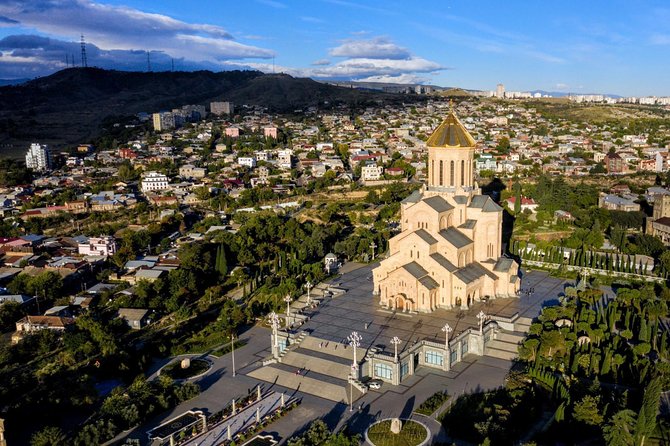
After Abanot Ubani, the tour finishes its Tbilisi side at Holy Trinity Cathedral. This is a new building, and it is described as the third biggest Orthodox cathedral in the world. Construction started in 1995 and finished in 2003, and the design idea is tied to Georgia’s long Christianity story, including 1500 years of autocephalous status and about 2000 years of Christianity.
You get about 30 minutes at the cathedral, and admission is free. This stop works well as a “wrap-up” because it balances the older fortress and old districts with a big statement of modern faith. Even if you are not a cathedral person, it helps you understand why these places matter to locals.
Dress code and entry rules are not stated in the tour details you provided, so I suggest bringing something modest just in case. If you can cover shoulders and knees, you will feel safer moving through religious spaces without delays.
Jvari Church above Mtskheta: the river meeting panorama
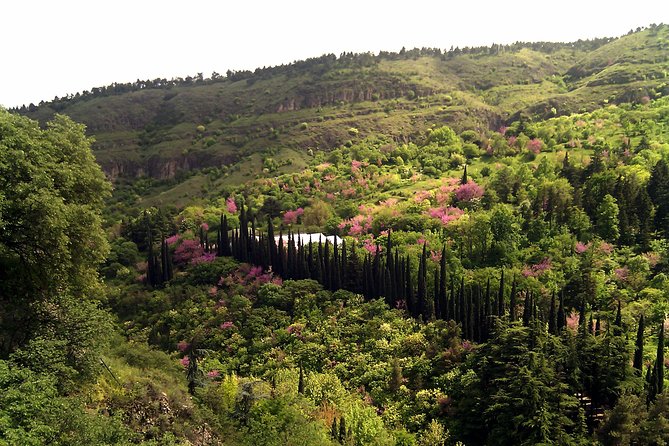
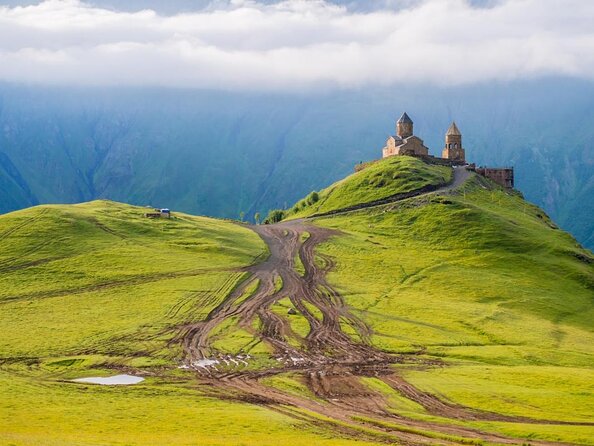
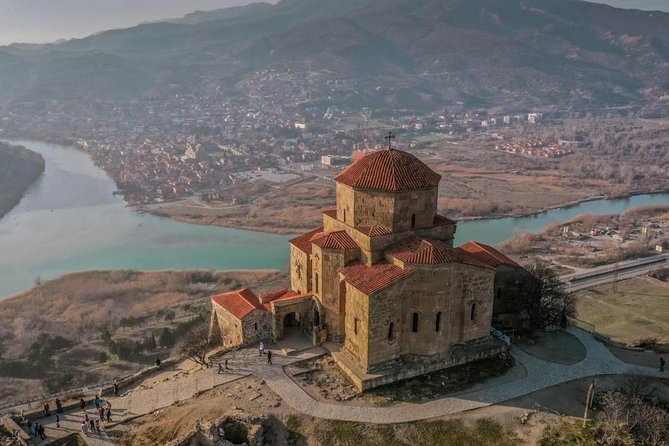
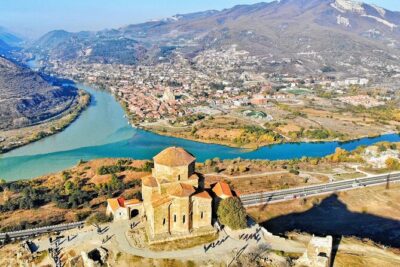
Then you shift from Tbilisi to Mtskheta. Before you reach the core city sights, you visit Jvari Church and monastery, which overlooks Mtskheta from a mountain. The church and monastery story connects to Georgia’s early Christianity. The monastery construction is said to have started soon after Christianity was accepted in Georgia, and it is described as beginning in the 4th century, with the main big church built in the 11th century.
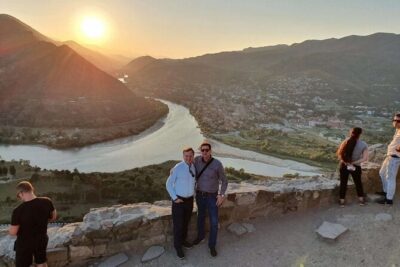
The big reason to go here is the panorama. You get magical views of wave-like mountains and the city of Mtskheta, plus the dramatic spot where two rivers meet: Aragvi and Kura (also known as Mtkvari). Admission is free, and you get about 30 minutes, so the goal is to take in the viewpoint first, then move into any areas you are allowed to access without rushing.
This is one of those stops where you can do more than take photos. Standing at Jvari helps you understand why Mtskheta mattered historically. Rivers define settlements. This is where geology meets faith and power in a way that is easy to feel even if you do not know every detail.
Wear shoes you trust on slopes and rocky edges. The views are the reward, but footing is how you get them.
Svetitskhoveli Cathedral: four sanctities you can actually see
Next is Svetitskhoveli Cathedral, the main church stop in Mtskheta. Mtskheta is mentioned in historical documents from 2000 to 3000 years ago, and it is described as being densely populated from the 3rd to 4th century BC. The cathedral construction started in 1010 and ended in 1029, which makes this stop feel anchored in medieval Georgia.
You get about 1 hour here, and admission is free. This is the longest stop in the tour, and it makes sense because Svetitskhoveli is where the tour becomes more than a scenic day. The cathedral is described as housing four great sanctities of the Orthodox world:
1) the Mantle of Isaiah the prophet
2) the robe of Jesus Christ
3) a particle of Andrew the Apostle
4) a Wood Cross with small particles where Jesus Christ was cast
Those are specific items, and they are exactly the kind of detail that turns “nice church” into “I understand why people make this journey.” Even if you do not know Orthodox relic traditions, the idea of a single cathedral preserving multiple sanctities explains why Svetitskhoveli draws attention.
Because the cathedral is a living religious site, expect to follow local rules for behavior and movement. Keep your voice low. If a guide gives you instructions on what areas you can enter or where you should stand, follow it closely so you do not slow down the group.
Price and pace: is $54 good value for 5 to 7 hours?
At $54 per person for a 5 to 7 hour tour, this is priced like a practical starter tour for first-timers. You are not just ticking boxes. You are getting multiple altitude-based perspectives in one day, and you are also getting the big day trip tie-in to Mtskheta, which most people would struggle to combine independently without a car and planning.
Value comes from two places. First, the tour includes cable car time and the Mtatsminda amusement park admission ticket. Second, it layers in major sights that are free to enter: Narikala Fortress, Bridge of Peace, Holy Trinity Cathedral, Jvari Church, and Svetitskhoveli Cathedral are all listed as free (except the botanical garden).
Pace is brisk but not reckless. Most stops are about 30 minutes, then you get a full hour at Svetitskhoveli. That pattern keeps you moving while still allowing real time at the most important site.
Where you need to do a small bit of math is the botanical garden ticket. If you add that cost, your all-in price will be higher than $54. But if you enjoy plants, it still makes sense, because you get global specimens plus city views in one compact block.
Pickup, meeting point, and how the day runs without stress
This tour offers pickup, and that matters a lot on a first visit. You can be picked up from your hotel in Tbilisi, from Tbilisi International Airport, or from a meeting point arranged the day before. The tour starts in Old Tbilisi and ends back at the meeting point.
It is also private, meaning only your group participates. That typically translates into less waiting, fewer mixed pacing issues, and more time for questions. The tour is offered in English, and you get a mobile ticket.
Near public transportation is listed as a plus. Even with pickup, this is helpful if you decide to meet at the start yourself, or if your schedule changes a bit.
One more small planning note: service animals are allowed, which can help you plan if you need that accommodation. And you will get confirmation at booking, which helps reduce pre-trip uncertainty.
Who this tour suits best, and who might want a different plan
This tour is ideal for you if:
- you want a first-timer overview of Tbilisi plus a strong Mtskheta day
- you like viewpoints and want to build a mental map quickly from hills and cable car angles
- you enjoy church art and historical details, especially at Svetitskhoveli
It might be less ideal if:
- you dislike walking on steep or uneven ground
- you only want one or two big stops and hate “short hits”
- you are allergic to added fees, since the botanical garden admission is not included
The best fit is a traveler who wants structure, doesn’t want to guess logistics, and still wants time to pause and look. You will come away with a clear sense of where Tbilisi sits and why Mtskheta is famous for its faith.
Also, if you are traveling as a couple or small group, the private format makes the day feel tailored even when the itinerary is fixed.
Should you book this Tbilisi and Mtskheta tour?
Book it if you want the smart version of a Tbilisi intro, with cable car viewpoints, fortress history, and the Mtskheta church pair that most travelers remember. The free admissions at many key stops plus the included Mtatsminda ticket helps keep the cost under control, and the 1 hour at Svetitskhoveli gives the day a real centerpiece.
Skip or consider alternatives if you have limited mobility, you hate short stops, or you want a longer deep-dive into just one place. This is a well-paced sampler with two big spiritual stops, not an all-day slow wander.
If you do book, plan for modest clothing for churches, good walking shoes, and a little extra budget for the botanical garden. Do those three things, and you will get a day that feels both efficient and meaningful.
FAQ
How long is the Tbilisi and Mtskheta city tour?
The tour runs about 5 to 7 hours.
Is pickup available, and where does the tour start and end?
Yes. Pickup is offered from your hotel in Tbilisi, from Tbilisi International Airport, or from a meeting point arranged the day before. The tour starts in Old Tbilisi and ends back at the meeting point.
What language is the tour offered in?
The tour is offered in English.
Which stops include admission, and which are free?
Mtatsminda Amusement Park includes an admission ticket. The National Botanical Garden of Georgia does not include admission. Narikala Fortress is free, Bridge of Peace is free, Holy Trinity Cathedral is free, Jvari Church is free, and Svetitskhoveli Cathedral is free.
Is this tour private or shared with other groups?
It is private, so only your group participates.
Can I cancel for a full refund?
Free cancellation is available up to 24 hours in advance for a full refund. If you cancel less than 24 hours before the start time, the amount you paid is not refunded.
More Georgian Tours We Have Read Closely




Everything Else Across the Caucasus

Mtskheta and the Hill Above It
Other Georgian tours we have been through, from the Black Sea to the Kakheti vineyards
- Private Adorable City Tour of Tbilisi
★ 5.0 · 3 reviews - Tbilisi Airport to Gudauri, Bakuriani, Batumi, Tbilisi
★ 5.0 · 3 reviews - Private Wine Tour In Kakheti Region with 7 Wines and Lunch
★ 5.0 · 3 reviews - Two Capitals in One Day: Tbilisi and Mtskheta Combo Tour
★ 5.0 · 3 reviews - Private Effortless transfer from Tbilisi to Gudauri ski resort
★ 5.0 · 3 reviews - Tbilisi to Gudauri Stepantsminda Private Transfer
★ 5.0 · 3 reviews
Mtskheta & Jvari Monastery, compared.
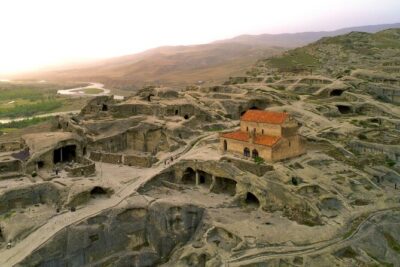 ★ 5.0Day Trip to Mtskheta Gori and UplistsikheFrom $291,801 reviews
 ★ 5.0Mtskheta,Jvari,Bazaar,wine tasting,Chronicles of GeorgiaFrom $20730 reviews
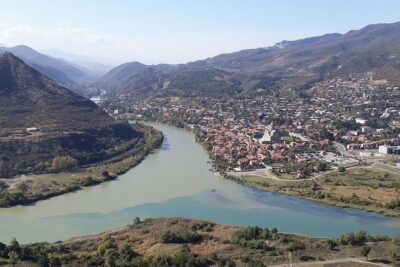 ★ 5.0Mtskheta-Gori-UplistsikheFrom $90112 reviews
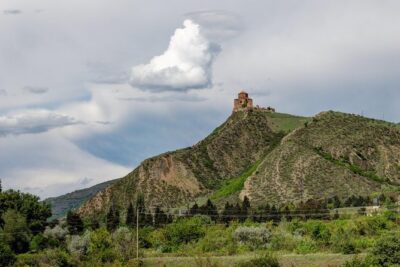 ★ 4.5Mtskheta, Jvari, gori, uflistsikhe, history and panorama (group tours)From $19107 reviews
 ★ 5.0Mtskheta-Jvari-Uplistsike-Chronicle of Georgia, PRIVATE TripFrom $68105 reviews
 ★ 4.5Tbilisi – Mtskheta – Jvari. Full City Tour on Hop On Hop Off BusFrom $4091 reviews
 ★ 4.5Ancient Georgia Group Tour: Mtskheta,Jvari, Gori, UplistsikheFrom $2473 reviews
 ★ 5.0Ancient Mtskheta and Chronicle of Georgia half day tourFrom $6566 reviews
Browse the lists this tour appears in