
REVIEW · GORI, UPLISTSIKHE & THE STALIN MUSEUM
Soviet tour of Georgia – Gori, Tskaltubo, Chiatura, Enguri Dam.
Soviet Georgia hits different in daylight. I like how this tour strings together Stalin-era sites and decaying Soviet towns into a clear, walkable story, starting in Gori and ending with engineering at Enguri Dam. You get real atmosphere, not just photo stops, with time to explore places where nature has moved in. One drawback to consider is that an English-speaking guide is not included, so you may want to request one if you love context and backstories.
This is also a very practical setup. You meet at Rose Revolution Square (8:00 am), your group stays private, and the driver is included throughout. If you are the kind of traveler who likes brutalist concrete, abandoned sanatoriums, and Soviet industrial scale, this itinerary will feel made for you.
In This Review
- Key highlights in this Soviet Georgia itinerary
- Entering the Soviet story from Rose Revolution Square
- Gori, the Stalin Museum, and the art of seeing propaganda as history
- Chiatura’s former mining-town mood
- Tskaltubo sanatoriums: where Soviet care becomes abandoned grandeur
- Enguri hydropower station: Soviet scale in one dome
- How the Svaneti portion changes the feel of the trip
- What the meals and private group format mean for your day
- Value check: does $850 per person make sense here?
- Best fit: who will love this tour, and who might not
- Booking decision: should you book this Soviet Georgia tour?
- FAQ
- FAQ
- What is the price per person for this tour?
- How long is the tour?
- Where do we meet, and when does the tour start?
- Is this a private tour?
- Is pickup included?
- Is an English-speaking guide included?
- What does the tour include for meals?
- Are admissions included for the main sites?
- Is transportation included between areas or airports?
- Are there any weather requirements?
- Is free cancellation available?
Key highlights in this Soviet Georgia itinerary
- Gori’s Stalin Museum for a blunt, hands-on look at Soviet memory making
- Chiatura, former Soviet mining town atmosphere, with time to wander at your pace
- Tskaltubo sanatoriums where abandoned buildings and nature share the same space
- Enguri hydropower station and its dome-shaped dam, built during the Soviet era
- Private tour comfort with pickup offered and you only sharing with your own group
- Optional Svaneti-style hiking add-ons (marked trails, driver waiting, and a Mestia base)
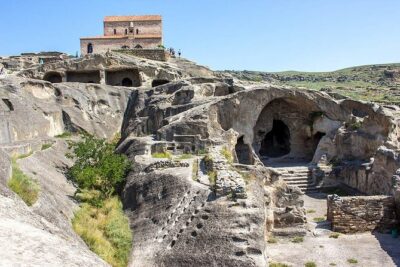
Other runs west to Gori and the Uplistsikhe rock town
Entering the Soviet story from Rose Revolution Square
You start in central Tbilisi, meeting at Rose Revolution Square at 8:00 am. That matters more than it sounds. A strong start point helps you avoid the usual morning scramble, and it sets a calm tone for a trip built around larger-than-life Soviet structures.
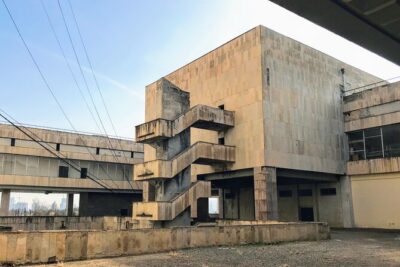
From day one, the tour is about Soviet-era architecture you can actually see and walk around. The plan includes Soviet buildings in Tbilisi, plus time connected to Rustavi. Even if you only catch glimpses, you begin to understand the pattern: big, blunt forms meant to project power, order, and permanence.
The pacing also feels sensible. You have half-day blocks at most stops, not an all-day sprint every day. That gives you enough time to wander, take photos, and still get to the next site without your brain melting.
Gori, the Stalin Museum, and the art of seeing propaganda as history
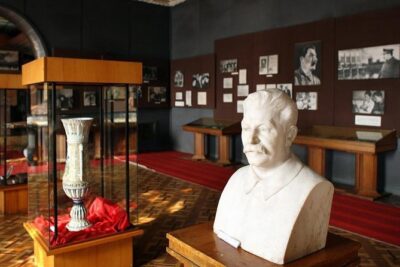
Gori is where Soviet history becomes personal and unavoidable. The centerpiece is Stalin Museum, with admission included. This is not just a museum stop. It’s a place where the Soviet story is framed in a specific way, and seeing that framing matters if you care about how regimes build narratives.
What I like about including this museum is that it provides a reference point for the rest of the trip. Later, when you’re looking at Soviet-style buildings in town or oversized infrastructure in the countryside, you understand the motive behind the concrete. It’s not just aesthetics. It’s messaging.
Practical tip: plan to give yourself room to pause. These kinds of museum displays can feel heavy. If you rush through, you miss the details that explain why certain design choices got repeated across the USSR.
Chiatura’s former mining-town mood
After Gori, the tour moves on to Chiatura, described as a former Soviet mining town. Even with limited time, this kind of stop works because it breaks the rhythm. You are not only looking at monuments. You’re seeing a place shaped by work, industry, and the daily logistics of an extraction economy.
The value here is atmosphere and contrast. Gori gives you Soviet identity through a museum setting. Chiatura gives you Soviet life through infrastructure and town planning style. It’s the difference between a curated story and the everyday leftovers of a system.
One consideration: Chiatura is included as part of a longer day that also reaches Tskaltubo. That means you should pace yourself. If you are the type who loves every staircase and rooftop view, you may wish you had more hours. On the other hand, the shorter window keeps the trip from dragging.
Tskaltubo sanatoriums: where Soviet care becomes abandoned grandeur
Then comes Tskaltubo, and it’s arguably the emotional heart of the Soviet-architecture vibe. You explore abandoned buildings and sanatoriums, with admission free. The plan is flexible too. You choose on site which areas to focus on, since there are so many options in Tskaltubo.
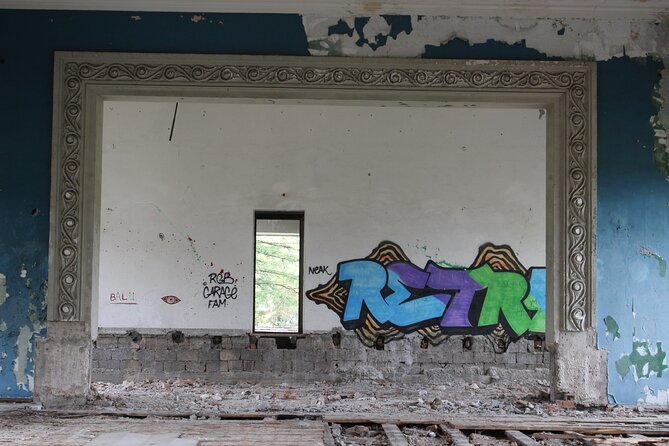
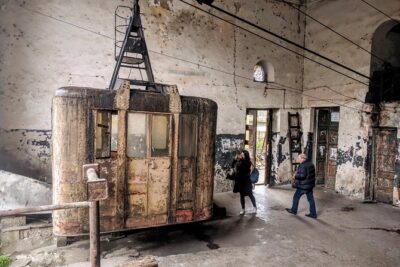
This stop is popular for a reason. Tskaltubo reads like a film set, but it’s real. You get Soviet-era leisure and medical ambitions, then you see what time did to them. Nature takes over details that used to be controlled: corridors, courtyards, and the edges of big institutional spaces.
In my view, this is where the tour earns its keep. The Soviet story becomes tangible. You’re not only looking at ideology. You’re looking at how long systems survive once the funding, staffing, and purpose fade.
Practical tip: go prepared for walking on uneven surfaces and for changing light. These buildings can look dramatically different depending on whether the sun is hitting the facades or hiding them. Also, keep your group logic tight. When you split off to explore, agree on a meeting point and time early.
More rusting cable cars and empty sanatoriums
- 1 Day Private Armenia: UNESCO, Soviet & Curated Family Lunch★ 5.0 · 106 reviews
- Tbilisi old town & soviet heritage – Private driver-guided Tour★ 5.0 · 83 reviews
- Armenia: 1 Day Soviet gems, UNESCO + Family lunch (Small group)★ 5.0 · 68 reviews
- Brutal Tbilisi: Urban exploration and untold stories★ 5.0 · 59 reviews
- Soviet Tbilisi Tour – Off the beaten path★ 5.0 · 45 reviews
Enguri hydropower station: Soviet scale in one dome
On the next day, you head from Tskaltubo to Zugdidi and then visit Enguri hydropower station. Admission is included. The highlight is the dome-shaped dam, noted as one of the highest dome shaped dams.
This is one of those stops that makes you feel small in a good way. It’s hard to fully process dam engineering from a distance. The dome shape is the visual signature, but the real takeaway is how Soviet planning treated infrastructure as a flagship statement. Big utilities were not background. They were proof of capability.
The stop fits well after Tskaltubo. One place shows Soviet ambition through social institutions. Enguri shows Soviet ambition through energy control and national infrastructure. Together, they sketch a fuller picture of how power was distributed, built, and displayed.
One practical consideration: the schedule lists this day as about 6 hours, so it’s not a quick roadside photo stop. You’ll likely have enough time to look carefully, but you should still manage your energy. Bring water and keep breaks short so you don’t lose momentum.
How the Svaneti portion changes the feel of the trip
Here’s the twist in the overall package description. In addition to the Soviet circuit, the broader tour details include a Svaneti-style extension with flights from and back to Tbilisi, and a stay in Mestia. You would stay at Hotel Old House (or an equivalent), with dinner and breakfast included. The hotel location is described as excellent, between 12th-century defensive towers near the ethnographic museum, with strong views.
If this Svaneti segment is part of your booking, you’ll also get two hikes on marked trails. One hike is in Becho gorge to see Ushba waterfalls, and another is to see Chalaadi glacier. The description also says the driver waits while you hike, which is a big deal if you want to move at your own pace.
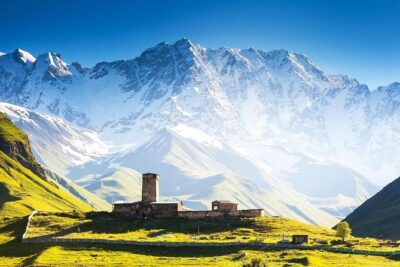
Then there’s Ushguli, a village with views on the Shkhara mountain range. After that, you have a horse riding trip to Qoruldi lakes by default, with the option to switch to a car if you’d rather not ride horses.
If you’re mainly here for Soviet architecture, this mountain time can be a palate cleanser. It turns the trip from concrete decay and industrial scale into working landscapes and dramatic viewpoints. If you love variety, it’s a win. If you want zero hiking and zero horseback riding, you should clarify your exact version before you go.
What the meals and private group format mean for your day
Meals are included in the package details: breakfast (2) and lunch (2), plus dinner. That sounds like standard tour math, but for this specific itinerary it helps you stay focused. When you’re moving between sites like a museum, an abandoned town, and an engineering installation, deciding where to eat can otherwise become a time tax.
The tour is private, meaning it’s only your group. That changes the feel. You can set a pace that matches your curiosity, whether that means lingering in Tskaltubo’s corridors or moving quickly through Tbilisi’s Soviet blocks.
Also, pickup is offered, and you meet and end at Rose Revolution Square. With clear start and finish points, you spend less energy on logistics and more on the actual places.
Value check: does $850 per person make sense here?
At $850 per person, the value depends on how you plan to use your time. If you are traveling independently, you’d need transport, a way to reach less-visited stops, and a schedule that doesn’t waste daylight. This tour bundles those pieces, and it’s also structured around sites that are easier to hit with a driver than on your own.
You also get included admissions at key stops (like Stalin Museum, Enguri hydropower station), plus the tour format itself removes a big headache: coordinating multiple Soviet-era locations across different towns.
Where you might question value is if you only want one or two stops and plan to skip the rest. This itinerary works best when you actually want the full sweep, from Soviet memory in Gori to Soviet decay in Tskaltubo to Soviet engineering at Enguri.
If you are the type who loves details, this price starts to look more reasonable fast. You’re not paying only for transportation. You’re paying for time efficiency and a guided structure that keeps you from missing the places that make the theme click.
Best fit: who will love this tour, and who might not
This tour is a strong match if you are into Soviet architecture, brutalist or industrial visuals, and places where political history has left physical marks. It also suits you if you enjoy slower exploring in atmospheric environments like abandoned sanatoriums.
It may be less satisfying if you expect an always-on, English-speaking guide who fills every gap. An English-speaking guide is not included, though guiding service can be organized on request. If you want constant commentary, plan for that upfront.
The good news is that the driver is included throughout. So even without formal guiding, you’re not stuck alone.
Booking decision: should you book this Soviet Georgia tour?
Book it if you want a focused trip built around Gori, Chiatura, Tskaltubo, and Enguri Dam, and if you like learning through what you see. The structure is practical, private, and theme-driven, and the Tskaltubo sanatorium stop is the kind of experience that makes the whole itinerary memorable.
Think twice or ask questions first if you want heavy interpretation in English without arranging it yourself. Also, if the Svaneti add-on (hikes to Ushba waterfalls and Chalaadi glacier, Ushguli views, and Qoruldi lakes with optional car) is important to you, confirm that your booking includes those components and in what form.
If you’re flexible and curious, this is the kind of tour that turns Georgia into something unexpected: not only beautiful, but also honestly historical, through buildings, institutions, and engineering left behind.
FAQ
FAQ
What is the price per person for this tour?
The price is $850.00 per person.
How long is the tour?
The listed duration is about 4 days. The overall tour description also mentions a private six-day program with five nights.
Where do we meet, and when does the tour start?
The tour starts at Rose Revolution Square, Tbilisi, Georgia at 8:00 am.
Is this a private tour?
Yes. It is private, so only your group participates.
Is pickup included?
Pickup is offered.
Is an English-speaking guide included?
No. An English-speaking guide is not included, but guiding service can be organized upon request.
What does the tour include for meals?
Dinner is included, along with breakfast (2) and lunch (2).
Are admissions included for the main sites?
Admission is included for the Stalin Museum and for the Enguri hydropower station. Other stops are listed as free.
Is transportation included between areas or airports?
Transfers to and from the airports are included, and throughout the tour the driver is included.
Are there any weather requirements?
Yes. The experience requires good weather. If it is canceled due to poor weather, you will be offered a different date or a full refund.
Is free cancellation available?
Yes. You can cancel up to 24 hours in advance for a full refund. Changes or cancellations made less than 24 hours before the start time are not refunded.
Further Into Svaneti


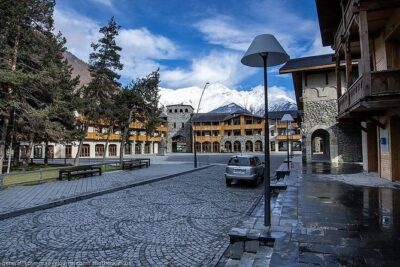
Rust, Concrete and Cable Cars
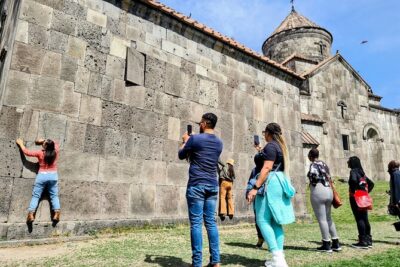

West to Gori and the Rock Town
Other Georgian tours we have been through, from the Black Sea to the Kakheti vineyards
- Private Adorable City Tour of Tbilisi
★ 5.0 · 3 reviews - Tbilisi Airport to Gudauri, Bakuriani, Batumi, Tbilisi
★ 5.0 · 3 reviews - Private Wine Tour In Kakheti Region with 7 Wines and Lunch
★ 5.0 · 3 reviews - Two Capitals in One Day: Tbilisi and Mtskheta Combo Tour
★ 5.0 · 3 reviews - Private Effortless transfer from Tbilisi to Gudauri ski resort
★ 5.0 · 3 reviews - Tbilisi to Gudauri Stepantsminda Private Transfer
★ 5.0 · 3 reviews
Gori, Uplistsikhe & the Stalin Museum, compared.
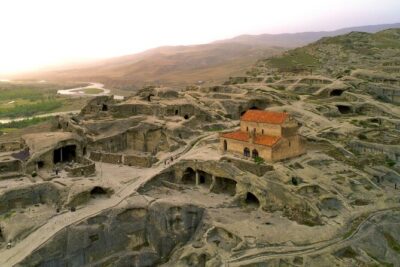 ★ 5.0Day Trip to Mtskheta Gori and UplistsikheFrom $291,801 reviews
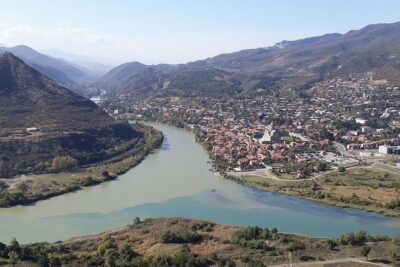 ★ 5.0Mtskheta-Gori-UplistsikheFrom $90112 reviews
 ★ 4.5Mtskheta, Jvari, gori, uflistsikhe, history and panorama (group tours)From $19107 reviews
 ★ 5.0Mtskheta-Jvari-Uplistsike-Chronicle of Georgia, PRIVATE TripFrom $68105 reviews
 ★ 5.0Day tour to Chronicles of Georgia, Gori city, Uplistsikhe caveFrom $3486 reviews
 ★ 4.5Ancient Georgia Group Tour: Mtskheta,Jvari, Gori, UplistsikheFrom $2473 reviews
 ★ 5.0Mtskheta – Jvari + Gori – Uplistsikhe TourFrom $5449 reviews
 ★ 5.0Mtskheta – Gori – Uplistsikhe caves • Private tourFrom $9024 reviews
Browse the lists this tour appears in