
REVIEW · SOVIET HERITAGE, CHIATURA & TSKALTUBO
Brutal Tbilisi: Urban exploration and untold stories
Brutalism, but make it human. This 4-hour urban exploration shows you Tbilisi through Soviet-era architecture and the stories tied to it, from monuments on hills to structures people still use. Two things I really like about it: you get a tight group size and you also learn the context behind the concrete, not just the photos.
You’ll also get a guide who can connect design details to everyday life in Georgia, with stops that many visitors never see. One consideration: this is primarily an adult-focused experience, and you should be comfortable with a “move along and look closely” style of touring, including open-air viewpoints.
In This Review
- Key Points You Should Know Before You Go
- Brutal Tbilisi in 4 Hours, Without the Usual Tourist Loop
- Meeting at the Giant Bicycle and Getting Your Bearings Fast
- Stop 1: Ministry of Highways of the Georgian SSR and the Power of Concrete
- Stop 2: Chronicles of Georgia Monument on the Hill
- Stop 3: The Former Archaeology Museum and the Eerie Side of Modernism
- Stop 4: Maglivi Bridge, Refugee Housing, and a Soviet Student Past
- Stop 5: Nutsubidze Skybridge Walk Between Twin Towers
- Value at $75: What You Get for a Half-Day
- What Makes the Guides Matter on This Tour
- Who Should Book This Brutal Tbilisi Tour
- Should You Book Brutal Tbilisi?
- FAQ
- How long is the Brutal Tbilisi tour?
- What does the tour cost?
- Is hotel pickup included?
- How big are the groups?
- What sites will we visit?
- Are entrance fees included?
- What is included in the price?
- Is lunch included?
- Is the tour suitable for children?
Key Points You Should Know Before You Go
- Small-group format that keeps the pace conversational and photo-friendly.
- Architectural storytelling, from Soviet planning to post-Soviet change.
- Five major stops built around Tbilisi’s brutalist and modernist leftovers.
- Sky-high views at the Nutsubidze Skybridge (walkways suspended about 70 meters up).
- Admission listed as free at the tour’s main sites, so your budget stays predictable.
- Language is English, and the tour is geared for adults.
More rusting cable cars and empty sanatoriums
Brutal Tbilisi in 4 Hours, Without the Usual Tourist Loop
If you think Tbilisi is only about old-town churches and sulfur baths, this tour nudges your eyes in a different direction. It’s designed as an easy half-day, with a mix of walking and short transfers so you can cover big ideas and big structures without burning the whole day.
The schedule runs about 4 hours, and you start and finish at the same place. That matters because it makes planning simpler when you still want time for dinner, river views, or a late-night stroll through the city.
One practical plus is the small group. The highlights say a maximum of six, and the overall cap is listed as 14. Either way, you should feel less lost in a crowd, and more able to ask questions as you go.
Meeting at the Giant Bicycle and Getting Your Bearings Fast
Your tour kicks off at the Giant Bicycle monument near Rose Revolution Square. Starting here is convenient because it’s a central landmark, and the tour is listed as near public transportation.
Expect a city-walk-and-look style. The experience is focused on urban exploration, including hidden alleyways and street art in the mix, so you’re not only staring at buildings from a single angle. Bottled water is included, which is a small detail that still helps when you’re moving between sites in daylight.
Hotel pickup is only mentioned for private tours. So if you’re joining a standard group, plan to meet at the monument and use local transit or a quick taxi ride to get there.
Stop 1: Ministry of Highways of the Georgian SSR and the Power of Concrete
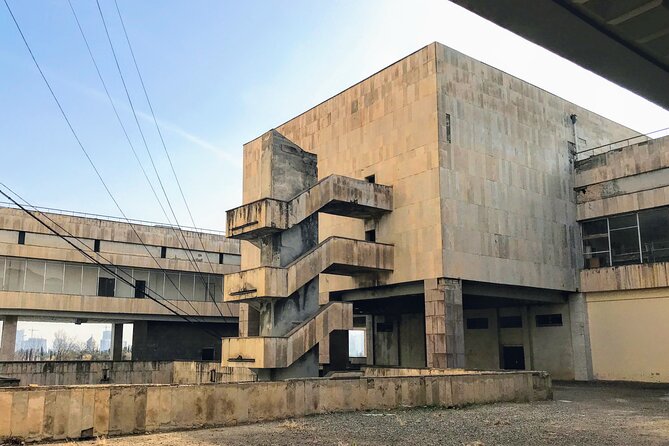
The first major stop is the Ministry of Highways of the Georgian SSR, and it’s a go-to example of Soviet brutalist architecture. This building is all heavy lines, strong geometry, and that signature “honest material” feeling that brutalism is known for.
You’ll spend around 30 minutes here, and admission is listed as free for the visit time. The value of this stop is not just the façade. Your guide is there to help you read the design, why it was built that way, and how Soviet architecture often tried to look like authority made out of stone and steel.
Photo tip, in plain terms: arrive ready to look low and then look up. Brutalist details can be easy to miss if you only shoot straight-on.
Stop 2: Chronicles of Georgia Monument on the Hill
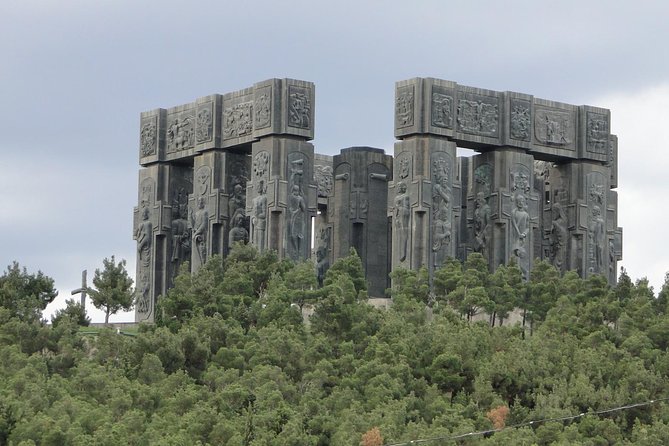
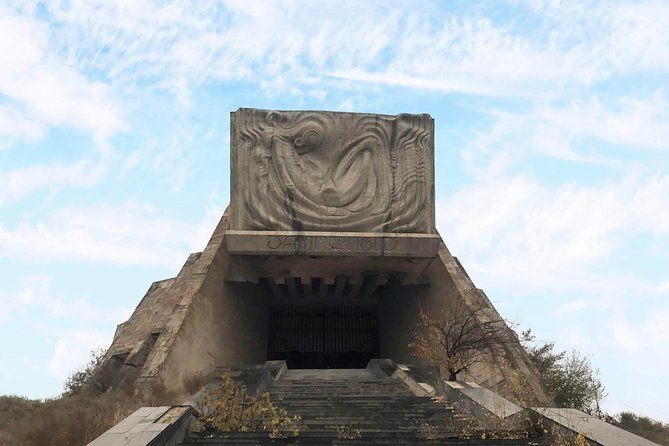
Next you head to the Chronicles of Georgia monument, which sits on a hill overlooking Tbilisi. The setting alone helps you understand the scale, because the monument isn’t meant to feel small or private.
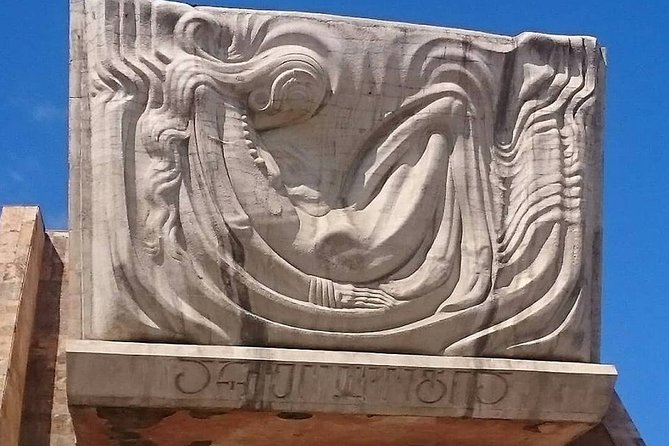
Plan about 45 minutes here, also listed as free for admission. The structure features massive stone pillars with scenes tied to Georgia’s story and mythology, including key moments like the founding of the Georgian state and the country’s conversion to Christianity.
This stop tends to work well if you like architecture that carries meaning. The carvings aren’t just decorative. They’re a visual timeline, and that makes the stone feel like a textbook you can walk around.
A consideration: because this is on a hill and it’s an open-air monument, dress for the weather you’re actually dealing with that day. The tour advises checking current conditions and wearing accordingly.
- Day Trip to Kakheti Wine Region Including 9 Wine Tastings★ 5.0 · 2,774 reviews
- Highlights of Caucasus Mountains-Jinvali,Ananuri,Gudauri,Kazbegi(Group tour)★ 5.0 · 2,682 reviews
- Day Trip to Kazbegi and Gudauri★ 5.0 · 2,009 reviews
- Day Trip to Mtskheta Gori and Uplistsikhe★ 5.0 · 1,801 reviews
- Tbilisi Walking Tour Including Cable Car and Traditional Bakery★ 5.0 · 1,310 reviews
Stop 3: The Former Archaeology Museum and the Eerie Side of Modernism
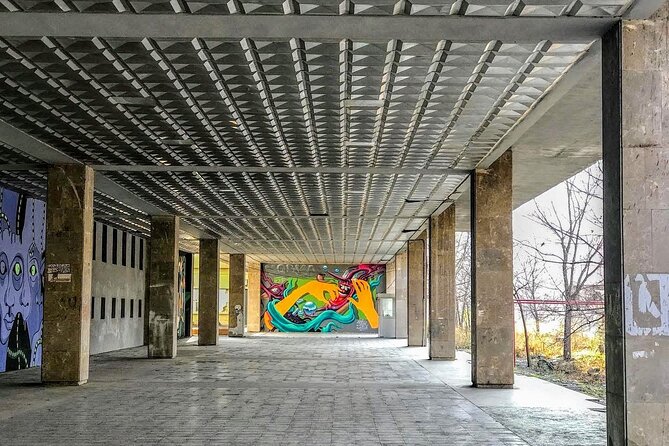
The Former Archaeology Museum is the tour’s mood-shift. Instead of a neat, museum-in-business vibe, you’re looking at an abandoned, grand structure that feels full of silence.
You’ll have about 30 minutes at this stop, with admission listed as free. What makes it interesting is how a building’s original purpose can clash with what it becomes later. That’s a big theme in Tbilisi, especially in the spaces left behind after social and political change.
From the way guides have handled this kind of stop in the past, you can expect a careful pacing so you can take in the scale without feeling rushed. If you’re the kind of person who likes to study a site slowly, this is likely to be one of your favorite stops.
Stop 4: Maglivi Bridge, Refugee Housing, and a Soviet Student Past
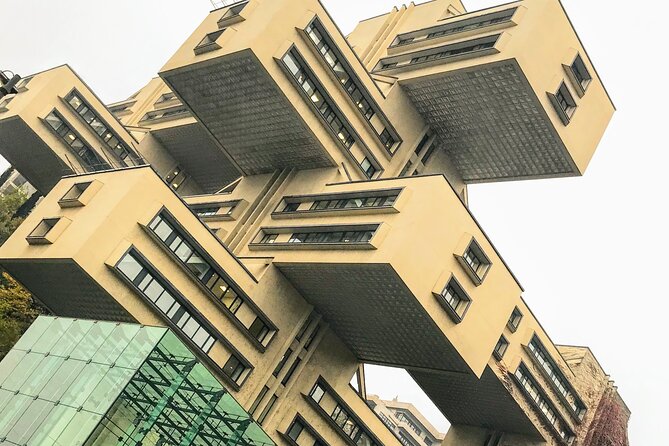
Stop four is the Maglivi Bridge area, and it’s where the tour gets very real. You’ll learn about former dormitories that have now been used as homes for refugees. Those buildings were once a symbol of education and student life, and now they hold a completely different story.
You’ll spend about 30 minutes here, admission listed as free. The value is the human context. Brutalist structures are often discussed as style, but this stop shows how style and politics connect to lives, housing, and displacement.
This stop also includes the old cable car in the university district. It’s another example of brutalist architecture that has survived through time, even if its original role has faded. The cable car is an interesting contrast because it’s less “monumental writing on the skyline” and more infrastructure that shaped everyday movement.
If you’re hoping for a smooth, fully indoor walking tour, this is the part to treat with extra attention, because this is still city exploring with open sections and real neighborhoods around you.
Stop 5: Nutsubidze Skybridge Walk Between Twin Towers
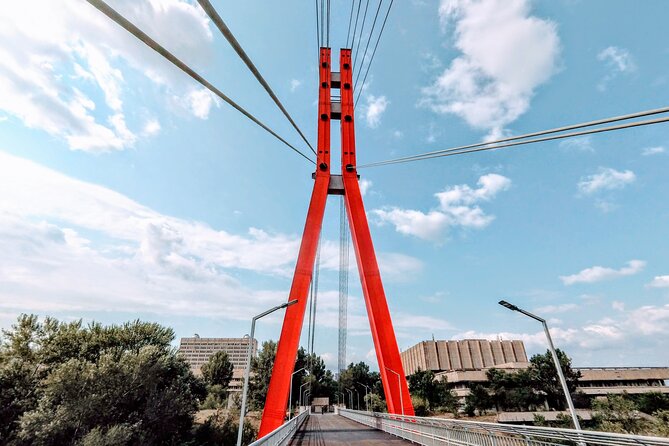
The finale is the Nutsubidze Skybridge, with twin towers and connected walkways. This is the stop most people picture when they think Brutal Tbilisi, because it’s both futuristic-looking and distinctly grounded in the city’s modernist era.
You’ll have about 45 minutes here, and admission is listed as free. The bridges connect the towers and you can walk across suspended walkways about 70 meters above the ground, with city views below.
This is where the tour becomes a sensory experience. You can see the geometry in three dimensions, and the height makes the structure feel alive. If you’re someone who loves architecture but also needs a payoff in views and motion, this is likely your favorite photo moment.
One extra detail you might catch during your time there is the mention of the skybridge elevator operator, sometimes called the lift lady in tour talk. If you’re able to speak with staff or get a quick explanation, it adds a tiny personal layer to the engineering story.
Value at $75: What You Get for a Half-Day
At $75 per person for about 4 hours, this isn’t priced like a “see five things, leave” quick hit. Your money is going toward guided interpretation of Soviet and post-Soviet urban design, plus a route that takes you past the most standard tourist circuits.
Admission for the key stops is listed as free in the tour details, so you’re not paying multiple site fees on top. Bottled water and a local guide are included, and that guide time is the real value driver here, especially if you like architecture with context.
Lunch is not included, so if you’re pairing this with dinner plans, keep that in mind. Also, plan on snacks or a later meal if you tend to get hungry while walking.
The group setup is also part of the value equation. When the group is small, you usually get more back-and-forth and less time waiting for the whole group to catch up.
What Makes the Guides Matter on This Tour
A brutalism tour lives or dies on explanation. The best version of this experience depends on your guide being able to turn concrete details into human stories.
Guides you may encounter include names like Khato, Khatu(na), Alex/Aleksi/Alexi, Xato, and Iona, and the common thread in how they’re described is passion and patience. People specifically call out that the guides make room for photos and move at a comfortable pace, even when someone wants to take extra time at a stop.
That’s important for you because some architecture is slow to “read.” If you like to look closely, you don’t want a guide who keeps yanking you forward every 90 seconds. This tour is set up to be a little more relaxed than a rushed highlights scramble.
Who Should Book This Brutal Tbilisi Tour
Book this if you:
- love architecture and want Soviet-era modernism explained in plain language
- want a different look at Tbilisi beyond the old-town staples
- enjoy walking outdoors and don’t mind a hill and open-air viewpoints
- like tours that include social context, like the refugee-housing story tied to dormitory buildings
Consider skipping or pairing with something else if you:
- want a fully relaxed sightseeing day with lots of free wandering
- are traveling with young kids, since children must attend with an adult and the tour is geared mainly for adults
- prefer indoor museums only, because you’ll spend time at monuments and exterior sites
The tour notes “moderate physical fitness.” That’s not a deal-breaker for most people, but it’s a good reminder to dress for walking and be ready for moving between locations.
Should You Book Brutal Tbilisi?
Yes, if you’re the type of person who likes architecture that has a story behind it, not just a silhouette for your camera roll. The route gives you five major stops that connect brutalist design to Georgia’s past and post-Soviet present, including a strong human element around refugee housing.
If you’re on the fence, the decision comes down to your interest level in concrete history. You’re paying for interpretation, pacing, and access to places you may not find on your own. For $75, you’re buying a guided way to see Tbilisi’s modern side in a single half-day, with time at each stop to actually look.
FAQ
How long is the Brutal Tbilisi tour?
The tour lasts about 4 hours.
What does the tour cost?
It costs $75.00 per person.
Is hotel pickup included?
Hotel pickup is listed as available only for private tours. For standard bookings, you meet at the Giant Bicycle monument near Rose Revolution Square.
How big are the groups?
The tour highlights mention a maximum of six. Another detail lists a maximum of 14 travelers.
What sites will we visit?
The tour includes five main stops: the Ministry of Highways of the Georgian SSR, the Chronicles of Georgia monument, the Former Archaeology Museum, Maglivi Bridge (including nearby brutalist elements), and the Nutsubidze Skybridge.
Are entrance fees included?
Admission is listed as free for each of the main stops.
What is included in the price?
Bottled water and a local guide are included.
Is lunch included?
No, lunch is not included.
Is the tour suitable for children?
Children must be accompanied by an adult if they attend, and the tour is primarily designed for adults. The operator recommends family-friendly tours for younger children.
Everything Else Across the Caucasus

Rust, Concrete and Cable Cars
Other Georgian tours we have been through, from the Black Sea to the Kakheti vineyards
- Private Adorable City Tour of Tbilisi
★ 5.0 · 3 reviews - Tbilisi Airport to Gudauri, Bakuriani, Batumi, Tbilisi
★ 5.0 · 3 reviews - Private Wine Tour In Kakheti Region with 7 Wines and Lunch
★ 5.0 · 3 reviews - Two Capitals in One Day: Tbilisi and Mtskheta Combo Tour
★ 5.0 · 3 reviews - Private Effortless transfer from Tbilisi to Gudauri ski resort
★ 5.0 · 3 reviews - Tbilisi to Gudauri Stepantsminda Private Transfer
★ 5.0 · 3 reviews
Soviet Heritage, Chiatura & Tskaltubo, compared.
 ★ 5.01 Day Private Armenia: UNESCO, Soviet & Curated Family LunchFrom $135106 reviews
 ★ 5.0Kutaisi:Chiatura Tour with Katskhi Pillar & Cable Car ExperienceFrom $3595 reviews
 ★ 5.0Tbilisi old town & soviet heritage – Private driver-guided TourFrom $7783 reviews
 ★ 5.0Armenia: 1 Day Soviet gems, UNESCO + Family lunch (Small group)From $4968 reviews
 ★ 5.0Soviet Tbilisi Tour – Off the beaten pathFrom $4945 reviews
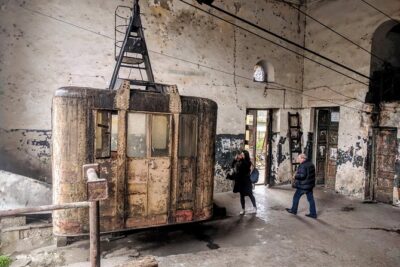 ★ 5.0Soviet past – Private day tour to Chiatura, Katskhi pillar and ChroniclesFrom $14929 reviews
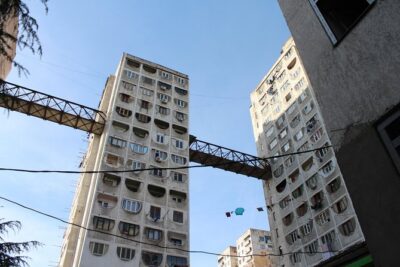 ★ 5.0Concrete Giants TourFrom $5420 reviews
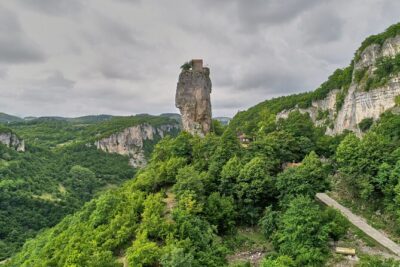 ★ 4.5Soviet Story – Private day trip to Chiatura, Stalin’s museum and Katskhi pillarFrom $2015 reviews
Browse the lists this tour appears in