
REVIEW · MTSKHETA & JVARI MONASTERY
Sacred Sites and Ancient Wonders: Jvari, Mtskheta and Uplistsikhe
Hilltop views meet hard history in one day. This tour strings together Jvari and Svetitskhoveli Cathedral with the kind of context that makes Georgia’s story click, from ancient capitals to Soviet-era politics. The only thing to watch is the cost creep, since Stalin Museum and Uplistsikhe have separate entry fees and lunch is on your own.
I also like how the route feels efficient without rushing you too hard: you get a guided, stop-by-stop flow from monastery viewpoints to a World Heritage church, then down into cave-town terrain. And if you want calm, human service, the guides listed, including Irakli and Davit, come across as friendly storytellers who keep communication steady even when travel plans shift.
You’ll love the day most if you enjoy walking and seeing things with meaning, not just posing for photos. If you’re looking for a totally lazy sightseeing day with zero extra spending and no food planning, this one might feel a bit intense.
In This Review
- Key Takeaways Before You Go
- Hilltop Jvari Monastery Over Mtskheta and the River Confluence
- Inside Svetitskhoveli Cathedral, UNESCO and the Legend of Christ’s Robe
- Gori’s Stalin Museum, the Soviet Story in a Birthplace House
- Uplistsikhe Cave Town, the Rock Fortress on the Old Silk Road
- How the Day Feels: Timing, Pacing, and Private Van Comfort
- Price and Value: What $100 Buys in Real Sightseeing Time
- Guides and Service: Friendly Storytelling Makes the Difference
- What to Bring and How to Prep for a Hill, a Cathedral, and Cave City
- Who This Tour Is Best For (and who might want a different plan)
- Should You Book Sacred Sites and Ancient Wonders?
- FAQ
- What time does the tour start?
- How long is the Sacred Sites and Ancient Wonders tour?
- Are tickets included for all the sites?
- Does the tour include lunch or food?
- Is hotel pickup and drop-off included?
- Is the tour private?
Key Takeaways Before You Go
- Jvari Monastery’s hilltop outlook connects you visually to Mtskheta and the Aragvi-Mtkvari meeting place
- Svetitskhoveli Cathedral is UNESCO-listed and tied to the legend of Christ’s robe beneath
- Gori is more than a stop, it’s a full visit to Stalin’s birthplace and growing-up home, plus his armored train
- Uplistsikhe is a real rock-hewn city on the old Silk Road route, once thriving around 20,000 people
- Most major entrances are free, with only the Stalin Museum and Uplistsikhe paid separately
- Hotel pickup and a private vehicle make a long day feel manageable from Tbilisi
More of Mtskheta and the Jvari hill above the confluence
Hilltop Jvari Monastery Over Mtskheta and the River Confluence
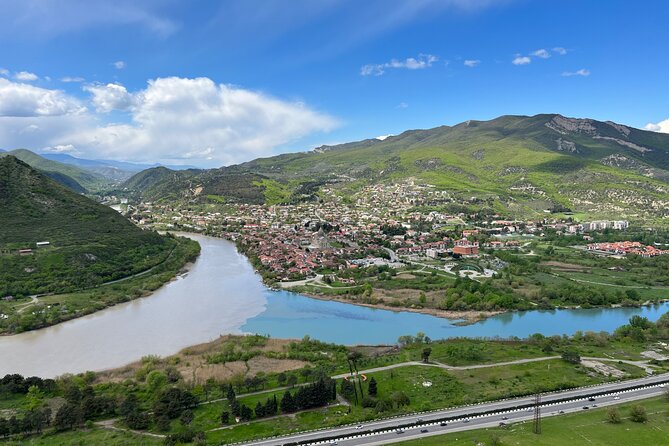
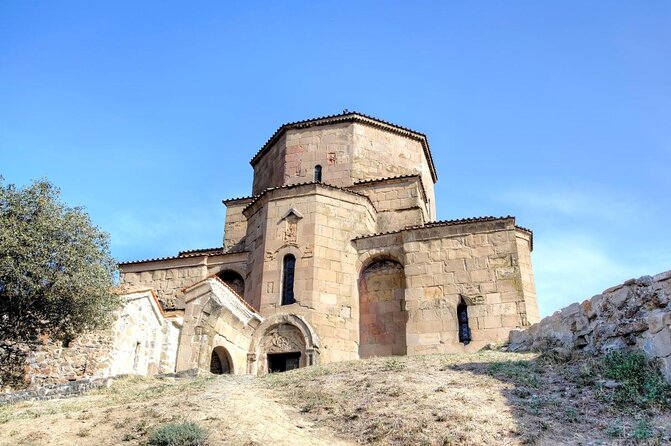
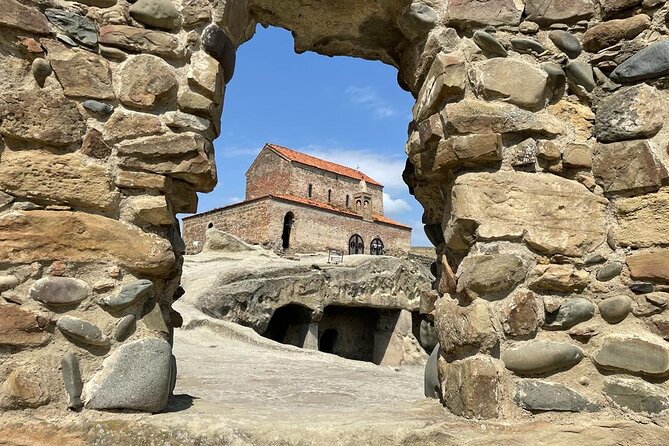
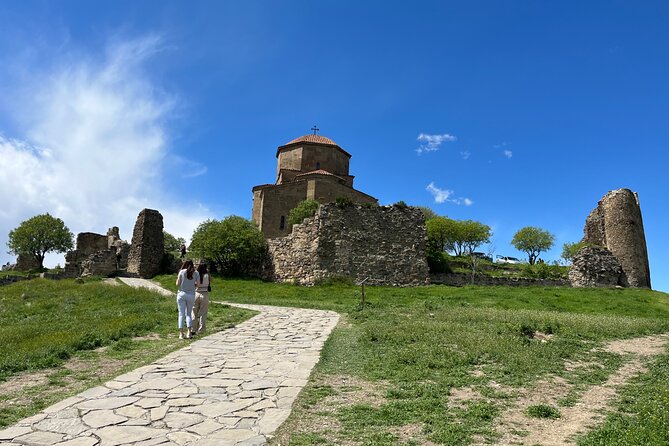
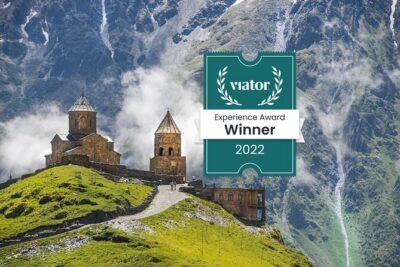
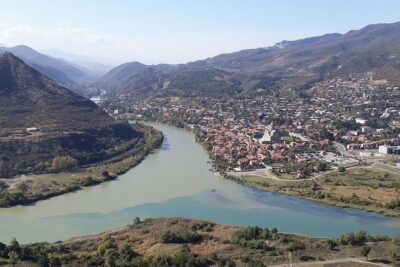
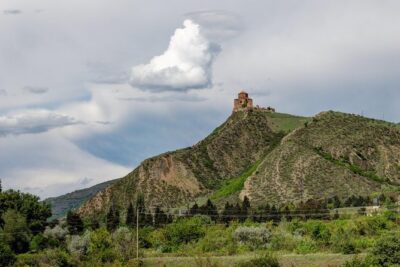
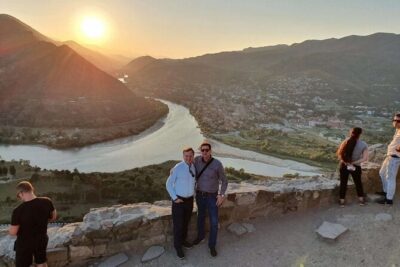
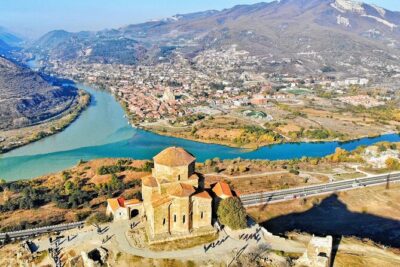
The day begins at Jvari Church, part of the Jvari Monastery complex near Mtskheta. This is a sixth-century Georgian Orthodox site built on a hill, and that elevation is the whole point. From there, you can take in the view of the city and the Aragvi-Mtkvari river meeting place, which is exactly the kind of “why this place mattered” view that photos often fail to explain.
What I like about Jvari is how it sets the emotional tone for the rest of the tour. You’re not starting with a museum label, you’re starting with geography and faith together. Even if you’re not super church-focused, this stop gives you a fast sense of scale: why kings, pilgrims, and traders would care about this area.
Practical note: plan on a bit of uphill walking on uneven ground. Wear shoes you trust, and bring a layer. Hilltop weather can change quickly, and you’ll want to stay comfortable so the views are a pleasure, not a chore.
Inside Svetitskhoveli Cathedral, UNESCO and the Legend of Christ’s Robe
Next comes Mtskheta, the historic heartland Georgia doesn’t just remember, it still feels. Mtskheta is described as founded in the 5th century BC, then the capital of the early Georgian kingdom of Iberia from the 3rd century BC to the 5th century AD. Later, when the capital shifted to Tbilisi, Mtskheta still mattered for coronations and burials of many Georgian kings.
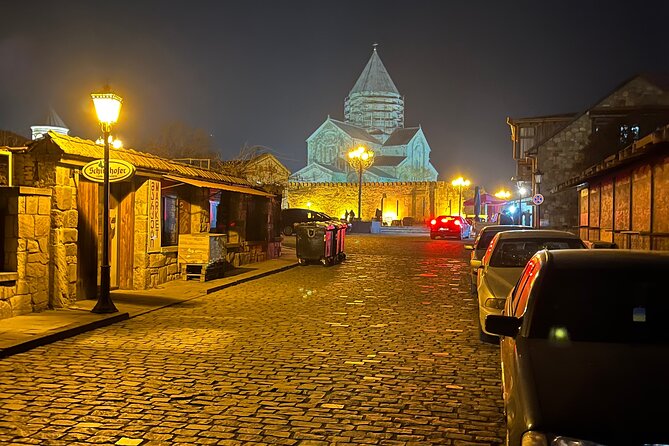
In the middle of that long timeline sits Svetitskhoveli Cathedral, a masterpiece of the Early Middle Ages and a UNESCO World Heritage Site. The connection that makes your visit stick is the belief that Christ’s robe is under the cathedral. That’s the kind of story that turns a building into a destination, because you’re not only seeing architecture, you’re stepping into centuries of faith and local tradition.
This stop is also straightforward on the budget side. Admission here is listed as free, which helps keep the day from turning into a ticket-by-ticket expense. About an hour gives you enough time to take in the space and listen to the guide’s framing without feeling trapped.
The one thing to consider is that this is a religious site, so dress and conduct matter. Keep your shoulders and knees covered if you can, and speak quietly when you’re inside.
Gori’s Stalin Museum, the Soviet Story in a Birthplace House
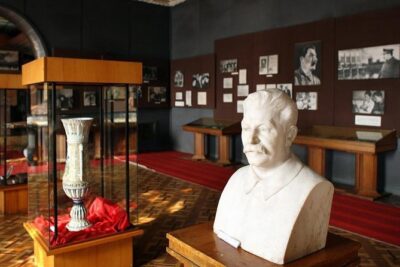
After the religious and royal eras, the tour turns to the 20th century with Gori and the Stalin Museum. This is housed in the place where Joseph Stalin was born and grew up, and the visit includes a look at his armored train.
Even if Soviet history is not your main interest, the museum works because it gives you a very human scale to a massive political story. You can stand in the kind of setting where a figure like that would have started, then connect it to how power moved through the region via the armored train. It’s history with objects you can point at.
Here’s the practical side: museum entry is not included, so you should expect to pay the listed ticket price (15 GEL per person). It’s a small line item compared to the rest of the day, but it is the one place where the tour can cost more than you first imagine.
Give yourself time to look slowly. This is one of those sites where the value is in noticing details and letting the guide’s context connect the dots. If you appreciate stories told clearly, you’re likely to enjoy the way guides like Davit have been described in feedback, especially for making the day feel more connected rather than chopped into separate sightseeing errands.
Uplistsikhe Cave Town, the Rock Fortress on the Old Silk Road
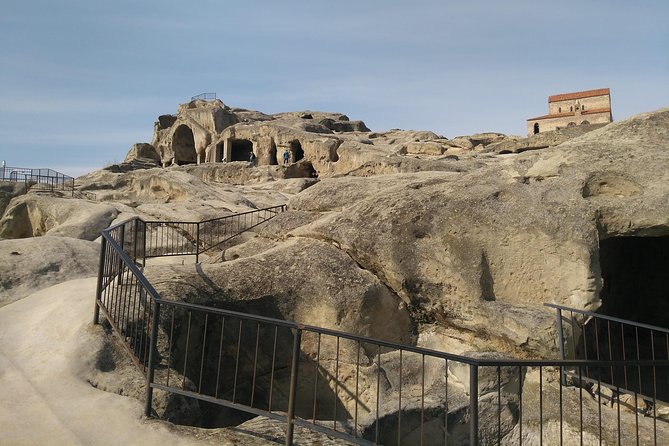
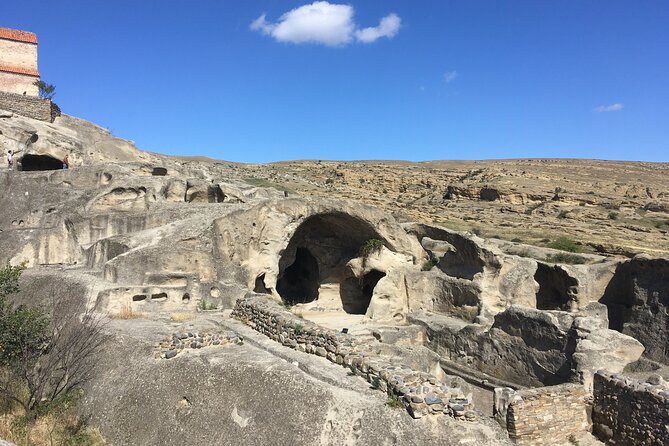
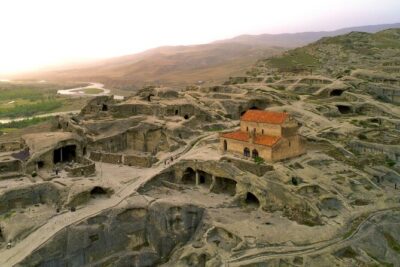
The day closes with Uplistsikhe Cave Town, an ancient rock-hewn complex. The name is tied to the idea of the fortress of the Lord, and the setting matches: this is an urban landscape carved into stone rather than built on flat ground. Uplistsikhe also sits directly on the route of the old Silk Road, which is why it became a strategic and commercial center.
The scale is what hits. At the peak of its prosperity, the city had a population listed as 20,000. That number changes how you see the site, because it stops being a few rock rooms and starts feeling like an actual town full of movement, trade, and daily life.
This stop is also one of the paid entrances, so plan for 15 GEL per person for the Uplistsikhe ticket. It’s not included, while Jvari and Svetitskhoveli are free, so your spending profile is clearly front-loaded at the start and then topped up at the end.
Because it’s rock-cut and uneven, comfort matters. Bring shoes with traction, and expect some walking on irregular surfaces. In warm weather, consider a hat and water since you’ll be outside for part of it.
Other runs west to Gori and the Uplistsikhe rock town
- Mtskheta-Jvari-Uplistsike-Chronicle of Georgia, PRIVATE Trip★ 5.0 · 105 reviews
- Day tour to Chronicles of Georgia, Gori city, Uplistsikhe cave★ 5.0 · 86 reviews
- Ancient Georgia Group Tour: Mtskheta,Jvari, Gori, Uplistsikhe★ 4.5 · 73 reviews
- Mtskheta – Jvari + Gori – Uplistsikhe Tour★ 5.0 · 49 reviews
- Mtskheta – Gori – Uplistsikhe caves • Private tour★ 5.0 · 24 reviews
How the Day Feels: Timing, Pacing, and Private Van Comfort
This tour is built as a focused day from Tbilisi, starting at 10:00 am and running about 7 hours. The format includes hotel pickup and drop-off, a private vehicle, and a driver/guide. For a day that covers three major “where history happened” areas, that comfort is a real value.
The biggest benefit of that private-vehicle setup is control. You’re not stuck waiting around for a bus full of strangers, and the guide can keep the day moving in a sensible order. Feedback also points to guides staying communicative when plans change, and that matters because day trips can get disrupted by traffic and timing, even when you do everything right.
Pacing wise, you’re given short but meaningful visits: about 30 minutes at Jvari, 1 hour at Svetitskhoveli, about 1 hour at the Stalin Museum, and about 1 hour at Uplistsikhe. That’s generally a good structure for a single-day itinerary. It’s enough time to see the main points without pretending you can do everything like a multi-day stay.
One possible drawback to think about is simply the intensity of it. Four major stops in one day means you’ll want to keep your energy up for walking, outdoor time, and indoor church rules.
Price and Value: What $100 Buys in Real Sightseeing Time
The price is $100 per person, and for a route like this, the value comes from what’s included. Fuel surcharge, a driver/guide, and hotel pickup and drop-off are all part of the package. A private vehicle also tends to cost more than shared transfers in most places, so it’s not a small detail.
Then there’s the ticket mix. Jvari Church admission is listed as free, and Svetitskhoveli Cathedral is also free. The two paid sights are clearly marked: Stalin Museum (15 GEL) and Uplistsikhe (15 GEL). Because you can anticipate those extra costs, you’re not stuck guessing what your day will end up costing.
Food and drinks are not included, so you’ll want a simple plan for lunch. On a day like this, grabbing something quick near one of the stops can save you time, but the ideal approach is to treat lunch as your “reset button,” not something you try to force into a tight gap between monuments.
If you do the math in your head, the tour price plus two small ticket entries still keeps this in the “single day, multiple major sights” category. That’s usually what you want when you only have a limited number of days in Tbilisi.
Guides and Service: Friendly Storytelling Makes the Difference
A lot of tours can show you the same places. What changes the experience is whether the guide turns stops into a coherent story. From the feedback you shared, Irakli and Davit are specifically mentioned for being communicative and for sharing lots of context. That means you’re more likely to leave each site with a reason for why it mattered, not just a list of what you saw.
Another strong point is the attitude around change. One review highlights that if plans shift, the company handles it with understanding. That might sound small, but day trips are exactly where that calm approach helps. Traffic happens, timing can vary, and having a guide who stays steady makes your day less stressful.
Also, the tour uses a mobile ticket, which is one of those simple modern conveniences that reduces hassle. If you like smooth check-in and less paperwork, this fits your style.
What to Bring and How to Prep for a Hill, a Cathedral, and Cave City
You’ll have a mix of outdoor viewpoints and indoor spaces, plus cave-city terrain. Here’s what I’d do to keep it easy:
- Wear comfortable shoes you can walk in for uneven stone and stairs-like terrain
- Bring a light layer, hilltop weather can shift quickly
- Dress respectfully for the cathedral visit
- Plan lunch, since food and drinks are not included
- Have cash or card ready for the two listed paid tickets at the Stalin Museum and Uplistsikhe
Also, because this is a private tour/activity for your group, you’ll likely get a smoother flow and less waiting around. Still, a day that starts at 10:00 am can be a bit early if your trip style is late mornings, so make sure you’re rested.
Who This Tour Is Best For (and who might want a different plan)
This works especially well if you want a “greatest hits” day without skipping the depth. You’ll enjoy it if you care about how faith, empire, and politics all shaped the same region.
It’s also a good match if you like variety in one day: hilltop monastery views, a UNESCO cathedral with a strong legend, a museum tied to Stalin’s life including his armored train, and then an ancient cave city connected to the Silk Road.
You might want to look at something else if you have limited interest in Soviet-era history, because the Stalin Museum is a full hour. And if you hate extra ticket payments, remember that two of the four main stops have paid admission.
Should You Book Sacred Sites and Ancient Wonders?
I’d book this tour if your priorities are clear: you want Mtskheta and its UNESCO cathedral, you want Uplistsikhe Cave City, and you don’t want to wrestle with transport on your own from Tbilisi. The included hotel pickup, private vehicle comfort, and the mix of free admissions at Jvari and Svetitskhoveli make the overall cost feel more predictable.
I would hesitate if you’re traveling with strict budget limits for tickets and meals, because lunch is not included and two sites add entry fees. Also, the schedule is full, so if you want a slow, lingering day, this might feel like too much.
If your goal is a single day that connects the region from ancient kingdoms to the Soviet age, with helpful guides like Irakli or Davit making the story understandable, this is a solid choice.
FAQ
What time does the tour start?
The tour starts at 10:00 am.
How long is the Sacred Sites and Ancient Wonders tour?
It lasts about 7 hours.
Are tickets included for all the sites?
Admission is free for Jvari Church and Svetitskhoveli Cathedral. The Stalin Museum and Uplistsikhe tickets are not included, at 15 GEL each.
Does the tour include lunch or food?
No. Food and drinks, including lunch, are not included.
Is hotel pickup and drop-off included?
Yes. Hotel pick up and hotel drop-off are included.
Is the tour private?
Yes. It is a private tour, and only your group participates.
Everything Else Across the Caucasus
West to Gori and the Rock Town
Mtskheta and the Hill Above It
Other Georgian tours we have been through, from the Black Sea to the Kakheti vineyards
- Private Adorable City Tour of Tbilisi
★ 5.0 · 3 reviews - Tbilisi Airport to Gudauri, Bakuriani, Batumi, Tbilisi
★ 5.0 · 3 reviews - Private Wine Tour In Kakheti Region with 7 Wines and Lunch
★ 5.0 · 3 reviews - Two Capitals in One Day: Tbilisi and Mtskheta Combo Tour
★ 5.0 · 3 reviews - Private Effortless transfer from Tbilisi to Gudauri ski resort
★ 5.0 · 3 reviews - Tbilisi to Gudauri Stepantsminda Private Transfer
★ 5.0 · 3 reviews
Mtskheta & Jvari Monastery, compared.
 ★ 5.0Day Trip to Mtskheta Gori and UplistsikheFrom $291,801 reviews
 ★ 5.0Mtskheta,Jvari,Bazaar,wine tasting,Chronicles of GeorgiaFrom $20730 reviews
 ★ 5.0Mtskheta-Gori-UplistsikheFrom $90112 reviews
 ★ 4.5Mtskheta, Jvari, gori, uflistsikhe, history and panorama (group tours)From $19107 reviews
 ★ 5.0Mtskheta-Jvari-Uplistsike-Chronicle of Georgia, PRIVATE TripFrom $68105 reviews
 ★ 4.5Tbilisi – Mtskheta – Jvari. Full City Tour on Hop On Hop Off BusFrom $4091 reviews
 ★ 4.5Ancient Georgia Group Tour: Mtskheta,Jvari, Gori, UplistsikheFrom $2473 reviews
 ★ 5.0Ancient Mtskheta and Chronicle of Georgia half day tourFrom $6566 reviews
Browse the lists this tour appears in