
REVIEW · MTSKHETA & JVARI MONASTERY
One-day tour in ancient Mtskheta, Gori and Uplistsikhe
Ancient Georgia in one long day. This tour strings together the UNESCO-listed highlights of Jvari and Svetitskhoveli, plus the unforgettable cave-town feel of Uplistsikhe, and the result is a fast way to understand how Georgia’s capital cities and kingdoms evolved. I especially like how the day is built around viewpoints and legends, not just a checklist of buildings. One thing to plan for: Stalin Museum and Uplistsikhe admissions are not included, so you will need extra cash.
If you want the day to run smoothly, this one does. Pickup is offered, the ride is in an air-conditioned vehicle, and the group stays small (up to 20), which makes it easier to ask questions and keep things moving between sites. The guide service is a real part of the value, and one name you might hear is Aleko from Evatour, praised for making the stops fun and understandable.
It also helps that the itinerary is practical. Jvari and Svetitskhoveli have free admission tickets, which saves money early, and you still get a proper chunk of time at Gori and Uplistsikhe later. With an about 10-hour schedule, it is a long day, so comfortable shoes matter.
In This Review
- Key highlights you’ll actually feel during the day
- Why Mtskheta, Gori, and Uplistsikhe work so well in one day
- Jvari Monastery: UNESCO on a hilltop where two rivers meet
- Svetitskhoveli Cathedral in Mtskheta, plus the legend that shaped the site
- Mtskheta’s old streets: where the churches start to feel personal
- Gori Fortress: a hilltop that explains why borders kept changing
- Stalin Museum and the Gori sites: what to expect and how to make it meaningful
- Uplistsikhe cave town: an ancient settlement you can feel in your feet
- How the timing feels across the full 10-hour day
- Group size, pickup, and why a small tour beats DIY here
- Price and value: how $50.13 becomes a real deal
- Who should book this day trip
- Should you book it or plan your own route?
- FAQ
- How long is the one-day tour?
- What is the price per person?
- Is pickup included?
- Is there a mobile ticket?
- What is included in the tour price?
- What is not included?
- Are admissions included for the church stops?
- What group size should I expect?
- How far in advance is it usually booked?
- What is the cancellation policy?
Key highlights you’ll actually feel during the day
- UNESCO views from Jvari, perched above the confluence of the Mtkvari and Aragvi rivers
- Svetitskhoveli’s big legend, tied to the tunic of Jesus Christ and a cedar that grew on a grave
- Gori Fortress on a hill, with a layered history shaped by empires and a major 1920 earthquake
- A full Stalin stop in Gori, including the museum plus the chance to see the house and train wagon
- Uplistsikhe cave town timing, where 1 hour lets you get the layout before you’re ready to move on
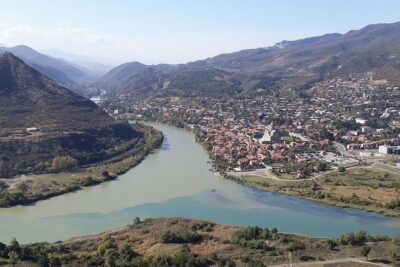
More of Mtskheta and the Jvari hill above the confluence
Why Mtskheta, Gori, and Uplistsikhe work so well in one day
This tour is built like a story arc. You start with early Georgian Christianity at Jvari and Svetitskhoveli, then shift into political history at Gori, then finish with a place that feels older than most modern cities.
That order matters. The churches in Mtskheta give you the religious and cultural “why” behind Georgia’s identity. Then Gori shows the 20th-century political face of the country, and Uplistsikhe reminds you that power and settlement patterns have been changing here for a very long time.
The duration is around 10 hours, so it’s not a relaxed stroll. But it is efficient, and the stops are chosen so each one adds a different chapter, rather than repeating the same kind of sight.
Jvari Monastery: UNESCO on a hilltop where two rivers meet
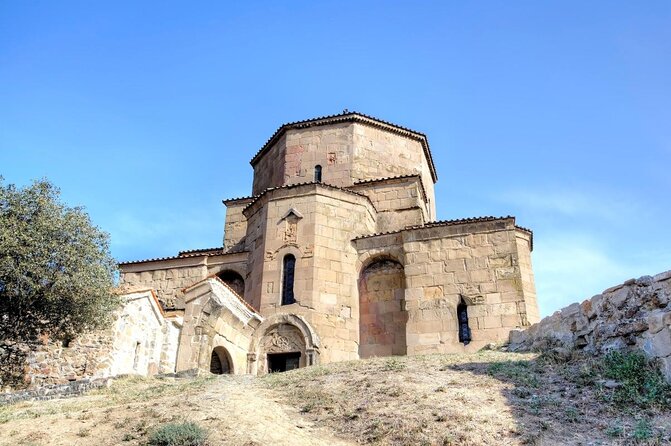
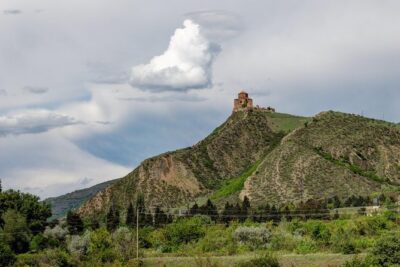
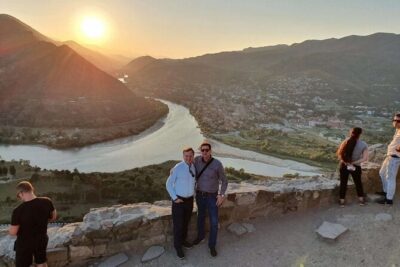
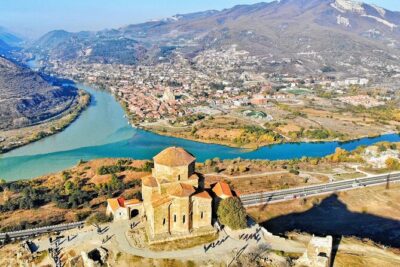
Jvari Monastery is the kind of place where you arrive and instantly get the point. It sits on a rocky hilltop near the confluence of the Mtkvari and Aragvi rivers, overlooking Mtskheta, which was the former capital of the Kingdom of Iberia before Tbilisi.
This is one of those UNESCO sites where the setting is part of the attraction, not just the architecture. After Christianity was adopted, King Mirian III erected a wooden cross here, symbolizing acceptance of the faith by Georgians. Later, in the second half of the 6th century, Guaram, ruler of Kartli, built a small church beside the Holy Cross.
The tour gives you about 20 minutes at Jvari, and that’s about right. You can see the temple setting, take in the views, and read enough to connect the legend to the place. Admission is listed as free, which is a nice bonus early in the day.
One practical note: even with short time, expect uneven ground and some walking. If you’re visiting in warmer months, start hydrating early, since bottled water is included but the day is still long.
Svetitskhoveli Cathedral in Mtskheta, plus the legend that shaped the site
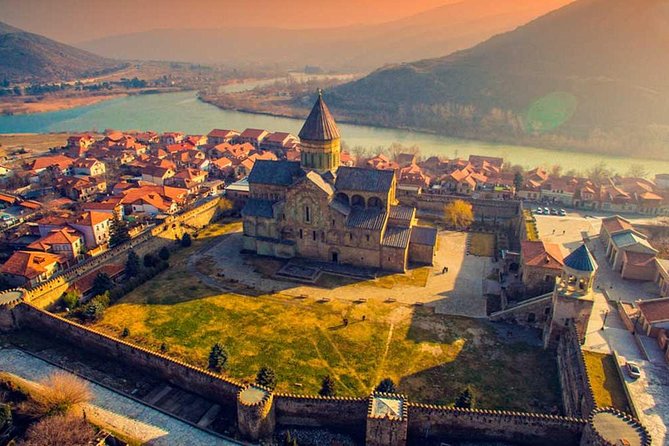
Svetitskhoveli is the bigger spiritual anchor in Mtskheta, and it earns its reputation. It is an Eastern Orthodox Christian cathedral in the former capital city, recognized by UNESCO as a World Heritage Site, and it is currently the second-largest church building in Georgia.
The standout is not just size. There is a legend about Elioz, a citizen of Mtskheta, who found the tunic of Jesus Christ in Jerusalem. Elioz’s sister, Sidonia, died after touching the tunic, and she was buried wrapped in it. A cedar of Lebanon grew on Sidonia’s grave, and that detail adds a powerful, almost physical sense of the story.
The tour allows about 30 minutes here, and admission is free. This is enough time to appreciate the architecture and still have energy left for the rest of Mtskheta’s streets.
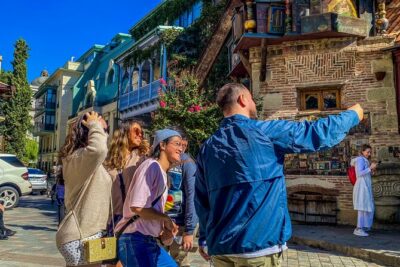
If you enjoy walking between places, the tour also includes exploring the old town area in Mtskheta. You’ll see the character that comes from older neighborhoods, with architecture that includes those nice balconies the town is known for. It’s the kind of break that makes the day feel less like driving from one ticketed stop to the next.
Mtskheta’s old streets: where the churches start to feel personal
The day plan does not just dump you in front of churches. It also gives you time to walk in the old town area of Mtskheta, the earlier capital of the Kingdom of Iberia.
This is where you notice scale. When you’re looking at churches from a distance, it can feel like you’re seeing monuments. When you walk the streets afterward, you start to feel how the city supported that kind of cultural center, with everyday life around major religious landmarks.
You might find it especially satisfying if you like “in-between” travel moments, the kind that are easy to skip if a day is only about interiors. Here, those exterior city textures help connect Jvari and Svetitskhoveli to a real town layout.
Other runs west to Gori and the Uplistsikhe rock town
- Mtskheta-Jvari-Uplistsike-Chronicle of Georgia, PRIVATE Trip★ 5.0 · 105 reviews
- Day tour to Chronicles of Georgia, Gori city, Uplistsikhe cave★ 5.0 · 86 reviews
- Ancient Georgia Group Tour: Mtskheta,Jvari, Gori, Uplistsikhe★ 4.5 · 73 reviews
- Mtskheta – Jvari + Gori – Uplistsikhe Tour★ 5.0 · 49 reviews
- Mtskheta – Gori – Uplistsikhe caves • Private tour★ 5.0 · 24 reviews
Gori Fortress: a hilltop that explains why borders kept changing
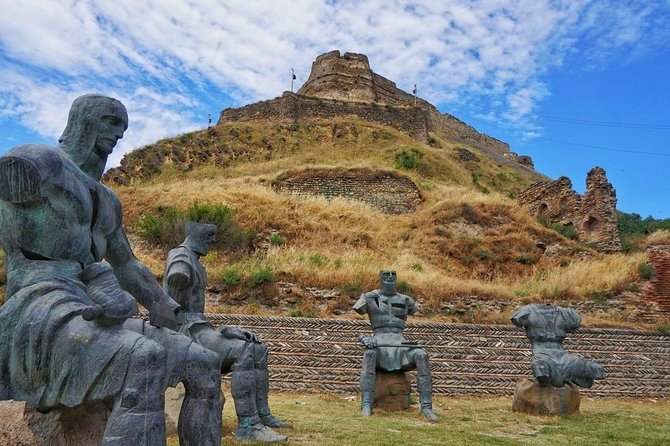
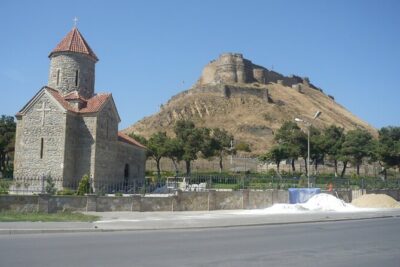
Next comes Gori, and the tone shifts. You start with Gori Fortress, a 13th-century castle above the city in the Shida Kartli region.
The hilltop position alone helps you understand the medieval logic of defense. The fortress has been shaped by multiple empires: it was captured by Ottomans in the 16th century, and the structure kept changing hands between Turks, Georgians, and Persians. Much of what you see today dates to the 17th and 18th centuries, and a 6.2 magnitude earthquake in 1920 caused significant damage.
The tour includes about 30 minutes here, with admission listed as free. That short visit works because the goal is orientation and context, not museum-style deep study. You’ll get enough to connect the fortress to the region’s political tug-of-war.
One drawback to watch for: if you dislike time pressure, fortress stops can feel quick. But in a day that also includes the Stalin Museum and Uplistsikhe, this timing is a realistic compromise.
Stalin Museum and the Gori sites: what to expect and how to make it meaningful
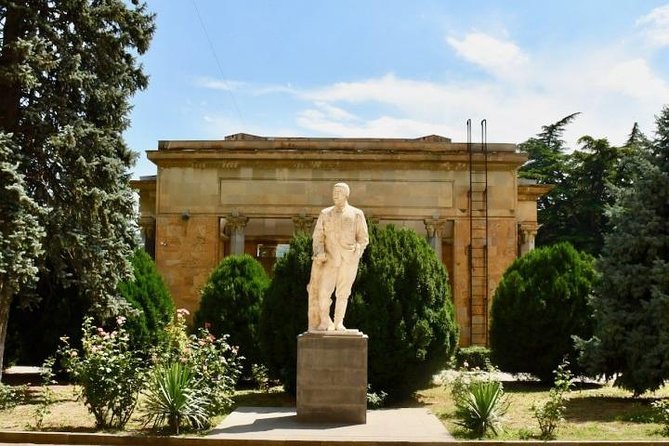
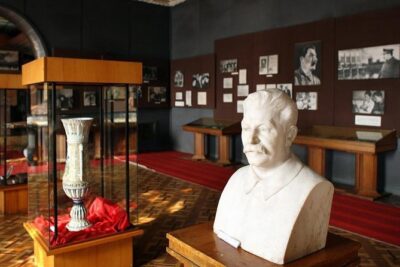
Gori is Joseph Stalin’s birthplace, and the tour includes a dedicated stop for the Joseph Stalin Museum. The tour summary also mentions you’ll have a chance to visit Stalin’s house, the museum, and a train wagon, guided locally.
This is not a small, casual add-on. The museum retains Soviet-era characteristics, and that style is part of the experience, even if you’re not trying to study politics in depth. Plan for about 45 minutes at the museum area.
Admission is not included for the Stalin Museum. So keep that cost in mind when comparing this tour’s total price value.
Language tip: one helpful detail from a guide-style visit is that exhibits can be listed in Georgian and Russian. If you need English explanations to feel fully oriented, it is worth asking whether your guide can help clarify key points while you’re there, or whether an English-speaking explanation option is possible during your visit.
Also, if you are sensitive to heavy historical themes, you can still approach this stop thoughtfully. The point is not to “enjoy” it, but to understand how one life and one ideology affected a whole era in the region.
Uplistsikhe cave town: an ancient settlement you can feel in your feet
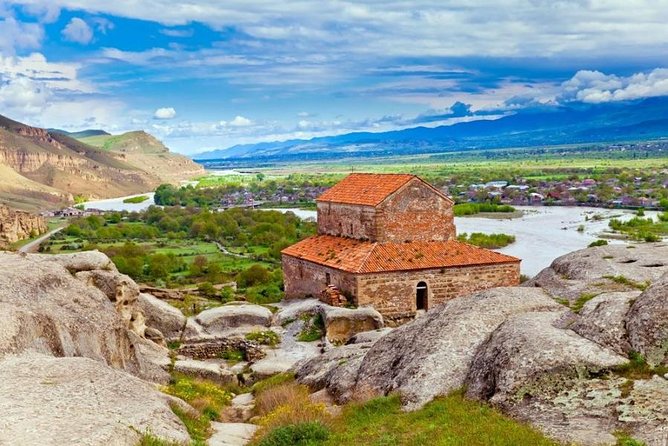
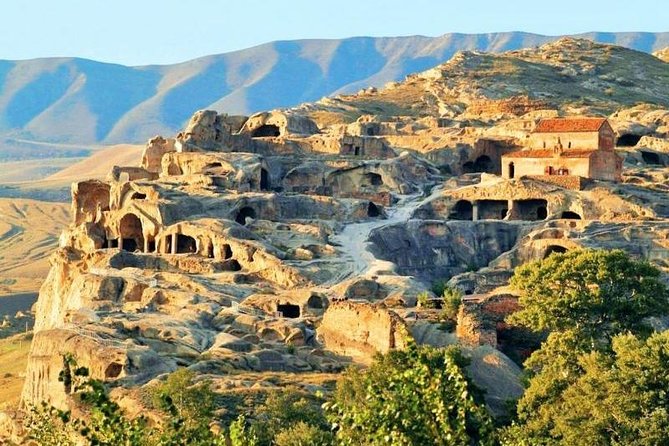
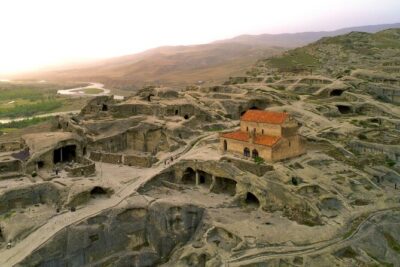
Uplistsikhe is the tour’s final major wow-factor, and it’s a different kind of site than the churches. It is a cave town often called one of Georgia’s oldest urban settlements, with roots going back to the 2nd to 1st millenniums B.C.
Uplistsikhe means fortress of the lord, and archaeologists identify it as strategically important within ancient Kartli, also known as Iberia to classical authors. The tour also points out that medieval written tradition even tied its founding to a mythical figure, Uplos, son of Mtskhetos and grandson of Kartlos.
What makes it feel alive is the idea of long continuity. The site served as a political and religious center and, in the Middle Ages, it stood on an important trade route linking Byzantium with India and China. Even without a long lecture, that historical framing changes how you read the place.
You get about 1 hour at Uplistsikhe. Admission is not included, so budget for that. One hour can be just enough to understand the layout and major spaces, then move on before fatigue sets in.
Comfort matters here. Cave-town visits can involve uneven paths and stairs, so shoes with good grip are a smart choice. If you tend to get cold in underground areas, bring a light layer, because cave temperatures can feel cooler than the street.
How the timing feels across the full 10-hour day
This is not a split-day tour. It is a continuous push through five main stops, with short, focused time at the free sites and longer time where you expect to absorb more context.
A typical rhythm looks like:
- Early start with Jvari and Mtskheta church time
- A later shift to Gori Fortress and then the Stalin Museum
- Finish with Uplistsikhe, where the terrain can be more physically demanding
Because the day runs about 10 hours, you should treat it like a long hike, even if you do not walk that far. Wear comfortable footwear, and drink water regularly.
Also, lunch is listed as not included. That means you’ll either need to buy something during the day or bring a plan you’re comfortable with. If you hate hunting for food on the spot, eat a solid breakfast and keep energy snacks in your bag.
Group size, pickup, and why a small tour beats DIY here
The tour caps at 20 travelers, which is a big deal for a day like this. In a small group, the guide can adjust pacing and answer questions without needing to “herd” everyone.
Pickup offered is another practical win. You start your day already in motion, not stuck trying to coordinate transport between Mtskheta, Gori, and Uplistsikhe yourself.
The vehicle is air-conditioned, which matters in Georgia’s warmer months. Bottled water is included, along with a fuel surcharge, so you avoid surprise add-ons just to stay comfortable.
One thing to keep in mind: the tour has a minimum number of travelers. If it does not meet that minimum, you may be offered a different date or experience, or a full refund. In one reported case, the company arranged a solo tour without extra cost, which is great news if you end up traveling on a quieter day.
Price and value: how $50.13 becomes a real deal
At about $50.13 per person, this tour can be a strong value because so much of the core sightseeing is built on free admissions.
Here’s what you can count on from the schedule:
- Jvari Monastery admission is free
- Svetitskhoveli Cathedral admission is free
- Gori Fortress admission is free
That means you are mainly paying for transportation, guide service, and the paid parts later in the day. The only notable paid admissions you must plan for are the Stalin Museum and Uplistsikhe.
So the price works best if you planned to see all of them anyway. If you only care about one or two stops, you might pay more in admissions and logistics than the tour price makes up for.
If you want maximum value in a limited time window, this is the kind of day trip that delivers, because it bundles distance and expert context in one shot.
Who should book this day trip
This tour fits well if you:
- Want a one-day sweep through Georgian identity, from early Christianity to Soviet history to ancient settlement
- Enjoy guided context that ties legends to real places
- Like efficient itineraries but still want walking time in a real town
It is less ideal if you:
- Prefer slow travel with long museum sessions
- Dislike any history tied to political propaganda themes
- Want a fully meal-included day, since lunch is not included
Should you book it or plan your own route?
Book it if you want a guided, efficient way to hit Mtskheta, Gori, and Uplistsikhe in one day without stress. The mix of free UNESCO church time, a fortress context stop, and a final cave town gives you a well-balanced snapshot of the region.
Skip or rethink if you know you only want one category of sights, or if you have trouble with longer days and uneven terrain. Also, if you have strong needs around meal plans, bring a lunch workaround so you are not stuck deciding mid-day.
If you book, do one small thing that makes the day better: wear good shoes and plan for paid entries at the Stalin Museum and Uplistsikhe. That way, the whole day feels like a smooth sequence instead of surprise costs.
FAQ
How long is the one-day tour?
The tour lasts about 10 hours.
What is the price per person?
The price is listed as $50.13 per person.
Is pickup included?
Pickup is offered.
Is there a mobile ticket?
Yes, a mobile ticket is included.
What is included in the tour price?
Included items are an air-conditioned vehicle, bottled water, fuel surcharge, and professional guide service.
What is not included?
Stalin Museum admission, Uplistsikhe admission, and lunch are not included.
Are admissions included for the church stops?
Jvari Monastery and Svetitskhoveli Cathedral list admission as free, and Gori Fortress admission is also listed as free.
What group size should I expect?
The tour has a maximum of 20 travelers.
How far in advance is it usually booked?
On average, it is booked 18 days in advance.
What is the cancellation policy?
You can cancel for a full refund up to 24 hours before the experience start time. Free cancellation applies as long as you cancel at least 24 hours in advance.
Everything Else Across the Caucasus
West to Gori and the Rock Town
Mtskheta and the Hill Above It
Other Georgian tours we have been through, from the Black Sea to the Kakheti vineyards
- Private Adorable City Tour of Tbilisi
★ 5.0 · 3 reviews - Tbilisi Airport to Gudauri, Bakuriani, Batumi, Tbilisi
★ 5.0 · 3 reviews - Private Wine Tour In Kakheti Region with 7 Wines and Lunch
★ 5.0 · 3 reviews - Two Capitals in One Day: Tbilisi and Mtskheta Combo Tour
★ 5.0 · 3 reviews - Private Effortless transfer from Tbilisi to Gudauri ski resort
★ 5.0 · 3 reviews - Tbilisi to Gudauri Stepantsminda Private Transfer
★ 5.0 · 3 reviews
Mtskheta & Jvari Monastery, compared.
 ★ 5.0Day Trip to Mtskheta Gori and UplistsikheFrom $291,801 reviews
 ★ 5.0Mtskheta,Jvari,Bazaar,wine tasting,Chronicles of GeorgiaFrom $20730 reviews
 ★ 5.0Mtskheta-Gori-UplistsikheFrom $90112 reviews
 ★ 4.5Mtskheta, Jvari, gori, uflistsikhe, history and panorama (group tours)From $19107 reviews
 ★ 5.0Mtskheta-Jvari-Uplistsike-Chronicle of Georgia, PRIVATE TripFrom $68105 reviews
 ★ 4.5Tbilisi – Mtskheta – Jvari. Full City Tour on Hop On Hop Off BusFrom $4091 reviews
 ★ 4.5Ancient Georgia Group Tour: Mtskheta,Jvari, Gori, UplistsikheFrom $2473 reviews
 ★ 5.0Ancient Mtskheta and Chronicle of Georgia half day tourFrom $6566 reviews
Browse the lists this tour appears in