
REVIEW · MTSKHETA & JVARI MONASTERY
Mtskheta Tour with All UNESCO Sites & Ancient Ruins
Mtskheta feels frozen in time. I like the hassle-free pickup and the chance to hear clear, story-driven context from a guide like Giorgi or George, without feeling rushed. The one real catch is practical, church-going logistics: expect walking with stairs and bring the right clothing for Georgian Orthodox sites.
This is built for a relaxed day, with a private air-conditioned vehicle, a group limited to your party, and stop-by-stop time to look closely. Admission at each major stop listed here is free, and you’ll use a mobile ticket. For 9 hours, it’s a strong value way to see the UNESCO core around Mtskheta without stitching together buses and timing on your own.
In This Review
- Key Highlights You’ll Feel Immediately
- Tbilisi Pickup and the 9-Hour Rhythm to Mtskheta
- Jvari Church on the Hill: Where Views and Early Georgian Architecture Meet
- Svetitskhoveli Cathedral: The Living Pillar and a King-Burial Legacy
- Samtavro Church and Monastery: St. Nino’s First Footprints
- Shio-Mgvime Monastery: The Hermit Cave Story You Can Feel
- Pacing, Walking, and Church Dress Rules That Keep the Day Smooth
- Price and Value: Why $127.50 Works for a UNESCO Day
- Who This Tour Fits Best (and Who Might Want a Different Plan)
- Should You Book This Mtskheta UNESCO Day Trip?
- FAQ
- What time does the tour start, and how long is it?
- Is hotel pickup included?
- Are admission tickets included for the stops?
- Do I need lunch during the tour?
- What should I wear for the churches?
- What happens if the weather is bad or I need to cancel?
Key Highlights You’ll Feel Immediately
- Pickup plus private comfort: you start with hotel pickup and travel by private, air-conditioned vehicle.
- UNESCO sites in a single circuit: Jvari, Svetitskhoveli, Samtavro, and Shio-Mgvime all anchor the day.
- Good pacing at each stop: planned time ranges help you pause for views and photos.
- Stories that make stones make sense: guides like Giorgi are praised for turning history into something you can picture.
- Free main-site entry times: the stops listed here show free admission tickets.
- Dress and shoes matter: headscarves and non-short trousers are required, and there is walking on uneven ground.
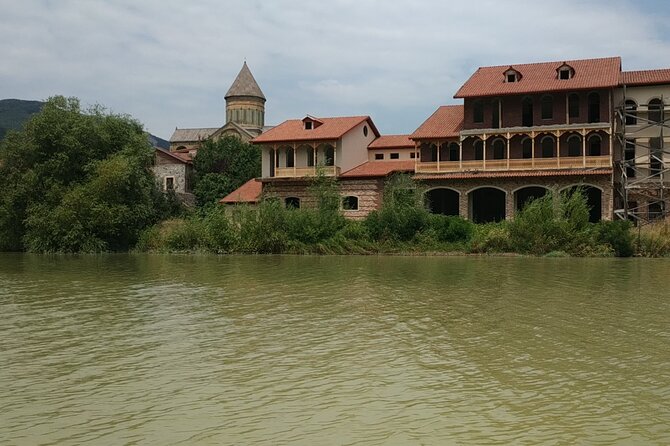
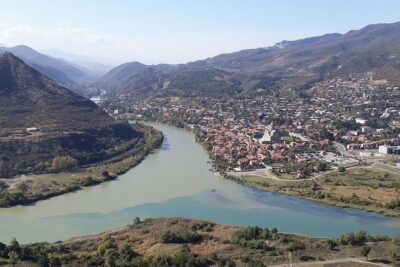
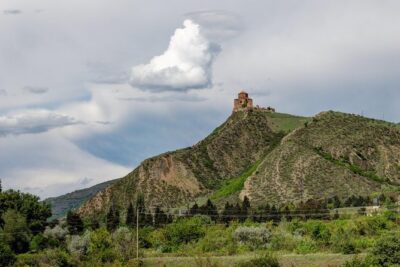
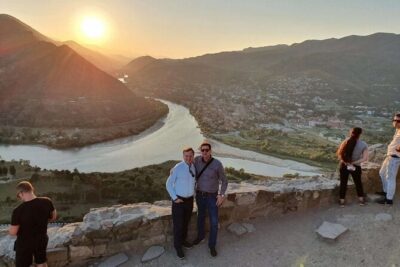
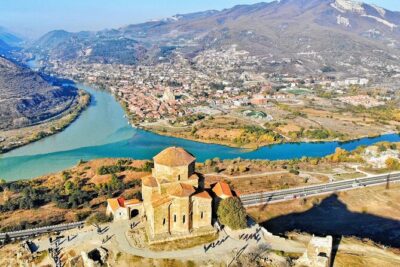
More of Mtskheta and the Jvari hill above the confluence
Tbilisi Pickup and the 9-Hour Rhythm to Mtskheta
You meet at 9:00 am, and the big early win is that pickup is offered. That means less time figuring out where to stand, and more time actually seeing things. Once you’re in motion, the private air-conditioned vehicle keeps the day comfortable, especially if Georgia’s weather is doing its thing.
This tour is also private in the sense that only your group participates. So instead of herding, you get the guide’s attention for questions, small detours (within reason), and explanations at the right volume. You’ll get a mobile ticket, which is one of those small modern perks that makes a day like this smoother.
One more thing: the day includes walking in Mtskheta’s old areas, with stairs and mixed terrain. Comfortable shoes are not optional here. If your feet are sensitive, plan for that up front, because the sites sit in a setting that is part city, part hill, part monastery grounds.
Jvari Church on the Hill: Where Views and Early Georgian Architecture Meet
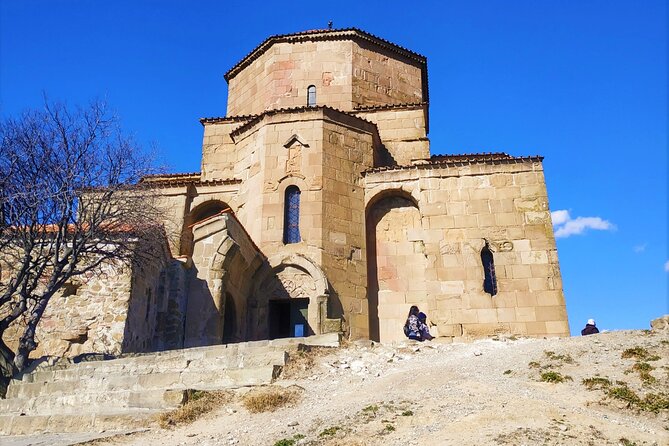
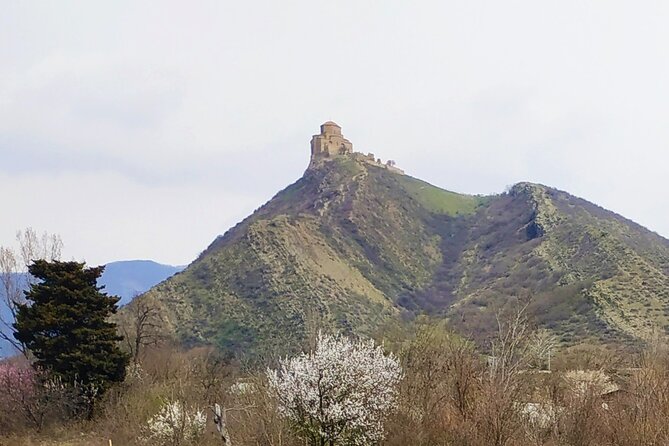
Jvari is a monastery complex on Jvari Mount (656 m a.s.l.), and the first reason people remember it is the view. Even if you only get a short window, you’ll feel how the church’s position connects built space with the natural environment. That link to the landscape is part of why Jvari is recognized as a UNESCO World Heritage site.
The second reason Jvari matters is its architecture story. The site is described as an Early Medieval Georgian church that survived to today almost unchanged. It also became the founder of the Jvari type of church architecture, a style that spread across Georgia and Armenia. So when you look at the proportions and plan, it’s not just old. It’s a style that helped shape later church building.
Your stop time is about 30 minutes, and it’s enough if you treat it like a viewpoint stop first, then a close-look stop second. If you arrive when clouds or fog roll in, don’t rush. The hill can change the whole mood of the place fast.
Practical note: since it’s on a mount, wind and weather can feel sharper than in town. Bring a layer if you run cold easily, and keep an eye on how comfortable your walking shoes feel on any uneven stone.
Svetitskhoveli Cathedral: The Living Pillar and a King-Burial Legacy
Svetitskhoveli Cathedral is often the anchor site of the day, and it earns that role quickly. It’s set in historic Mtskheta, and it’s recognized by UNESCO as a World Heritage site. The cathedral is known as the Cathedral of the Living Pillar, and it’s closely tied to one of the most famous local traditions: it is associated with the burial place of the claimed mantle of Christ.
This place also hits you with scale and time depth. It’s the second largest church building in Georgia, after the Holy Trinity Cathedral. The site itself dates back to the early fourth century, but the current cross-in-square structure was completed between 1010 and 1029 by the medieval Georgian architect Arsukisdze. That means when you look at the exterior architecture, you’re looking at a very specific moment in high medieval building, not just an old ruin.
There’s also a layered royal angle. Over the centuries, the cathedral served as the burial place for kings. That tradition helps explain why Svetitskhoveli feels less like a museum stop and more like a living religious center, even when you’re there as a visitor.
Make sure you plan about 1 hour here, because you’ll want time for both exterior features and the interior atmosphere. And here’s a detail worth knowing before you go in: some of the cathedral’s priceless frescoes were lost due to being whitewashed by Russian Imperial authorities. Knowing that doesn’t make it sad, it makes your look more focused, like you’re reading the building’s history in what remains.
Admission is free for this stop based on what’s listed for the tour, so you’re not paying extra just to stand in one of Georgia’s most meaningful sacred spaces.
Samtavro Church and Monastery: St. Nino’s First Footprints
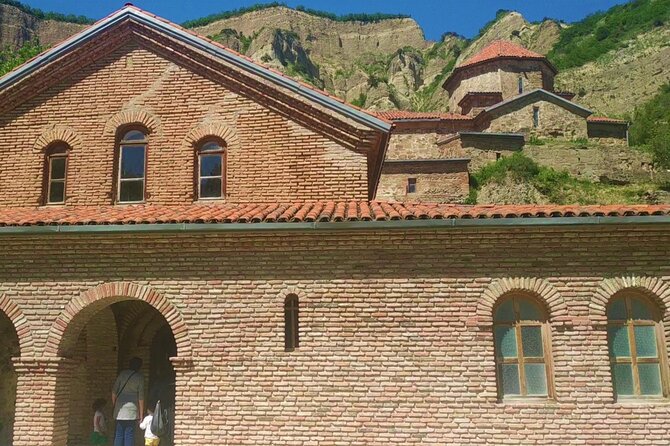
Samtavro gives you a different texture than the cathedral. It’s still sacred and UNESCO-protected, but it feels more intimate and layered, with multiple periods represented in one compact stop.
The story starts early. Samtavro Monastery was founded in the 4th century by King Mirian III, and it’s associated with Saint Nino, who is linked to early Christianity in Georgia. The main temple is stylistically dated to the first half of the 11th century, and it was probably built or rebuilt soon after Svetitskhoveli Cathedral by King George I and Catholicos-Patriarch Melchizedek I.
A practical reason to include Samtavro: it’s a good “rest your legs” stop in between larger sights. Your allotted time is about 30 minutes, which is just right for a thoughtful look without turning the day into a long slog.
It also combines Transfiguration Church and the Nunnery of St. Nino, so you’re not only looking at one structure. You’re reading a site that has function and devotion layered on top of each other, which helps you understand how these places evolved instead of freezing in time.
Dress code applies, since you’re in Georgian Orthodox spaces. If you’re short on clothing options, scarves and dresses are available near some church entrances, which can save a day if you arrive unprepared.
- Day Trip to Kakheti Wine Region Including 9 Wine Tastings★ 5.0 · 2,774 reviews
- Highlights of Caucasus Mountains-Jinvali,Ananuri,Gudauri,Kazbegi(Group tour)★ 5.0 · 2,682 reviews
- Day Trip to Kazbegi and Gudauri★ 5.0 · 2,009 reviews
- Day Trip to Mtskheta Gori and Uplistsikhe★ 5.0 · 1,801 reviews
- Tbilisi Walking Tour Including Cable Car and Traditional Bakery★ 5.0 · 1,310 reviews
Shio-Mgvime Monastery: The Hermit Cave Story You Can Feel
Shio-Mgvime is the stop with the strongest “how did they live here” factor. The monastery dates to the 6th century, founded by St. Shio, one of the Thirteen Assyrian Fathers who came to Georgia as Christian missionaries. That detail matters because it reframes the monastery as part of a larger movement of early Christian travel and settlement.
The most memorable image is the cave. St. Shio spent his last years as a hermit in a deep cave, and that is exactly the kind of setting you don’t get from a typical city church. It’s not just a building, it’s a location built for solitude.
The earliest building mentioned for Shio-Mgvime is a very plain and strict cruciform church from the 560s to 580s. Even the dome details are part of the story: it has an octagonal dome covered with a conic floor. At some point, an older stone iconostasis was housed here, and the note in the tour info says it is now at the Art Museum of Georgia.
Expect your stop to be about 1 hour. That’s enough to absorb the cave context and see what was changed later. The monastery was altered in the 11th and 18th centuries, but it retained its original architecture. In other words, you’ll see the original core ideas still there, even with later layers.
If you’re the type who likes architecture, Shio-Mgvime is a great contrast to Svetitskhoveli’s larger, more formal cathedral feel. Here, the design looks like it was made for discipline and retreat.
Pacing, Walking, and Church Dress Rules That Keep the Day Smooth
This tour is built for a full day, roughly 9 hours, and it includes walking in Mtskheta’s old town. Terrain can be uneven, and you’ll hit stairs. I recommend you treat footwear like it’s hiking shoes day, not city shoes day, even if the distances feel short.
Now for the dress rule that can make or break a smooth visit. Ladies need headscarves and dresses in Georgian Orthodox churches. Short trousers for men are forbidden. The good news is that scarves and dresses can also be found near some church entrances, so you’re not stuck if you forget.
A good approach: plan to arrive at each church ready to go in right away. If you’re adjusting clothing on the spot, you’ll lose your calm. Instead, keep a small plan in your day bag: a lightweight scarf you can reach quickly and a layer that works indoors.
Also, weather matters. The experience requires good weather, and if it’s canceled due to poor conditions you’ll be offered a different date or a full refund. That’s a real consideration for hill viewpoints like Jvari, where visibility changes everything.
Price and Value: Why $127.50 Works for a UNESCO Day
At $127.50 per person for a roughly 9-hour day, you’re paying for more than transport. You’re paying for the combination of pickup, private air-conditioned comfort, and a guide who can explain why each site matters beyond the postcard view.
The value sweet spot here is that multiple UNESCO-level sites are packed into one route. Admission at the stops listed here is free, and you’re not trying to manage separate tickets and schedules across town. The mobile ticket and guided timing also reduce the friction that typically eats up half a day on DIY trips.
One more value point: the tour includes personalized attention. Even if it’s not marketed as a small group tour, it is private, and your guide’s time is focused on your group. That matters at sites like Svetitskhoveli, where understanding the religious traditions linked to the mantle, the burial history, and the building periods makes your visit feel deeper and easier to follow.
The main tradeoff is that it’s a long day. If you hate long blocks of time on your feet, or you prefer slow museum pacing, you might find the schedule intense. But if you like seeing a lot while still having real time at each stop, this is a practical way to do it.
Who This Tour Fits Best (and Who Might Want a Different Plan)
This tour fits best if you want a one-day, UNESCO-centered introduction to Mtskheta from Tbilisi. It’s especially good for first-timers who don’t want to coordinate buses, timing, and church etiquette on their own.
It also works well if you enjoy storytelling. The guide style is clearly a highlight, with names like Giorgi and George praised for captivating explanations and for giving time to breathe in the environment. That kind of guiding makes a big difference when you’re walking through places that are centuries deep.
If you’re traveling with teens who like photos and views, Jvari delivers quickly. If you have adults who like sacred art and architecture, Svetitskhoveli and Shio-Mgvime will satisfy. And if you want variety in a short time, Samtavro adds a calmer, layered counterpart.
If you’re very sensitive to walking and stairs, plan extra care with shoes and keep your energy up. Also, if you’re not comfortable with dress requirements, get a scarf ready before you go, because the tour includes multiple churches.
Should You Book This Mtskheta UNESCO Day Trip?
Yes, if your goal is a focused day of UNESCO Mtskheta with minimal logistics stress. The mix is smart: a hill viewpoint at Jvari, a cathedral that carries major sacred and royal stories at Svetitskhoveli, a quieter monastery layer at Samtavro, and a hermit cave setting at Shio-Mgvime.
Before you book, do three quick checks. First, confirm you can handle a full 9-hour schedule and walking with stairs. Second, pack or plan for the church dress rules, especially headscarves and appropriate trousers for men. Third, keep weather in mind, because the experience can be shifted or refunded if conditions are poor.
If those boxes fit your travel style, this is a solid value way to see why Mtskheta matters, without turning your day into a logistics puzzle.
FAQ
What time does the tour start, and how long is it?
The tour starts at 9:00 am and runs for approximately 9 hours.
Is hotel pickup included?
Pickup is offered, and the tour is designed to be convenient right from your accommodation.
Are admission tickets included for the stops?
For the listed stops, admission tickets are marked as free, including Jvari Church, Svetitskhoveli Cathedral, Samtavro Church, and Shio-Mgvime Monastery.
Do I need lunch during the tour?
Lunch depends on the tour option you book. A tour with lunch includes lunch, while a budget tour does not include lunch but includes a stop in a restaurant.
What should I wear for the churches?
Ladies need headscarves and dresses in Georgian Orthodox churches. Short trousers for men are forbidden. Scarves and dresses may be available near some church entrances.
What happens if the weather is bad or I need to cancel?
The experience requires good weather. If it’s canceled due to poor weather, you’ll be offered a different date or a full refund. You can cancel up to 24 hours in advance for a full refund.
More Georgian Tours We Have Read Closely



Everything Else Across the Caucasus
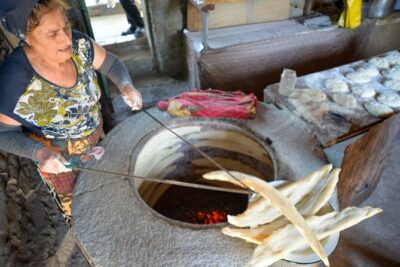

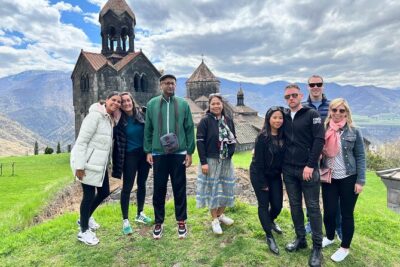
Mtskheta and the Hill Above It
Other Georgian tours we have been through, from the Black Sea to the Kakheti vineyards
- Private Adorable City Tour of Tbilisi
★ 5.0 · 3 reviews - Tbilisi Airport to Gudauri, Bakuriani, Batumi, Tbilisi
★ 5.0 · 3 reviews - Private Wine Tour In Kakheti Region with 7 Wines and Lunch
★ 5.0 · 3 reviews - Two Capitals in One Day: Tbilisi and Mtskheta Combo Tour
★ 5.0 · 3 reviews - Private Effortless transfer from Tbilisi to Gudauri ski resort
★ 5.0 · 3 reviews - Tbilisi to Gudauri Stepantsminda Private Transfer
★ 5.0 · 3 reviews
Mtskheta & Jvari Monastery, compared.
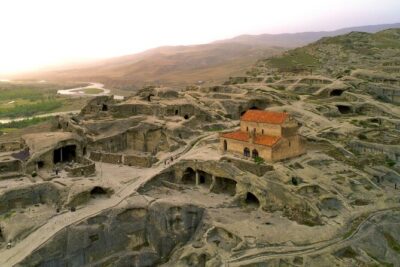 ★ 5.0Day Trip to Mtskheta Gori and UplistsikheFrom $291,801 reviews
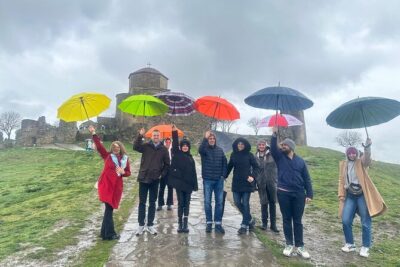 ★ 5.0Mtskheta,Jvari,Bazaar,wine tasting,Chronicles of GeorgiaFrom $20730 reviews
 ★ 5.0Mtskheta-Gori-UplistsikheFrom $90112 reviews
 ★ 4.5Mtskheta, Jvari, gori, uflistsikhe, history and panorama (group tours)From $19107 reviews
 ★ 5.0Mtskheta-Jvari-Uplistsike-Chronicle of Georgia, PRIVATE TripFrom $68105 reviews
 ★ 4.5Tbilisi – Mtskheta – Jvari. Full City Tour on Hop On Hop Off BusFrom $4091 reviews
 ★ 4.5Ancient Georgia Group Tour: Mtskheta,Jvari, Gori, UplistsikheFrom $2473 reviews
 ★ 5.0Ancient Mtskheta and Chronicle of Georgia half day tourFrom $6566 reviews
Browse the lists this tour appears in