
REVIEW · MTSKHETA & JVARI MONASTERY
Mtskheta – Jvari – Samtavro, the cradle of Georgian Christianity. (group tours)
Church views, history, and one famous blackberry bush. This 5-hour group tour ties together Jvari, Svetitskhoveli, and Samtavro, the cradle of Georgian Christianity, with air-conditioned comfort and an English guide.
I like two big things about it: the admission tickets are included for all main stops, and the guide does the heavy lifting by turning each church into part of one connected story about Christianity in Georgia.
One possible drawback: the group is sometimes bilingual, so even when you choose English, you may notice moments where the explanation switches languages and then comes back.
In This Review
- Quick hit checklist
- Why this half-day is more than three churches
- Getting there from Tbilisi: 12:00 pickup and a tight 5-hour loop
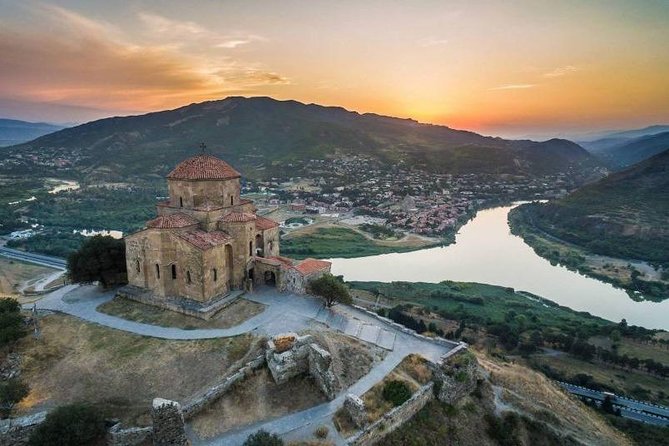
- Stop 1: Jvari Church, VI-century views over Aragvi and Kura
- Stop 2: Svetitskhoveli Cathedral, the Pillar of Life-Giving
- Stop 3: Samtavro Convent, Mirian, Queen Nana, and the blackberry story
- The guide factor: strong storytelling, with occasional language switching
- Price and value: why $20 can be a smart deal in Georgia
- What you should pack and how to plan your afternoon
- Who this tour suits best
- Should you book the Mtskheta, Jvari, Samtavro group tour?
- FAQ
- Where does the tour start?
- What time does the tour begin?
- How long is the tour?
- How much does it cost?
- Is the tour offered in English?
- Is a mobile ticket provided?
- Are admission tickets included?
- What is included in the price?
- What is not included?
- Can I cancel and get a full refund?
Quick hit checklist
- Small group size (max 15) makes it easier to ask questions and hear the guide over the bus noise
- Air-conditioned vehicle keeps the day comfortable, even if the weather is warm
- Included tickets save time and money at each religious site
- Three landmark stops in Mtskheta make a clean half-day loop instead of a complicated self-drive
- Guides by name: I’ve seen English-led tours run by people like Liza, George, Ronnie, Nino, and Gendeieta, with consistently strong context
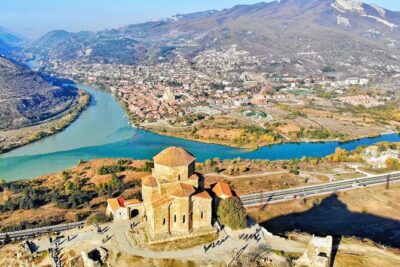
More of Mtskheta and the Jvari hill above the confluence
Why this half-day is more than three churches
Mtskheta is the kind of place where religion, legend, and national identity overlap in the same stone. This tour focuses on the core sites that help you understand why Georgian Christianity has such deep roots, long before modern tourists arrived with maps and camera phones.
What makes it work well for most visitors is the pacing. You are not asked to memorize a lecture. Instead, you visit three places that each explain a different piece of the bigger picture. You see how the faith spread, where important figures are remembered, and why specific relics and stories became part of local tradition.
You also get a practical advantage: you are traveling with a guide in an organized group. You show up, you walk the right routes, and you don’t waste energy trying to figure out what to look at first. For a first trip to Mtskheta, that alone is valuable.
Getting there from Tbilisi: 12:00 pickup and a tight 5-hour loop
This tour starts at 3 Vakhtang Gorgasali St in Tbilisi at 12:00 pm, and it returns you to the same meeting point at the end of the experience. Plan on about 5 hours total, give or take real-world timing.
Two logistics points matter here:
1) Small group, max 15
Smaller groups typically mean less standing around, fewer bottlenecks at entrances, and more chance your guide can actually keep your group together.
2) Air-conditioned vehicle
Mtskheta is a quick trip from Tbilisi, but Georgia weather can swing. The vehicle helps you arrive at the first stop without feeling drained.
One thing to note from real day-to-day experience with this kind of group schedule: punctuality can vary. On some tours the start can run later than the advertised time, so if your afternoon plans are strict, keep them flexible.
If you want this to fit your schedule cleanly, it is smart to book ahead. It’s often reserved about 10 days in advance.
Stop 1: Jvari Church, VI-century views over Aragvi and Kura
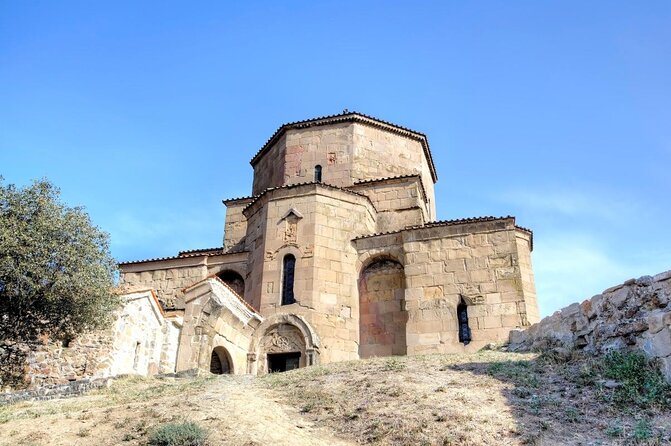
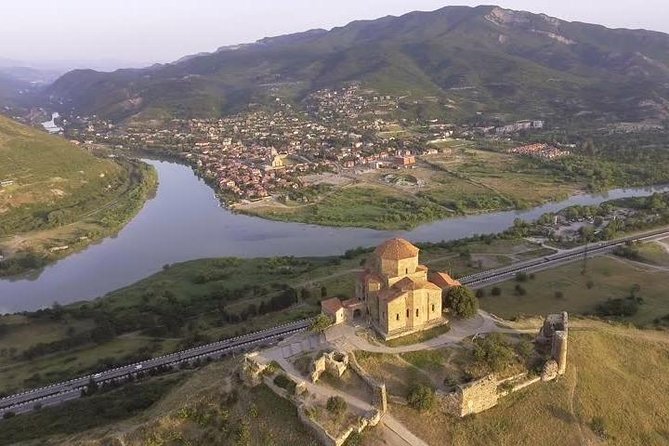
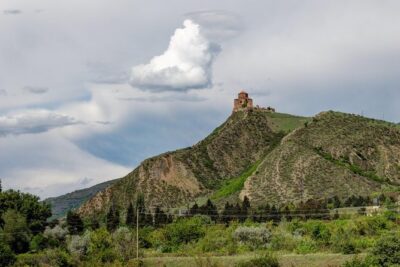
You begin with a walk up to Jvari Church, a VI-century temple with a commanding position above Mtskheta. The route starts along a section associated with big names like Pushkin, Lermontov, Tchaikovsky, Dumas-father, and Tolstoy, and the walk takes you past spots linked in local storytelling to events described in Lermontov’s poem Mtsyri.
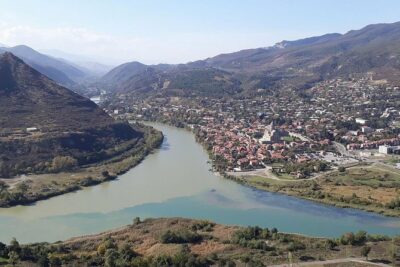
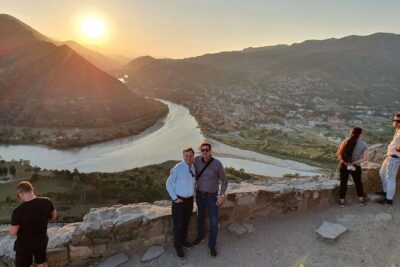
Then you reach the church, and the reason it’s famous hits you fast: the views. From Jvari you can look out over the meeting of rivers, described in the tour as the Aragvi and the Kura coming together. You also get a sense of why religious sites were often built where you can see far. It’s not just spiritual symbolism, it’s geography that helps the place feel important.
How long you’ll spend here: about 40 minutes, including time on site. That’s enough to get photos, absorb the setting, and hear the main story without the day feeling rushed.
One practical consideration: this is a walk. If you have mobility limits, you might want to treat this as the “most active” part of the day and prepare accordingly with comfortable shoes.
Stop 2: Svetitskhoveli Cathedral, the Pillar of Life-Giving
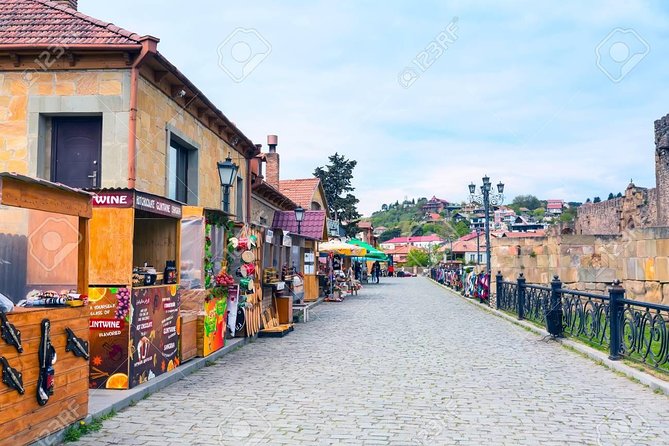
Svetitskhoveli Cathedral is the patriarchal cathedral of the Georgian Orthodox Church, and it’s the historical center of gravity for many visitors. The tour gives you the essentials: what the cathedral is, why it mattered politically and spiritually, and what events shaped its reputation over time.
This stop is also where the tour’s “cradle of Georgian Christianity” theme turns concrete. You visit the cathedral known as the Pillar of Life-Giving, and you learn about its burial associations with early Christian relics, including the tunic of Jesus Christ and the mantle of Elijah the Prophet. The tour also references relics connected to St. Andrew the First-Called.
Another key point: the cathedral is not just about one moment. It’s a layered place where people came to worship across generations. Even if you do not read every inscription, you feel how long this has been a focal point.
Time on site is about 1 hour 30 minutes, which is a solid chunk for a major cathedral. In that time, you can usually do three things well:
- catch the main story from your guide
- look closely at the parts that draw the eye
- step back and re-orient yourself for better photos
If you are the type who hates waiting, this stop is still worth it because the guide’s context helps you move from “pretty church” to “I understand why this matters.”
- Day Trip to Kakheti Wine Region Including 9 Wine Tastings★ 5.0 · 2,774 reviews
- Highlights of Caucasus Mountains-Jinvali,Ananuri,Gudauri,Kazbegi(Group tour)★ 5.0 · 2,682 reviews
- Day Trip to Kazbegi and Gudauri★ 5.0 · 2,009 reviews
- Day Trip to Mtskheta Gori and Uplistsikhe★ 5.0 · 1,801 reviews
- Tbilisi Walking Tour Including Cable Car and Traditional Bakery★ 5.0 · 1,310 reviews
Stop 3: Samtavro Convent, Mirian, Queen Nana, and the blackberry story
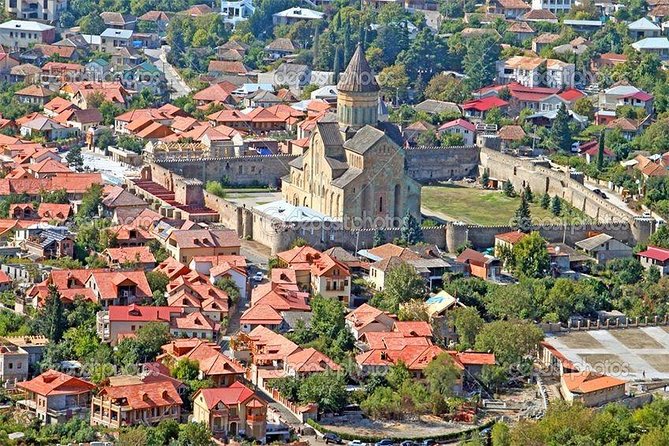
After Svetitskhoveli, you stroll to Samtavro’s convent and temple area. Here the tour shifts from cathedral history to royal memory and early Christian legend in a more intimate setting.
You’ll see the grave of Mirian, the first Georgian Christian king, and his wife Queen Nana. The tour also highlights relics of holy elder Gabriel Samtavrii, connecting the site to religious figures linked with the early spread of Christianity.
Then comes the detail people talk about because it’s so specific: the tour mentions a blackberry bush connected to Queen Nina, and the story that it was cut down and later grew back, becoming a local miracle symbol. Even if you treat miracles as faith-based tradition rather than proof-based history, the story tells you something real about how people anchored belief in everyday nature.
You spend about 30 minutes here. That’s enough time to see the important graves and absorb the story without dragging the day out. It also gives the tour a pleasing rhythm: big cathedral, then shorter, more story-driven convent time.
If you enjoy small symbolic details, this stop often feels the most personal. If you want a longer church experience, you might wish Samtavro had more time, but the day is designed to keep the whole loop manageable.
The guide factor: strong storytelling, with occasional language switching
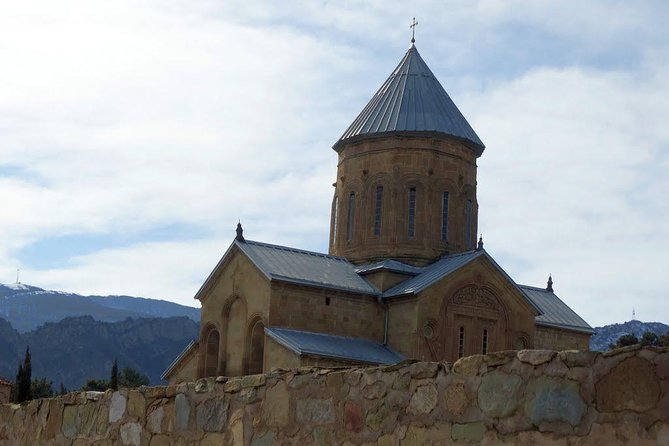
This is a guided tour, and the quality of the guide can make or break the day. In the feedback I’ve seen, people like Liza, George, Ronnie, and Nino get praise for clear explanations and helpful context around Georgian Christianity and church history.
There is also one issue worth knowing up front. This is typically a bilingual setup, so the guide may speak in another language first and then switch to English. One response explained that languages can get mixed up even though the tour is bilingual and the stories get explained well overall. Translation rhythm matters. If you need nonstop English, you might feel that the flow is not always as smooth as a strictly English-only group.
The good news is that because the group is small, you can usually ask a follow-up question if you missed a point. When guides are organized, they handle that without making you feel awkward.
My practical tip: when you start, do a quick mental checklist of what you care about most. If it’s relics, focus your questions around Svetitskhoveli. If it’s early conversion stories, center questions on Mirian and Queen Nana at Samtavro. That way, even if there are brief bilingual interruptions, you still leave with what matters to you.
Price and value: why $20 can be a smart deal in Georgia
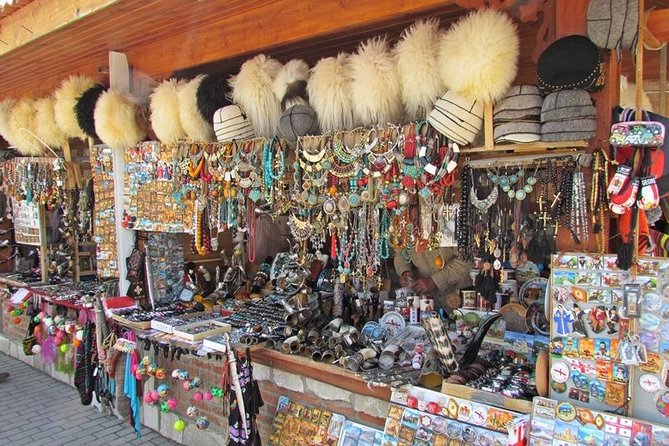
At $20 per person, this tour is not trying to be a luxury private guide. It’s built as a value-focused group experience: air-conditioned vehicle, a guide, and admission tickets included at each main stop.
That mix is the real value. Many low-cost tours either skip key admissions or make you pay at the door. Here, you get tickets folded into the price, which means you spend less time dealing with logistics and more time on the sites themselves.
The price also works well because the itinerary is tight and efficient. In about five hours, you cover three high-priority historical and religious destinations tied to Georgian Christianity. If your goal is to see the essential Mtskheta monuments without spending your day plotting bus routes or driving yourself, this is a simple win.
Where it may feel less valuable: if you already know Georgian church history well and you want deeper time in one place, you might feel the tour is a highlight reel. This is especially true because it’s built around short visits at each stop, 40 minutes, 1 hour 30 minutes, and 30 minutes.
What you should pack and how to plan your afternoon
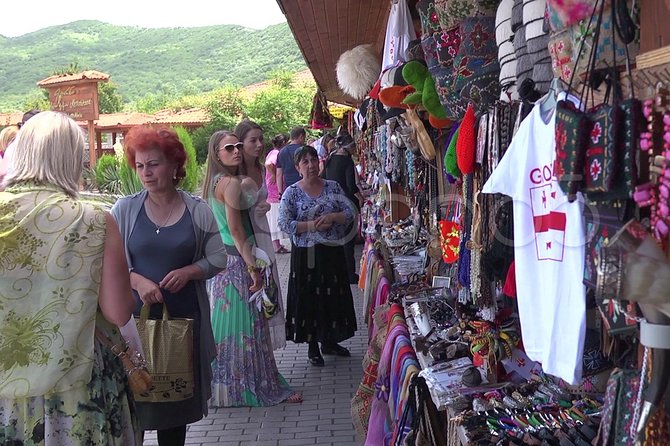
You are outdoors for parts of this day, including the walk to Jvari. Bring comfortable walking shoes. Even if the route is not extreme, you will appreciate footwear that works for uneven surfaces.
Other practical things:
- Bring water, especially if your day in Tbilisi is warm
- Keep a light layer for church interiors, which can feel cooler
- Charge your phone, because the river-and-city views from Jvari can tempt you into extra photos
For your afternoon plans, leave some breathing room. With group tours, timing can shift. If you want to connect this with another activity later in Tbilisi, try to avoid anything that starts immediately at the end time.
Dinner is not included. So plan an easy meal afterward in Tbilisi, not during your five-hour loop.
Who this tour suits best
This experience is best for you if:
- you want a first-timer friendly introduction to Mtskheta’s key Christian sites
- you prefer an English guide rather than DIY navigation
- you like stories tied to locations, relics, and early conversion traditions
- you want a half-day plan that feels efficient
It’s less ideal if:
- you have limited time in Georgia and you are debating between several regions
- you want more than three stops or you crave long unstructured time inside one cathedral
- you need strict, uninterrupted English language delivery the whole time
If you fall into the “I want everything” category, you might still book, but then pair it with other experiences on different days so you are not overloaded by churches in one go.
Should you book the Mtskheta, Jvari, Samtavro group tour?
I’d book it if you want a straightforward, guided way to hit the best-known Georgian Christianity sites in one afternoon, with included admissions and an organized loop from Tbilisi.
Skip it, or at least consider alternatives, if you feel you would rather trade church time for another part of Georgia that fits your interests better, or if you know you are sensitive to bilingual pacing.
If you do book, go in with a simple goal: learn how the story moves from Jvari’s dramatic setting to Svetitskhoveli’s major cathedral relic associations, then to Samtavro’s royal graves and the blackberry tradition. Do that, and you’ll come away with a clear mental map, not just a list of buildings.
FAQ
Where does the tour start?
The tour starts at 3 Vakhtang Gorgasali St, T’bilisi 0105, Georgia.
What time does the tour begin?
The start time is 12:00 pm.
How long is the tour?
The duration is about 5 hours.
How much does it cost?
The price is $20.00 per person.
Is the tour offered in English?
Yes, the tour is offered in English.
Is a mobile ticket provided?
Yes, the tour includes a mobile ticket.
Are admission tickets included?
Yes. Admission tickets are included for Jvari Church, Svetitskhoveli Cathedral, and Samtavro’s Convent.
What is included in the price?
It includes an air-conditioned vehicle and a highly qualified guide.
What is not included?
Dinner is not included.
Can I cancel and get a full refund?
Yes, free cancellation is available. You can cancel up to 24 hours in advance for a full refund.
More Georgian Tours We Have Read Closely



Everything Else Across the Caucasus

Mtskheta and the Hill Above It
Other Georgian tours we have been through, from the Black Sea to the Kakheti vineyards
- Private Adorable City Tour of Tbilisi
★ 5.0 · 3 reviews - Tbilisi Airport to Gudauri, Bakuriani, Batumi, Tbilisi
★ 5.0 · 3 reviews - Private Wine Tour In Kakheti Region with 7 Wines and Lunch
★ 5.0 · 3 reviews - Two Capitals in One Day: Tbilisi and Mtskheta Combo Tour
★ 5.0 · 3 reviews - Private Effortless transfer from Tbilisi to Gudauri ski resort
★ 5.0 · 3 reviews - Tbilisi to Gudauri Stepantsminda Private Transfer
★ 5.0 · 3 reviews
Mtskheta & Jvari Monastery, compared.
 ★ 5.0Day Trip to Mtskheta Gori and UplistsikheFrom $291,801 reviews
 ★ 5.0Mtskheta,Jvari,Bazaar,wine tasting,Chronicles of GeorgiaFrom $20730 reviews
 ★ 5.0Mtskheta-Gori-UplistsikheFrom $90112 reviews
 ★ 4.5Mtskheta, Jvari, gori, uflistsikhe, history and panorama (group tours)From $19107 reviews
 ★ 5.0Mtskheta-Jvari-Uplistsike-Chronicle of Georgia, PRIVATE TripFrom $68105 reviews
 ★ 4.5Tbilisi – Mtskheta – Jvari. Full City Tour on Hop On Hop Off BusFrom $4091 reviews
 ★ 4.5Ancient Georgia Group Tour: Mtskheta,Jvari, Gori, UplistsikheFrom $2473 reviews
 ★ 5.0Ancient Mtskheta and Chronicle of Georgia half day tourFrom $6566 reviews
Browse the lists this tour appears in