
REVIEW · MTSKHETA & JVARI MONASTERY
Mtskheta-Jvari-Gori-Uplistsikhe-Stalins Museum All inclusive tour
Rock-hewn caves and Soviet secrets in one day. This all-inclusive route from Tbilisi strings together ancient faith sites and Stalin’s Museum, with pickup and private air-conditioned transport. You’ll see how Georgia’s power, belief, and politics show up in stone, rivers, and museum rooms.
I especially love the time in Uplistsikhe, a rock-hewn cave town with roots tied to very old cultures, first appearing in written history in the 7th century. I also like that the religious stops are not quick photo breaks, you get real context at Jvari and the UNESCO-listed Svetitskhoveli Cathedral complex.
The main trade-off is time. The day runs about 8 to 10 hours, and the lunch in Gori can land later, so come hungry and plan for a long sit-to-walk rhythm with lunch in the middle.
In This Review
- Key things worth your attention
- How this 8 to 10 hour combo tour really feels from Tbilisi
- Uplistsikhe Cave Town: a rock-hewn city with very deep roots
- Goristsikhe in Gori: fortress ruins and the meaning of “Gori Prison”
- Stalin’s Museum: 60,000 exhibits, a birth house, and his train car
- Jvari Church: the UNESCO hilltop at the confluence
- Svetitskhoveli Cathedral complex: relics, tombs, and big Georgian presence
- Lunch in Gori, timing, and how to keep the day comfortable
- Price check: is $155 per person good value?
- Who this tour fits best (and who might hesitate)
- Should you book this tour?
Key things worth your attention
- Uplistsikhe’s cave-town story goes back to the early Bronze Age monuments and the Kura-Araxes culture
- Stalin’s Museum has scale with 60,000 exhibits plus a memorial house and his personal train car
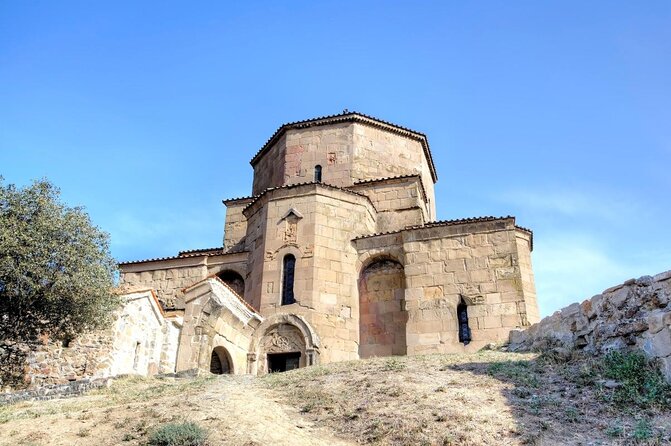
- Jvari is about the view and the symbolism at the confluence of the Aragvi and Mtkvari rivers
- Svetitskhoveli is a complex, not a single church with bell tower, gate, castles, and preserved holy relics
- A UNESCO double hit with Jvari and Svetitskhoveli listed as World Heritage sites
- Expect moderate walking on hills and uneven stone paths across multiple sites
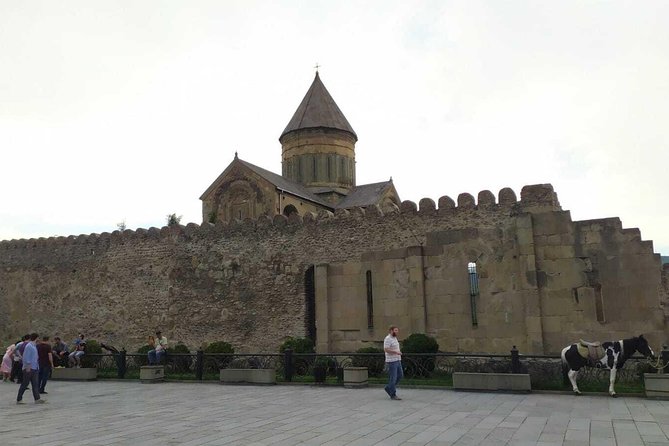
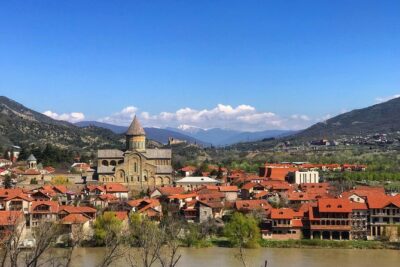
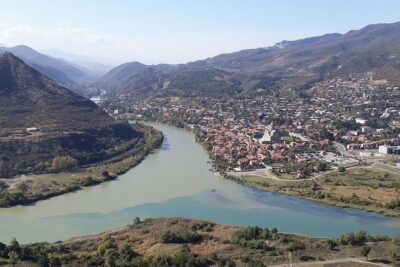
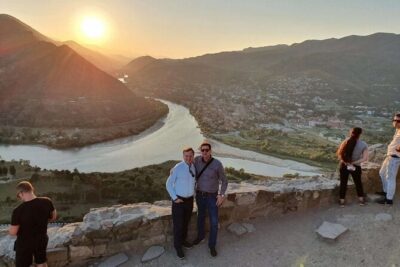
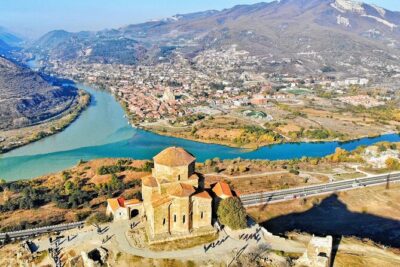
More of Mtskheta and the Jvari hill above the confluence
How this 8 to 10 hour combo tour really feels from Tbilisi
This is the kind of day trip that covers multiple “Georgia flavors” in one go: cave city, fortress ruins, two UNESCO Christian sites, and a major Soviet-era museum. The tour starts at 9:30 am and runs about 8 to 10 hours, so you’re building a day around momentum more than lingering.
You’ll ride in a private, air-conditioned vehicle with pickup offered. That matters because the destinations are spread out, and switching between hilltops and museums would be tiring with public transport. You also get bottled water, and a mobile ticket approach helps you keep things simple when you’re moving from one stop to the next.
One more practical point: admissions are partly handled for you. Stalin’s Museum and Uplistsikhe Cave Town have tickets included, while several other sites have free admission during the tour (Goristsikhe, Jvari Church, and Svetitskhoveli Cathedral). So your money goes into what’s usually the costlier experience, the big museums and main cave site.
Uplistsikhe Cave Town: a rock-hewn city with very deep roots
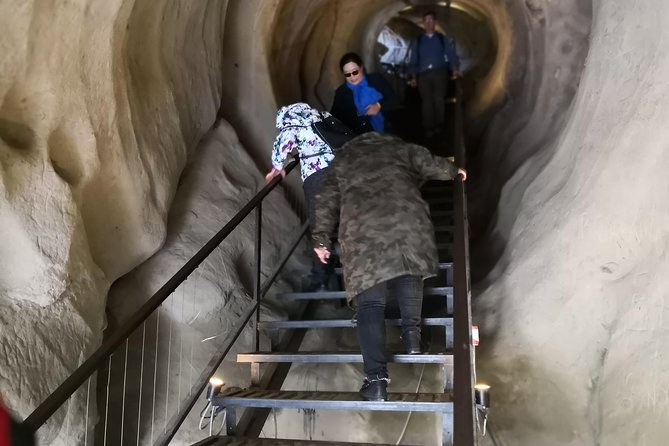
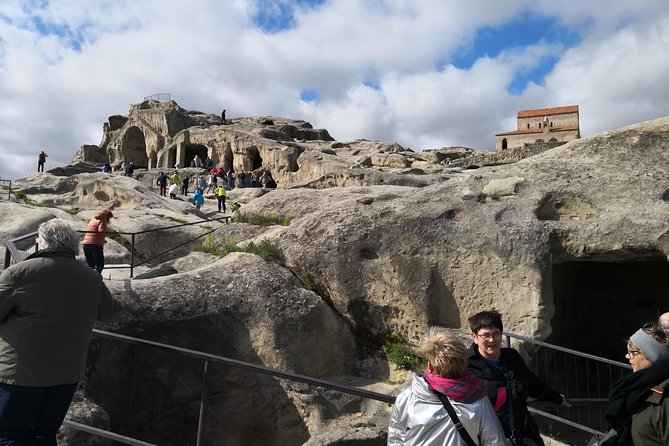
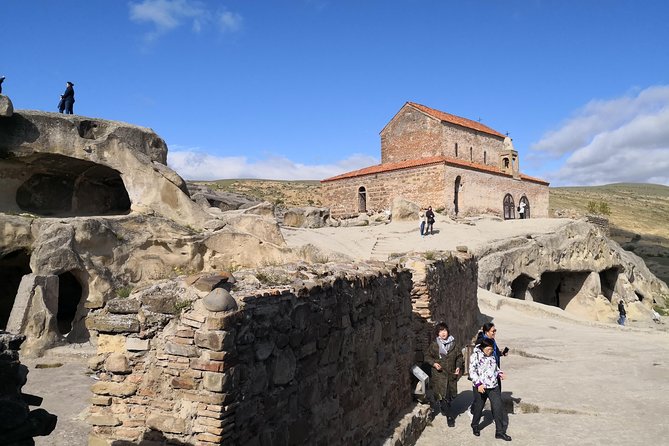
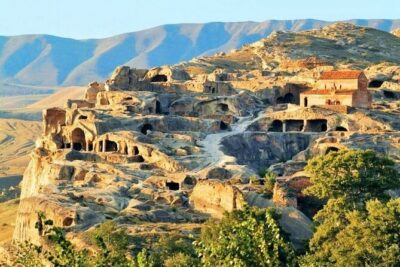
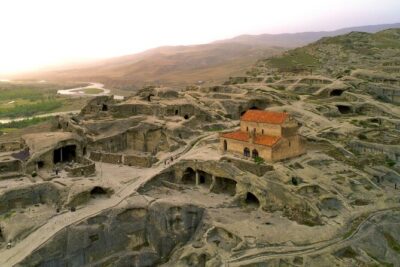
Uplistsikhe is one of those places where the geography does half the explaining. The cave city sits about 10 km east of Gori on the left bank of the Mtkvari River, and it feels like you’re walking through a timeline carved into the same landscape for generations.
You’ll spend about 2 hours here, and the ticket is included. The city is described as one of the oldest settlements in the Caucasus region, with written references appearing in the 7th century. But what makes Uplistsikhe extra interesting is that the surrounding archaeological and architectural monuments include the oldest dating to the early Bronze Age, linked to the Kura-Araxes culture.
Also, the nickname used for this place is Fortress of the Lord, which hints at how seriously the site was viewed. Even if you don’t catch every detail at first glance, you can still feel why people built here: the rock provides shelter, and the terrain provides natural protection.
What to watch for: cave towns are not museum-floor smooth. Even without getting into specifics, you should expect uneven surfaces and a bit of climbing as you follow the routes. If your pace is slower, you may want to stay close to your guide’s group flow so you don’t lose the schedule.
Goristsikhe in Gori: fortress ruins and the meaning of “Gori Prison”
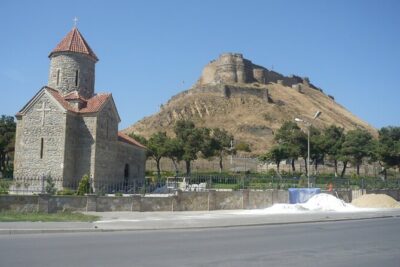
Gori is where Uplistsikhe makes sense. You go from rock city to rock hill, and the story connects. At this stop, you visit Goristsikhe, a historic fortress area on a rocky hill in the center of Gori.
Plan for about 40 minutes. Admission is listed as free, so this is a good “stretch break” in the middle of the day, even though you still get walking and hill views.
The timeline here is long. Findings and ruins on the northern slope suggest a fortress presence as far back as the 1st century BC. In later manuscripts, the fortress is first mentioned in the 13th century as Gori Prison. That contrast is what makes it interesting: you’re not just seeing ancient stone, you’re seeing how a location can keep getting reused for power, control, and defense.
If you’re short on energy, keep your expectations realistic. This stop is shorter than Uplistsikhe and doesn’t have the same “everything in one building” feeling as the museum. Treat it as a context stop, not the main event.
Stalin’s Museum: 60,000 exhibits, a birth house, and his train car
Then the day takes a sharp turn into the 20th century with Stalin’s Museum. This is the stop many people remember, partly because it’s so concrete and partly because it’s so specific.
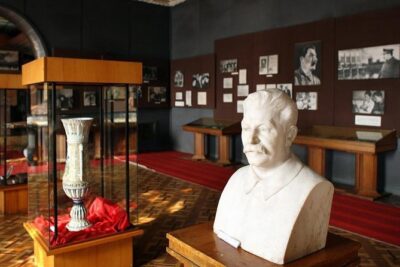
You’ll have about 1 hour here, and tickets are included. The museum is said to have over 60,000 exhibits, founded in 1937. The holdings include the memorial house believed to be Stalin’s birthplace, a separate exhibition building, and even Stalin’s personal train car, which he used on trips to Tehran, Yalta, and Potsdam.
There are also personal belongings in the collection. That mix is important because Stalin’s story doesn’t just show up as poster-style history. The museum uses objects to bring you closer to the personality and the machinery of power.
A balanced note: if you prefer medieval churches and architecture, this might feel like a tonal reset. On the other hand, if you want to understand how Georgia got pulled into Soviet life, it’s a powerful stop. It also helps you connect the dots when you later look at Georgian identity and religious sites with a different lens.
Other runs west to Gori and the Uplistsikhe rock town
- Mtskheta-Jvari-Uplistsike-Chronicle of Georgia, PRIVATE Trip★ 5.0 · 105 reviews
- Day tour to Chronicles of Georgia, Gori city, Uplistsikhe cave★ 5.0 · 86 reviews
- Ancient Georgia Group Tour: Mtskheta,Jvari, Gori, Uplistsikhe★ 4.5 · 73 reviews
- Mtskheta – Jvari + Gori – Uplistsikhe Tour★ 5.0 · 49 reviews
- Mtskheta – Gori – Uplistsikhe caves • Private tour★ 5.0 · 24 reviews
Jvari Church: the UNESCO hilltop at the confluence
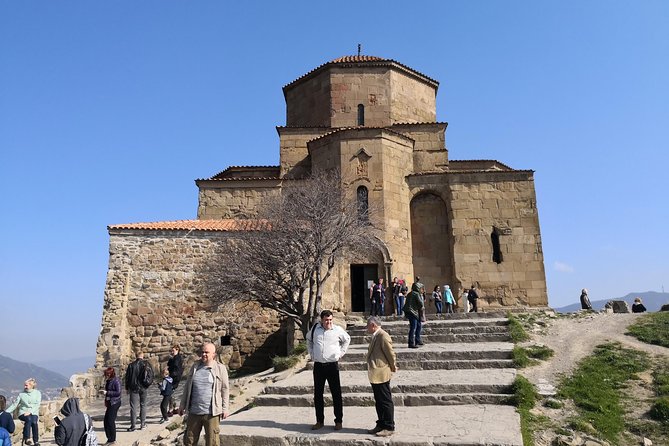
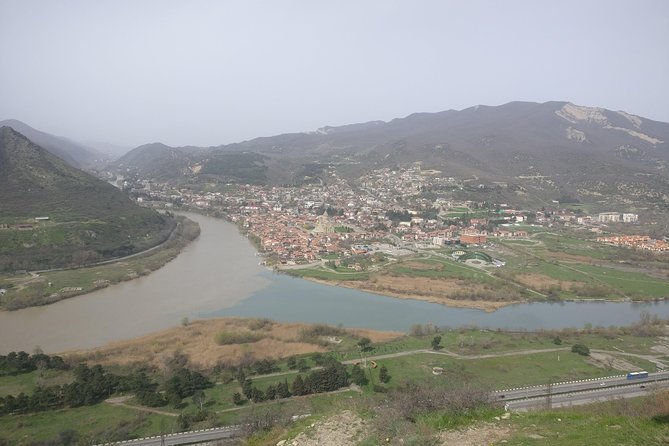
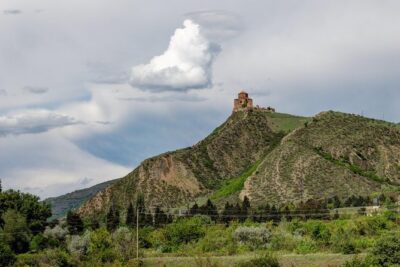
After the museum, the tour shifts back to spiritual architecture with Jvari Church. This is a 6th-century Georgian Orthodox monastery built on a hill opposite Mtskheta, at the confluence of the Aragvi and Mtkvari rivers.
You’ll spend about 40 minutes, and admission is listed as free. This stop is included on the UNESCO World Heritage Site list, and that shows up in more than paperwork. The site’s story is tied to early Christianity and political authority.
According to the details shared for the site, after Christianity’s adoption, King Mirian III erected a huge wooden cross on the spot. Later, in the second half of the 6th century, Guaram, ruler of Kartli, built a smaller church beside the Holy Cross. Even if you only have a short time here, those layers help you understand why the hill matters.
What I like about Jvari for first-timers: it’s easier to appreciate from the outside than many complex interiors. The location gives you the “why now” feeling, rivers, hill, and the kind of view you can use to orient yourself.
Svetitskhoveli Cathedral complex: relics, tombs, and big Georgian presence
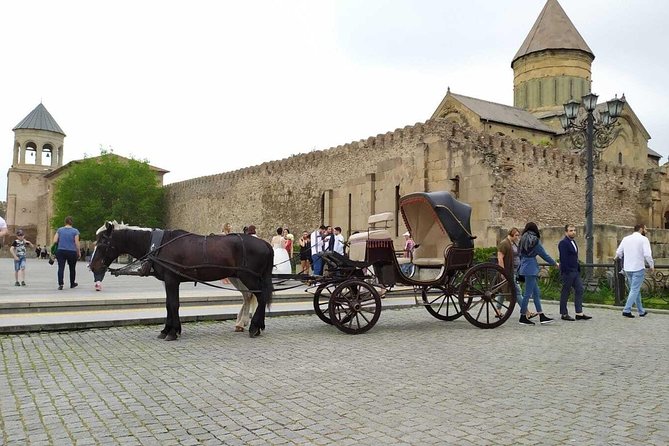
If Jvari is about the hill and the rivers, Svetitskhoveli Cathedral is about scale and significance. This architectural complex dates to the 11th century and has served as a religious center for centuries.
Your time here is about 1 hour, and admission is free. The complex includes not only the church, but also a gate, bell tower, castles, and clerical residences. That setup matters, because you’re not just looking at one landmark. You’re seeing the broader way the religious center functioned.
Two relics are specifically mentioned as preserved here: the mantles of Christ and of Prophet Elijah. There’s also a notable tomb inside, the tomb of King Vakhtang Gorgasali, described as the founder of Tbilisi.
This is also another UNESCO-listed stop, and it shows in the level of care given to the site’s meaning. Even if you’re not deep into church art, the combination of architecture plus the story of the preserved relics gives you a reason to slow down.
Practical note: like many major religious sites, you’ll want to dress respectfully and keep your pace calm, especially if other visitors are around.
Lunch in Gori, timing, and how to keep the day comfortable
Lunch is included as lunch in Gori Restaurant. Water is also included, and bottled water is on hand.
But here’s the realistic advice: with a packed day and multiple stops, lunch can arrive later than you’d ideally want. That shows up as a potential frustration point for some people, especially if you’re hungry early or want a more relaxed break.
To make it easier on yourself, do two things. First, bring a small snack for the drive if you know you get hungry between major stops. Second, wear comfortable shoes. The cave town and the hilltop sites are the two places where you’ll feel any lack of support.
Also, alcohol is not included. If you want wine, it’s something you’d need to plan for separately.
Price check: is $155 per person good value?
At $155 per person, this tour can be a good deal if you value convenience and don’t want to piece together transport plus tickets plus a long list of stops.
Here’s where the value comes from:
- Private transportation in an air-conditioned vehicle plus fuel surcharge
- Lunch included in Gori
- Bottled water
- Entrance tickets included for Stalin’s Museum and Uplistsikhe Cave Town
On the other hand, admissions for Goristsikhe, Jvari Church, and Svetitskhoveli Cathedral are listed as free for this tour. So your paid portion is mainly supporting the big paid attractions, the cave city and the museum.
If you can get a comparable schedule on your own, you might save money on paper. But factoring in the time and stress of getting between hilltop UNESCO sites and a museum in Gori, the all-in feel can be worth it.
If you’re the type who hates long days, this is not a “slow travel” choice. It’s a packed culture route, designed to get you to the major hitters.
Who this tour fits best (and who might hesitate)
This works best for you if you like variety and want a single day that covers major Georgian themes: early Christian architecture, ancient cave settlements, and Soviet history with real-world objects.
You’ll also likely enjoy it if you’re okay with moderate walking and short site visits. The stops are time-managed in a way that keeps the day moving, around 2 hours at Uplistsikhe, then shorter windows at Goristsikhe, Jvari, and Svetitskhoveli, with about 1 hour at Stalin’s Museum.
You might hesitate if:
- You’re sensitive to schedule pressure and need more breathing room at each site
- You strongly prefer either medieval religious stops or modern museums, and dislike having both on one ticket
One more small tip for the day’s experience: the quality of the day can depend on how comfortably you connect with your guide’s explanations. In similar tours, a guide named David has been noted for letting people take their time and for arranging a nice wine tasting on top of the program. So if that kind of add-on matters to you, ask about it on the day.
Should you book this tour?
I’d book it if you want one efficient day that hits UNESCO sights, Uplistsikhe’s cave-city atmosphere, and Stalin’s Museum without you coordinating a thing. It’s also a solid pick for first-timers who want a broad picture of Georgia across centuries.
Skip it if you hate tight pacing or if you know you’ll need extra time in a single location, because this is designed to cover a lot. If you do book, come ready for hills, wear comfortable shoes, and keep your expectations aligned: you’re getting the main experience at each stop, not a slow, deep-only exploration of one site.
If you want a culture-heavy day that feels like Georgia in two key modes, ancient stone and modern history, this one earns its place.
Museum Stops Worth the Entrance

West to Gori and the Rock Town
Mtskheta and the Hill Above It
Other Georgian tours we have been through, from the Black Sea to the Kakheti vineyards
- Private Adorable City Tour of Tbilisi
★ 5.0 · 3 reviews - Tbilisi Airport to Gudauri, Bakuriani, Batumi, Tbilisi
★ 5.0 · 3 reviews - Private Wine Tour In Kakheti Region with 7 Wines and Lunch
★ 5.0 · 3 reviews - Two Capitals in One Day: Tbilisi and Mtskheta Combo Tour
★ 5.0 · 3 reviews - Private Effortless transfer from Tbilisi to Gudauri ski resort
★ 5.0 · 3 reviews - Tbilisi to Gudauri Stepantsminda Private Transfer
★ 5.0 · 3 reviews
Mtskheta & Jvari Monastery, compared.
 ★ 5.0Day Trip to Mtskheta Gori and UplistsikheFrom $291,801 reviews
 ★ 5.0Mtskheta,Jvari,Bazaar,wine tasting,Chronicles of GeorgiaFrom $20730 reviews
 ★ 5.0Mtskheta-Gori-UplistsikheFrom $90112 reviews
 ★ 4.5Mtskheta, Jvari, gori, uflistsikhe, history and panorama (group tours)From $19107 reviews
 ★ 5.0Mtskheta-Jvari-Uplistsike-Chronicle of Georgia, PRIVATE TripFrom $68105 reviews
 ★ 4.5Tbilisi – Mtskheta – Jvari. Full City Tour on Hop On Hop Off BusFrom $4091 reviews
 ★ 4.5Ancient Georgia Group Tour: Mtskheta,Jvari, Gori, UplistsikheFrom $2473 reviews
 ★ 5.0Ancient Mtskheta and Chronicle of Georgia half day tourFrom $6566 reviews
Browse the lists this tour appears in