
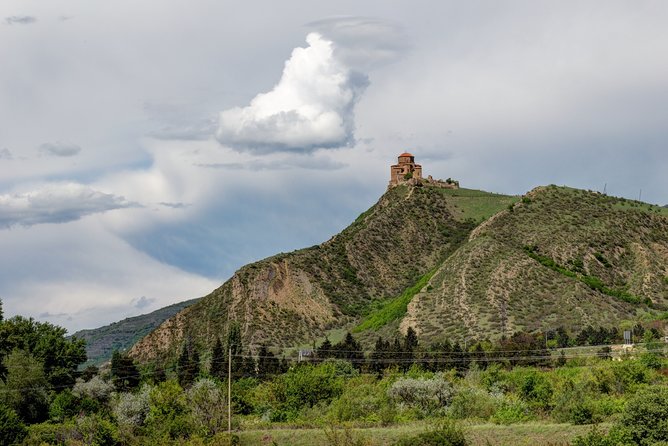
REVIEW · MTSKHETA & JVARI MONASTERY
Mtskheta, Jvari, gori, uflistsikhe, history and panorama (Private tours)
One of Georgia’s best day routes starts with a view. This private tour strings together Jvari Church and Mtskheta’s early-Christian sites, then finishes with the pre-Christian cave city of Uplistsikhe. I like how the route follows Georgia’s big story from ancient times to Christianity in one long, satisfying day.
I also really like the way the guide builds connections as you walk, from the hillside church to the cathedral sites tied to saints and relics. The presence of a highly qualified guide (plus WiFi and an air-conditioned car) makes the long day feel organized rather than rushed.
One drawback to consider: lunch is not included, and you may have extra ticket costs for the optional stops in Gori and Uplistsikhe, so it helps to plan for that.
In This Review
- Key highlights worth your time
- A route that connects Bronze Age Georgia to Christianity
- Tbilisi to Jvari Church: start with the big view
- Svetitskhoveli Cathedral: where the stories get serious
- Samtavro Church and the Miraculous Blackberry
- Optional Stalin Museum in Gori: a modern-history detour
- Uplistsikhe cave complex: pre-Christian Georgia in stone
- Value and logistics: what you pay for (and what you don’t)
- What to expect from your guide, and how to get more out of it
- Timing tips: how to make the day feel relaxed
- Food on the move: don’t skip lunch planning
- Who this tour is best for
- Should you book this private Mtskheta, Jvari, Gori, and Uplistsikhe tour?
- FAQ
- What is the tour duration?
- What is the price per person?
- What is included in the tour price?
- Is lunch included?
- Are there extra tickets for any stops?
- Is pickup offered, and where is the meeting point?
- What time does the tour start?
- Is this a private tour or shared group?
- Can I get a full refund if I cancel?
Key highlights worth your time
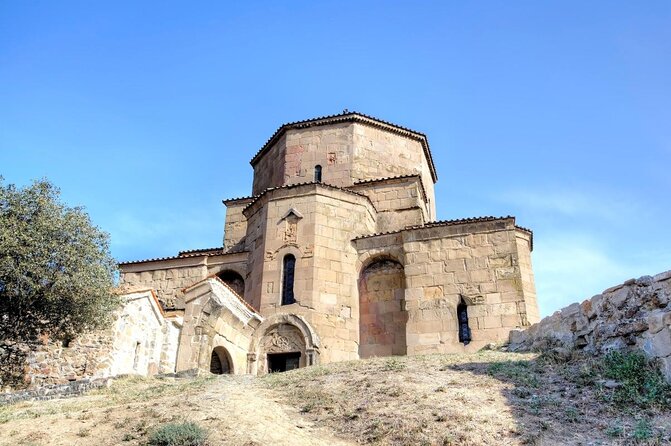
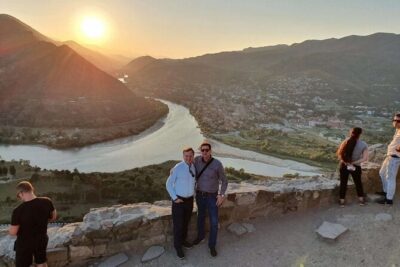
- Hillside panoramas at Jvari, with Mtskheta and the merging rivers in view
- Svetitskhoveli Cathedral, tied to major Christian relics and Georgian church history
- Samtavro Church, including the grave of King Mirian and the famous blackberry story
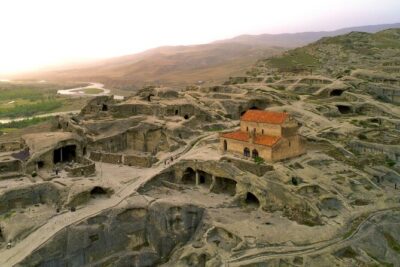
- Uplistsikhe cave city, with ancient trade stories and real stone “labyrinth” rooms
- Optional Stalin Museum in Gori, if your group wants a 20th-century detour
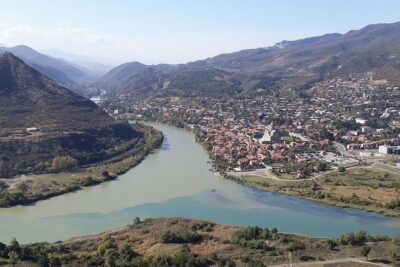
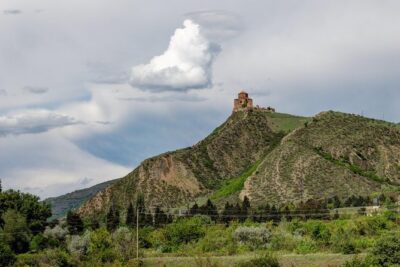
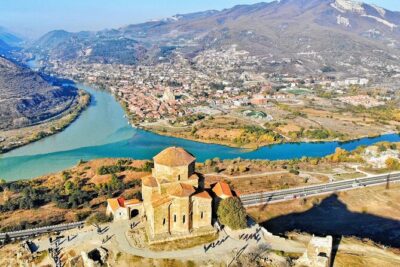
More of Mtskheta and the Jvari hill above the confluence
A route that connects Bronze Age Georgia to Christianity
This is the kind of day trip that feels like a timeline you can see with your own eyes. You start with Jvari, a sixth-century church placed high enough to take in the land and rivers that shaped Mtskheta. Then you move into the cathedral and church sites that explain how early Christianity took root and how it was carried forward through the Middle Ages.
The payoff is not just “more places.” It’s the order. You’re shown how Georgia’s culture layered over time, from very old, pre-Christian life in caves to later religious centers in the town.
Tbilisi to Jvari Church: start with the big view
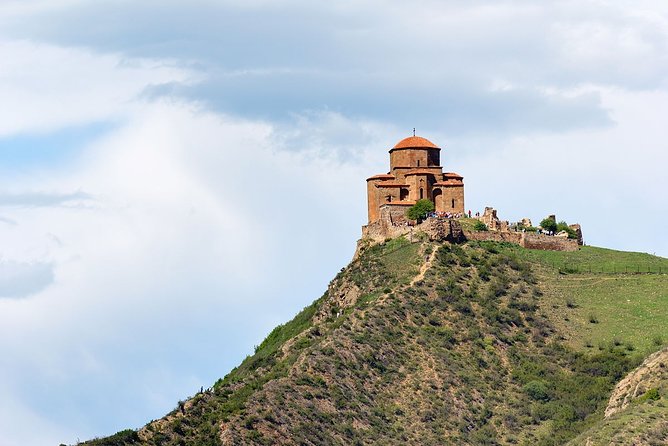
Your day kicks off at 9:30 am, with pickup available. You meet at 3 Vakhtang Gorgasali St in Tbilisi, and then you head out toward the hilltop.
At Jvari, the walk begins along a road linked with famous names, and you’ll pass places connected to events that inspired Lermontov’s poem Mtsyri. That matters because it gives the setting a mood, not just a location. Then you climb up to the Jvari temple itself, a sixth-century church that gives you a wide, unforgettable view over Mtskheta.
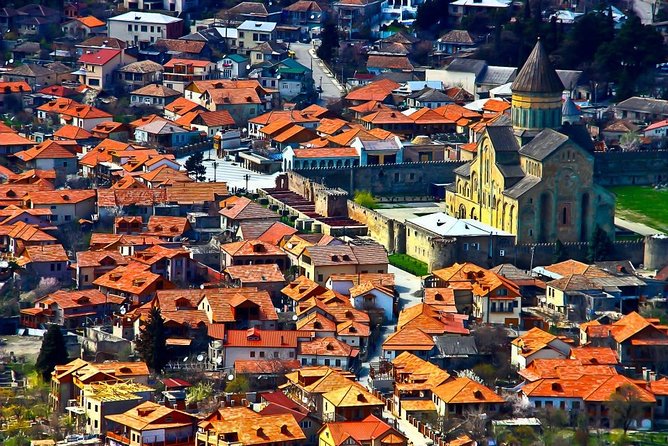
From up there, the key image is the way the Aragvi and Kura rivers meet. It’s exactly the kind of sight that makes you understand why people kept choosing this area, long before cathedrals and even long before modern roads.
Practical tip: bring grippy shoes. The paths up and around viewpoints are often uneven, and you’ll want stable footing for photos and for the short climb.
Svetitskhoveli Cathedral: where the stories get serious
Next you head into Mtskheta’s religious heart: Svetitskhoveli Cathedral, also called the Pillar of Life-Giving. This is the patriarchal cathedral of the Georgian Orthodox Church, so it’s not just scenic. It’s a major spiritual and historical center.
Your time here is focused on history and significant events from the past, and the big draw is the connection to Christianity’s treasured items. The cathedral is described as the burial place of major Christian shrines, including the tunic of Jesus Christ and the mantle of Elijah the Prophet, plus the relics of St. Andrew the First-Called.
Even if you’re not a relic person, what you’ll enjoy is the sense of continuity. You can stand in one spot and learn why certain places became pilgrimage targets, and how faith and politics braided together in Georgia.
Time-wise, you get about one hour. That’s just enough to see the main parts without feeling like you’re trying to speed-run a cathedral.
Note for your planning: admission here is included, which makes the budget easier.
Samtavro Church and the Miraculous Blackberry
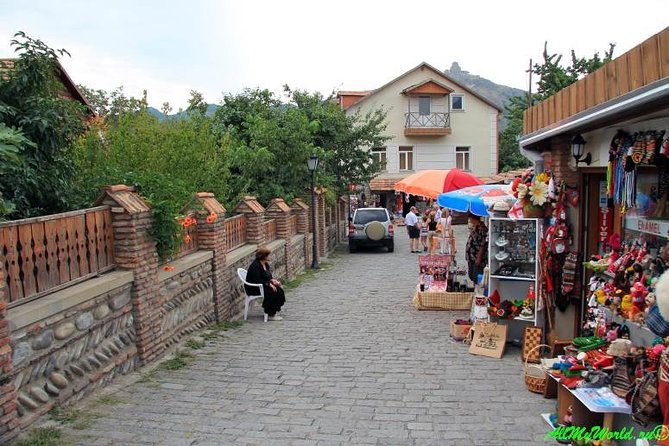
After the cathedral, you stroll to Samtavro Church. The setting is calmer and smaller in feel, but it hits a different note of Georgia’s Christian story.
Samtavro is tied to the first Georgian Christian king, Mirian, and his wife, Queen Nana. You’ll also learn about holy elder Gabriel Samtavrii and see the grave connected with him. Then there’s the famous blackberry bush, described as growing under the place where Queen Nina lived and preached.
The story you’ll hear is that the blackberry was repeatedly cut down by barbarians and later came back, and it’s considered miraculous. This is one of those details that gives a site personality. It turns a church stop into something you can actually picture, not just a name on a wall.
Your stop is shorter, around 30 minutes. That works well because Samtavro is the kind of place you’ll want to take in without rushing, but it’s not a museum maze.
Practical tip: if you’re visiting in warmer months, keep an eye on shade. It can get bright out in Mtskheta, and you still have more driving and more walking after this.
Other runs west to Gori and the Uplistsikhe rock town
- Mtskheta-Jvari-Uplistsike-Chronicle of Georgia, PRIVATE Trip★ 5.0 · 105 reviews
- Day tour to Chronicles of Georgia, Gori city, Uplistsikhe cave★ 5.0 · 86 reviews
- Ancient Georgia Group Tour: Mtskheta,Jvari, Gori, Uplistsikhe★ 4.5 · 73 reviews
- Mtskheta – Jvari + Gori – Uplistsikhe Tour★ 5.0 · 49 reviews
- Mtskheta – Gori – Uplistsikhe caves • Private tour★ 5.0 · 24 reviews
Optional Stalin Museum in Gori: a modern-history detour
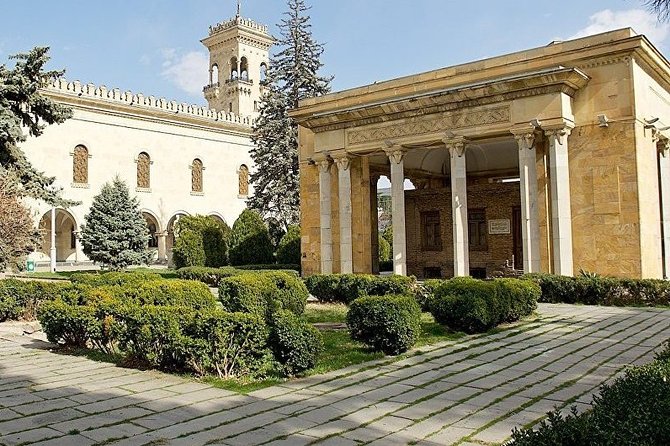
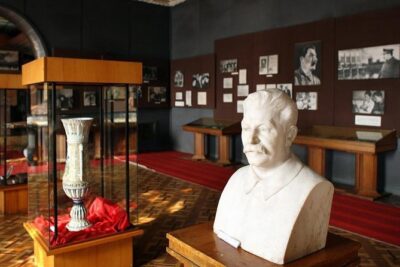
The second half of the day gives you a choice. If the group wants it, you can visit the Stalin Museum in Gori.
This is not presented as a must-do. It’s included as optional, with an additional ticket price of 15 GEL. The museum guide conducts the excursion, and you’ll see preserved displays linked to Stalin, including sculpture, personal belongings, and furniture.
Whether you love or hate 20th-century history, this stop adds contrast. Your morning is about early Christianity and ancient cave life. Gori reminds you that Georgia’s history also includes the 1900s, and that powerful figures get housed in very tangible ways.
If you hate “forced curiosity” stops, this is your cue to ask your guide to keep things moving and focus on the older sites.
Uplistsikhe cave complex: pre-Christian Georgia in stone
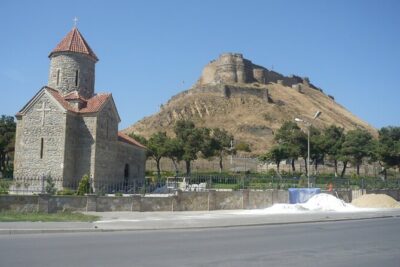
Uplistsikhe is the turning point. After religious centers, you head toward a cave city from the end of the second millennium BC into the first millennium BC. This is where the pre-Christian world shows up in a way you can walk through.
The complex is explored with an emphasis on stone labyrinths, living and utility rooms, and how people might have used space for daily life and cult rites. It’s not just “cool caves.” You’ll be guided through what the layout suggests about community, beliefs, and routines.
You also get trade context, including ties to ancient states such as Urartu and Media, which helps explain how something this far from the sea could still be plugged into larger regional networks. Then you’ll hear the story of its heyday and decline.
And yes, there are great viewpoints over the Kura Valley. Even when you’re focused on the ruins, you’ll get that sense of height and distance, the reason cave cities were strategically placed.
Timing here is about one hour. It’s enough time to grasp the big idea and see the main stone spaces, especially with a guide calling out the important rooms and routes.
One practical issue to check before you go: in the tour details, Uplistsikhe has a note about an additional 15 GEL ticket price, but it’s also listed as having admission ticket free. That kind of mismatch usually means you should confirm the exact on-site cost when you book, so nobody is surprised.
Value and logistics: what you pay for (and what you don’t)
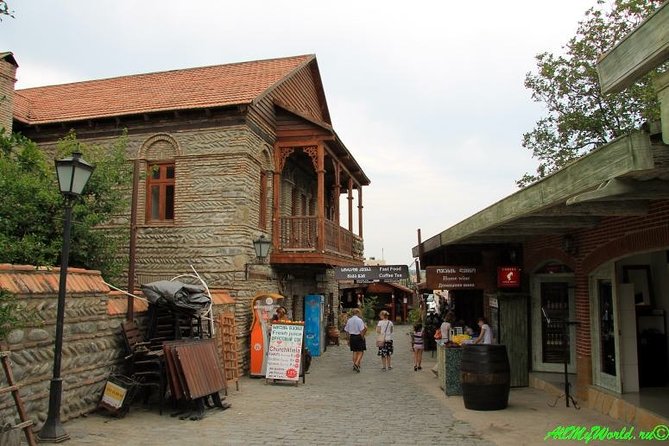
The price is $90.00 per person for a private tour, lasting about 9 hours. That sounds like a full-day rate, and it is, especially because most key admissions are included: Jvari Church, Svetitskhoveli Cathedral, and Samtavro Church.
What’s not included is lunch. That’s the big budget item left for you, so I’d treat this as a day where you either pack something simple or plan a proper lunch stop near your route.
You also get some comfort that makes a long day easier. The vehicle is air-conditioned, WiFi is on board, and your guide is described as highly qualified. In practical terms, that means you’re less likely to lose time to confusion and more likely to learn while you travel.
Also note that group discounts are offered, and the tour is private, meaning only your group participates. If you’re traveling with friends or family, this can work out well because you’re not splitting attention with strangers.
What to expect from your guide, and how to get more out of it
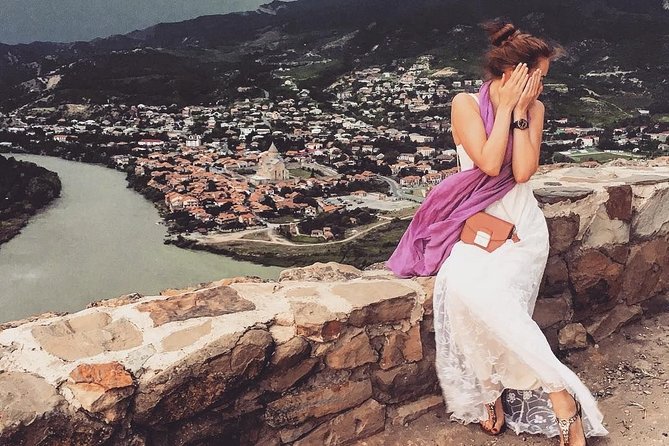
The best part of a history day is the person turning facts into something you can hold. The guides for this experience come through as caring and information-focused.
For example, Georgiy Beruashvili is described as especially attentive and supportive, with a calm, careful approach on the road and a warm way of explaining details. Nino is also highlighted for delivering lots of useful information and being very kind and easy to work with.
You can help your guide help you. Ask direct questions, like why a church was built on that hill, or what trade connections might have meant for a cave city. Guides here are set up to answer questions, not just speak at you.
Timing tips: how to make the day feel relaxed
A 9-hour day is long but workable if you know what drains your energy. For this route, the draining parts are mostly walking and sun.
I’d plan for:
- Sturdy shoes for hills and stone pathways around churches and viewpoints
- Water for the drive and the short walks
- A light layer, because churches can feel cool even on hot days
You’ll likely want your camera ready early. Jvari gives you the kind of view people remember later, not just the ones they photograph and forget.
Food on the move: don’t skip lunch planning
Lunch is not included, so you have two realistic options: grab something simple during a convenient stop, or plan a longer sit-down meal depending on your guide’s pacing.
One practical detail I like from the trip experience is that there can be good budget-friendly food options near the route. In particular, a cafe near a town in a stone setting was mentioned as tasty and cheap, so it’s worth asking your guide for a local recommendation that fits your schedule and tastes.
If you have dietary needs, tell your guide early. That way you’re not hunting last minute.
Who this tour is best for
This private day trip is a good match if you want:
- A strong story arc, ancient to medieval to modern
- Major religious sites without turning the day into a church-only slog
- A mix of walking and viewpoint time
- A guide-driven experience, not a grab-and-go checklist
It’s also ideal if you don’t want to rent a car or coordinate multiple tickets across towns.
If your group hates optional stops, you can keep the day focused on the big religious and ancient sites, then skip the Gori museum.
Should you book this private Mtskheta, Jvari, Gori, and Uplistsikhe tour?
Book it if you want a full Georgia picture in one day: hillside church views, cathedral relics, a famous blackberry church legend, and a cave city that shows life from thousands of years ago. The value looks strong because key admissions are included, your transportation is comfortable, and the day is paced around major stops.
Think twice if you’re picky about timing and meals, because lunch is not included and you may face a small additional ticket situation at Uplistsikhe (and at the optional Stalin Museum). If that’s manageable for you, it’s an easy win.
If you want to maximize the experience, go in with curiosity, wear good shoes, and ask your guide to connect the dots as you move from Jvari to Mtskheta to Uplistsikhe.
FAQ
What is the tour duration?
The tour runs for about 9 hours.
What is the price per person?
The price is $90.00 per person.
What is included in the tour price?
Included features are an air-conditioned vehicle, WiFi on board, and a highly qualified guide. Admission tickets are included for Jvari Church, Svetitskhoveli Cathedral, and Samtavro Church.
Is lunch included?
No, lunch is not included.
Are there extra tickets for any stops?
Yes. The Stalin Museum in Gori is listed with an additional ticket price of 15 GEL. Uplistsikhe has a note about an additional ticket price of 15 GEL, though the admission line is also marked as free, so it’s worth confirming the exact cost when you book.
Is pickup offered, and where is the meeting point?
Pickup is offered. The ticket redemption and meeting point is 3 Vakhtang Gorgasali St, T’bilisi 0105, Georgia.
What time does the tour start?
The start time is 9:30 am.
Is this a private tour or shared group?
It is a private tour. Only your group participates.
Can I get a full refund if I cancel?
Free cancellation is available. You can cancel up to 24 hours in advance of the experience for a full refund.
Everything Else Across the Caucasus


West to Gori and the Rock Town
Mtskheta and the Hill Above It
Other Georgian tours we have been through, from the Black Sea to the Kakheti vineyards
- Private Adorable City Tour of Tbilisi
★ 5.0 · 3 reviews - Tbilisi Airport to Gudauri, Bakuriani, Batumi, Tbilisi
★ 5.0 · 3 reviews - Private Wine Tour In Kakheti Region with 7 Wines and Lunch
★ 5.0 · 3 reviews - Two Capitals in One Day: Tbilisi and Mtskheta Combo Tour
★ 5.0 · 3 reviews - Private Effortless transfer from Tbilisi to Gudauri ski resort
★ 5.0 · 3 reviews - Tbilisi to Gudauri Stepantsminda Private Transfer
★ 5.0 · 3 reviews
Mtskheta & Jvari Monastery, compared.
 ★ 5.0Day Trip to Mtskheta Gori and UplistsikheFrom $291,801 reviews
 ★ 5.0Mtskheta,Jvari,Bazaar,wine tasting,Chronicles of GeorgiaFrom $20730 reviews
 ★ 5.0Mtskheta-Gori-UplistsikheFrom $90112 reviews
 ★ 4.5Mtskheta, Jvari, gori, uflistsikhe, history and panorama (group tours)From $19107 reviews
 ★ 5.0Mtskheta-Jvari-Uplistsike-Chronicle of Georgia, PRIVATE TripFrom $68105 reviews
 ★ 4.5Tbilisi – Mtskheta – Jvari. Full City Tour on Hop On Hop Off BusFrom $4091 reviews
 ★ 4.5Ancient Georgia Group Tour: Mtskheta,Jvari, Gori, UplistsikheFrom $2473 reviews
 ★ 5.0Ancient Mtskheta and Chronicle of Georgia half day tourFrom $6566 reviews
Browse the lists this tour appears in