
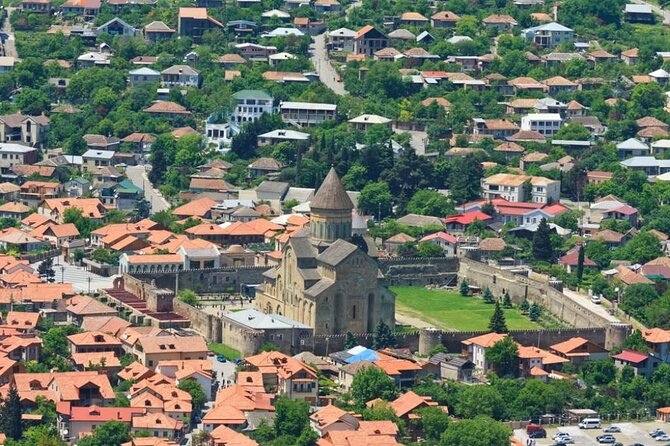
REVIEW · MTSKHETA & JVARI MONASTERY
Group Day Tour of Mtskheta,Jvari,Samtavro
Four Georgia churches, one easy half day. This small-group tour links Jvari, Svetitskhoveli, and Samtavro in a tight loop that makes the faith and architecture feel connected, not like random stops. I like how the timing is practical, and how you get major story points at each site, from Saint Nino’s cross at Jvari to the Robe of Christ tradition at Svetitskhoveli.
My favorite part is the balance between big landmarks and real context, especially in Mtskheta, the former Georgian capital. The one drawback to plan for is simple: with only 3 to 4 hours total, each church is a focused visit. You’ll have time to see highlights, but you will not wander for hours.
In This Review
- Key highlights at a glance
- A smooth half-day loop through Mtskheta’s top religious sites
- From Tbilisi: meeting point, small group vibe, and comfort
- Stop 1: Jvari Monastery on its hilltop and the four-apsed church
- Stop 2: Svetitskhoveli Cathedral, frescoes, and the Robe of Christ tradition
- Stop 3: Samtavro Church, frescoes, and King Mirian III
- Mtskheta town: a free 30 minute chance to reset
- Price and value: what $19 actually buys you
- Best for first-timers who want meaning, not just photos
- Should you book this Mtskheta day tour?
- FAQ
- How long is the Group Day Tour of Mtskheta, Jvari, Samtavro?
- What time does the tour start?
- How much does the tour cost?
- Where do I meet the tour?
- Is the tour in English?
- Is WiFi and air-conditioning included?
- Are admission tickets included?
- Are meals included?
- Can I get a full refund if I cancel?
Key highlights at a glance
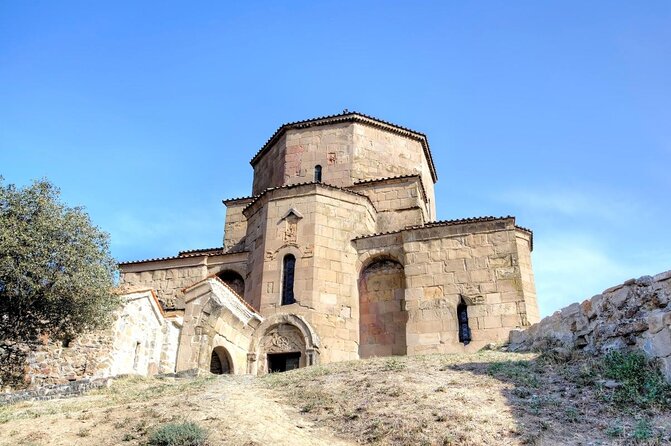
- UNESCO at Jvari with a hilltop view and early Christian roots tied to Saint Nino
- Svetitskhoveli’s Robe of Christ tradition, plus frescoes and ornate stonework
- Samtavro’s royal connections including tombs tied to King Mirian III
- Tickets included for the main church stops, so you spend less time figuring stuff out
- Max 15 people in the group with an air-conditioned vehicle and onboard WiFi
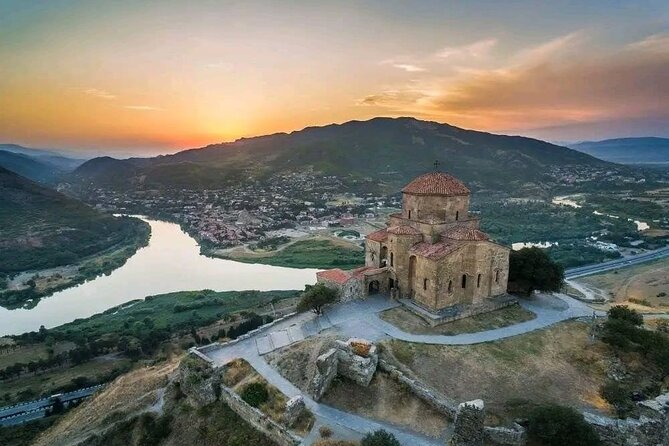
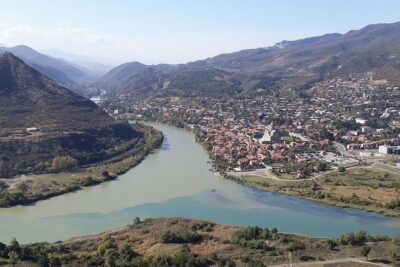
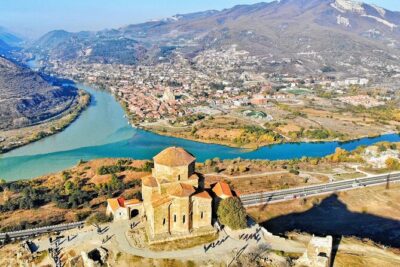
More of Mtskheta and the Jvari hill above the confluence
A smooth half-day loop through Mtskheta’s top religious sites
This is one of those tours that works because it is designed around flow. You start from Tbilisi and move outward to the sites that define Mtskheta’s spiritual importance, then you return to the same meeting point. With a 3 to 4 hour window, it is long enough to feel like you left the city, but short enough that you can keep your afternoon free.
What you are really buying is guided context. Each stop is significant on its own, yet the tour makes it easier to connect the dots: early Christian roots, later rebuilding, and the way multiple empires and styles layered onto the same sacred ground. That matters if you want more than photos. You want to understand what you are looking at while you are there.
And yes, the price is refreshingly reasonable at $19 per person, especially because the main sites include admission tickets. For many day trips, tickets get added later like a surprise bill. Here, the tour handles that for Stops 1 to 3, so the day stays straightforward.
From Tbilisi: meeting point, small group vibe, and comfort
The start is at 15 Abano St, Tbilisi, with a 12:00 pm departure. You end back at the same place, which is a small detail that saves stress when you are back in Tbilisi traffic and trying to line up your next plan.
The group size cap is 15 travelers, so you should get a guide who can actually keep the group together without turning the experience into a stampede. You also travel in an air-conditioned vehicle, which helps in Georgia’s warmer stretches. Onboard WiFi is included too, which is handy if you want to look up names as the guide mentions them.
The tour is offered in English, so the narration and explanations should land without you needing to translate in your head. That is one of the biggest value points here: if you do not speak Georgian, you still get the meaning of what you are seeing.
Stop 1: Jvari Monastery on its hilltop and the four-apsed church
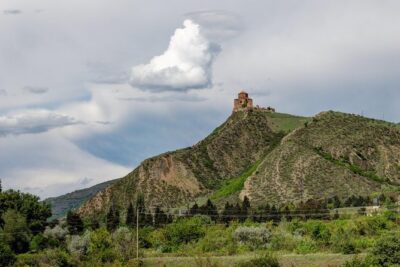
Jvari Monastery is the kind of site that makes you understand why people built sacred places where the view can do the talking. The church sits on a hilltop overlooking Mtskheta, the old capital. That positioning is part of the experience, because the landscape helps frame the stories tied to Georgia’s early Christianity.
The big hook at Jvari is its connection to Saint Nino, the female evangelist linked with bringing Christianity to Georgia. The site is described as being connected to where Saint Nino erected a wooden cross, and then a 6th-century church was built on that same spot. Even if you never memorize dates, that sequence helps you read the place: belief is not only in the walls, it is also in the location and the continuity of the site.
Jvari also stands out for its design. The current structure reflects a mix of Georgian, Armenian, and Byzantine influences, and it has a distinctive four-apsed layout. That design detail is worth paying attention to because it is the kind of feature you can feel in person. It also helps the church feel like a real historical artifact rather than a polished museum set.
You get about 40 minutes here, and that time is enough to slow down for photos and to absorb the main architectural points. The only consideration is that you will want comfortable shoes. Jvari is on a hilltop, and sacred sites often come with uneven footing or steps once you are on site.
Tickets are included at this stop, so you can focus on the church itself instead of budgeting time for entry.
Stop 2: Svetitskhoveli Cathedral, frescoes, and the Robe of Christ tradition
If Jvari gives you a hilltop first impression, Svetitskhoveli gives you the sense that Mtskheta is a major spiritual center. The cathedral story begins far earlier, described as originally built in the 4th century, and rebuilt many times. The structure you see today dates from the 11th century, and it blends Georgian, Byzantine, and Persian architectural influences.
That mixture is not just decoration. It is a visual reminder that sacred places evolve. Over centuries, the community rebuilds and refashions them, while keeping the heart of the site intact.
Svetitskhoveli is known for intricate stonework, plus beautiful frescoes and ornate decoration. This is the stop where you should take your time looking upward and around. The details are not random, they are part of the way the cathedral communicates significance.
Then there is the tradition that makes Svetitskhoveli a name you remember: the cathedral houses the Robe of Christ, described as a seamless garment said to have been worn by Jesus during his crucifixion. Even if you treat religious traditions with your own personal lens, it adds emotional weight to the visit. You are not only seeing art. You are visiting a place bound up with belief, identity, and story.
You get about 1 hour here, and that longer window compared to the other stops is smart. It lets you take in both the overall cathedral feeling and the fine details without feeling rushed.
Tickets are included at this stop as well, which keeps the day smooth.
- Day Trip to Kakheti Wine Region Including 9 Wine Tastings★ 5.0 · 2,774 reviews
- Highlights of Caucasus Mountains-Jinvali,Ananuri,Gudauri,Kazbegi(Group tour)★ 5.0 · 2,682 reviews
- Day Trip to Kazbegi and Gudauri★ 5.0 · 2,009 reviews
- Day Trip to Mtskheta Gori and Uplistsikhe★ 5.0 · 1,801 reviews
- Tbilisi Walking Tour Including Cable Car and Traditional Bakery★ 5.0 · 1,310 reviews
Stop 3: Samtavro Church, frescoes, and King Mirian III
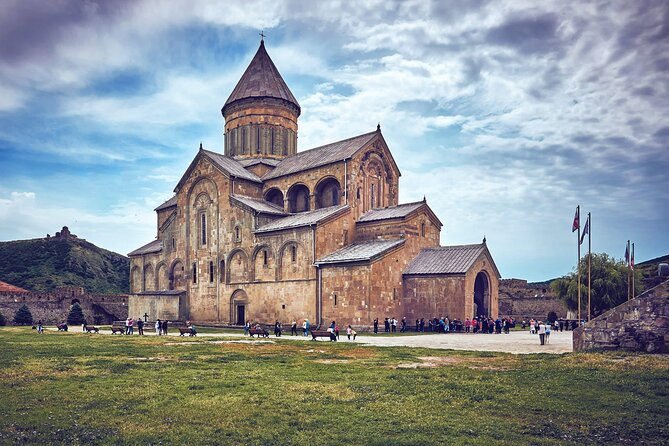
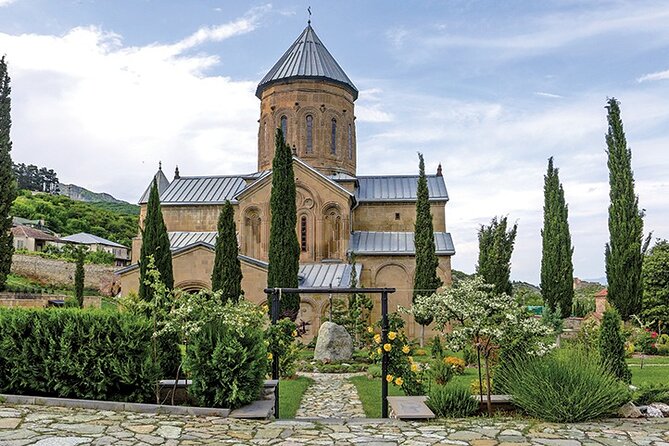
Samtavro Church and its monastery area is where the tour shifts from architecture and relic tradition to royal history and sacred memory. Like the other stops, Samtavro is described as founded in the 4th century and repeatedly rebuilt, with the current structure dating from the 11th century. The same pattern shows up again, Georgian, Byzantine, and Persian influences, which makes this whole Mtskheta loop feel cohesive.
Samtavro is praised for beautiful frescoes, plus intricate stonework and ornate decoration. This stop rewards you if you slow down and look for the painted and carved details rather than only the bigger shapes. The overall feel is often quieter than the larger cathedral, and the time you have helps keep it reflective instead of checklist-fast.
The most meaningful anchor here is what Samtavro contains. It is said to house tombs of Georgian kings and queens, including the tomb of King Mirian III, who is described as responsible for converting Georgia to Christianity in the 4th century. That matters because it connects the idea of Christianity arriving to the political and social shift that followed.
You get about 30 minutes here. That is enough to see the main church area and take in the frescoes and key points the guide highlights. The consideration is time again, but here it works because Samtavro’s visit is usually focused. If you want to read everything carefully or photograph every corner, you might wish you had more minutes.
Admission is included for this stop too.
Mtskheta town: a free 30 minute chance to reset
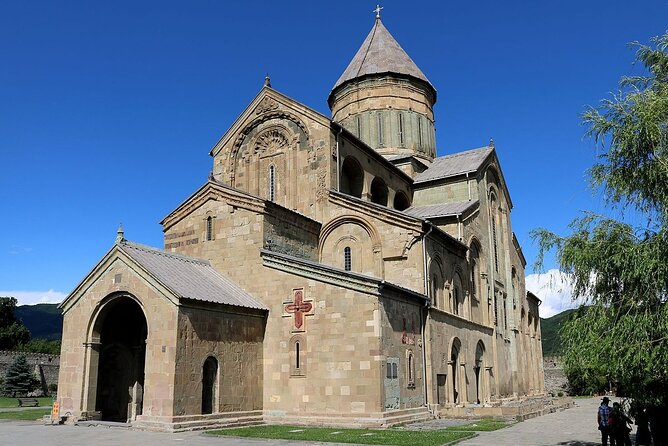
After the church-heavy part of the day, you get about 30 minutes in Mtskheta, and it is free time rather than ticket time. This is your window to breathe, check out streets, and get your bearings in the town that ties it all together.
Mtskheta is described as one of the oldest continuously inhabited cities in the world and an important religious and cultural center. Even in just a short stop, that claim helps you understand why the area keeps showing up in Georgia’s story. This is not a one-off landmark town. It is the kind of place where layers of time live side by side.
In those 30 minutes, I recommend you do one practical thing: pick a direction and walk long enough to understand the town layout around the historic sites. It makes the earlier hilltop and cathedral perspectives feel less like separate scenes and more like one connected place.
This segment is free, so it is also your buffer for whatever your pace is. If you want photos, you can take them. If you prefer a short stroll, you can do that too.
Price and value: what $19 actually buys you
At $19 per person, this tour is good value for a simple reason: it bundles what most visitors end up paying for separately. The tour includes an air-conditioned vehicle, WiFi on board, a professional guide, and admission tickets for the main church stops.
That last point is key. Stops 1 to 3 all include admission tickets, so you avoid the common situation where you budget for the tour and then hit additional entry costs one by one.
You do not get meals. That is not a deal-breaker, but it does affect your planning. If you take this at 12:00 pm, you should either eat before you depart or plan quick food options after you return. A good rule is to bring a small snack you can manage without turning the day into a long break.
Also, you should think of this as an introduction, not a slow deep soak. The time per stop is set, around 40 minutes for Jvari, 1 hour for Svetitskhoveli, and 30 minutes for Samtavro. If you like spending a lot of time with religious art, you may want to supplement with extra independent time later.
Best for first-timers who want meaning, not just photos
This tour fits best if you are seeing Georgia for the first time and want a high-signal day trip from Tbilisi. It is also a smart pick if you care about why things matter. Jvari is not just a church on a hill, it is tied to Saint Nino’s story and an early-Christian narrative. Svetitskhoveli is not only architecture, it is linked to the Robe of Christ tradition. Samtavro is not only frescoes, it is linked to royal tombs and the conversion era connected to King Mirian III.
You will likely enjoy this if:
- You want an English guided explanation at each major site
- You prefer a small group setting (up to 15 travelers)
- You want admission handled for the key stops
- You want to keep your schedule light and return to Tbilisi the same day
You might not love it as much if:
- You want long, unhurried museum-style time at each building
- You plan to photograph every detail for an extended period
- You expect a food break included in the price
Should you book this Mtskheta day tour?
I think it is an easy yes for most visitors who want a focused day that teaches you what you are looking at. The value is strong because admission for the key sites is included, the group is small, and the guide is there to connect the major stories. The itinerary also keeps you from getting stuck in transit too long, since transportation time is built into the total 3 to 4 hour visit.
My main caution is about expectations. This is a highlights tour, not a slow exploration. If you crave more quiet time inside each space, you may need a separate self-guided follow-up later.
If you are choosing between staying in Tbilisi versus going out to the old capital, I’d make Mtskheta your move. You get UNESCO-level significance at Jvari, a cathedral tied to one of the most famous Christian relic traditions, and a monastery site connected to the conversion era. That combination is hard to beat in a half-day format.
FAQ
How long is the Group Day Tour of Mtskheta, Jvari, Samtavro?
The tour lasts about 3 to 4 hours.
What time does the tour start?
The start time is 12:00 pm.
How much does the tour cost?
It costs $19.00 per person.
Where do I meet the tour?
The meeting point is 15 Abano St, Tbilisi, Georgia.
Is the tour in English?
Yes, the tour is offered in English.
Is WiFi and air-conditioning included?
Yes. The tour includes WiFi on board and an air-conditioned vehicle.
Are admission tickets included?
Yes. Admission tickets are included for Jvari Monastery, Svetitskhoveli Cathedral, and Samtavro Church. Mtskheta town is free.
Are meals included?
No, meals are not included.
Can I get a full refund if I cancel?
Yes, you can cancel up to 24 hours in advance for a full refund. If you cancel less than 24 hours before the experience start time, the amount you paid will not be refunded.
More Georgian Tours We Have Read Closely



Everything Else Across the Caucasus

Mtskheta and the Hill Above It
Other Georgian tours we have been through, from the Black Sea to the Kakheti vineyards
- Private Adorable City Tour of Tbilisi
★ 5.0 · 3 reviews - Tbilisi Airport to Gudauri, Bakuriani, Batumi, Tbilisi
★ 5.0 · 3 reviews - Private Wine Tour In Kakheti Region with 7 Wines and Lunch
★ 5.0 · 3 reviews - Two Capitals in One Day: Tbilisi and Mtskheta Combo Tour
★ 5.0 · 3 reviews - Private Effortless transfer from Tbilisi to Gudauri ski resort
★ 5.0 · 3 reviews - Tbilisi to Gudauri Stepantsminda Private Transfer
★ 5.0 · 3 reviews
Mtskheta & Jvari Monastery, compared.
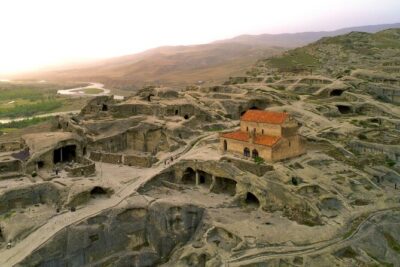 ★ 5.0Day Trip to Mtskheta Gori and UplistsikheFrom $291,801 reviews
 ★ 5.0Mtskheta,Jvari,Bazaar,wine tasting,Chronicles of GeorgiaFrom $20730 reviews
 ★ 5.0Mtskheta-Gori-UplistsikheFrom $90112 reviews
 ★ 4.5Mtskheta, Jvari, gori, uflistsikhe, history and panorama (group tours)From $19107 reviews
 ★ 5.0Mtskheta-Jvari-Uplistsike-Chronicle of Georgia, PRIVATE TripFrom $68105 reviews
 ★ 4.5Tbilisi – Mtskheta – Jvari. Full City Tour on Hop On Hop Off BusFrom $4091 reviews
 ★ 4.5Ancient Georgia Group Tour: Mtskheta,Jvari, Gori, UplistsikheFrom $2473 reviews
 ★ 5.0Ancient Mtskheta and Chronicle of Georgia half day tourFrom $6566 reviews
Browse the lists this tour appears in