
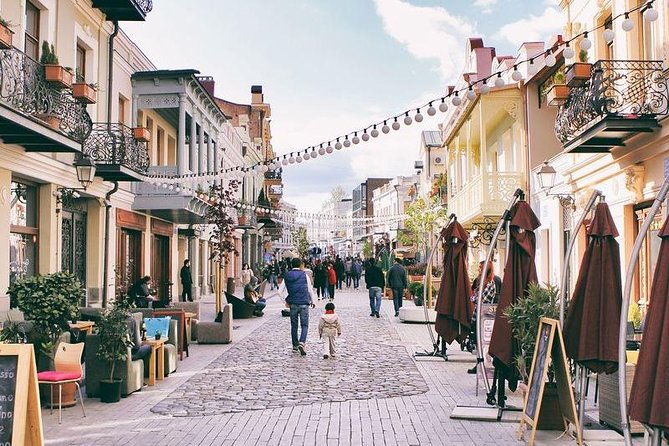
REVIEW · WALKING TOURS
Tbilisi with all its glory and originality. (group walking tour)
Tbilisi rewards people who walk. This small group tour takes you through the city’s most characterful corners, mixing landmark stops with the kind of stories that explain why things look the way they do. You also get a planned break for a free Georgian wine tasting, plus views that you can extend with a cable car ride if you want that extra wow.
I like that the group stays small, with a maximum of 15 people, so you get real attention at each stop instead of feeling rushed. I also like that key entrances are handled for you, including time at Metekhi Cathedral and the sulfur baths, and that the wine tasting is part of the tour price and not an add on.
The main thing to consider is timing and extras. The day runs about four hours, much of it on foot, and some of the best panorama options involve a cable car that costs extra.
In This Review
- Key highlights you will feel in your day
- A small group makes Tbilisi click fast
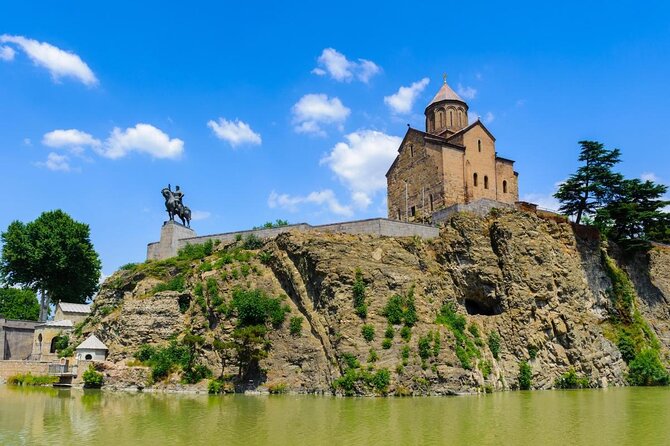
- Metekhi Cathedral and the city’s origin story from above
- Kartlis Deda: the mother of Georgia and why her pose matters
- Sulfur Bath No 5: where old legends meet practical bath culture
- Old Town Balconies and the Fig Valley waterfall moment
- The Peace Bridge and the modern debate at Rike Park
- The 17th century wine cellar tasting that anchors the whole day
- Price and what you truly get for $20
- Who this tour fits best
- Should you book this Tbilisi walking tour?
- FAQ
- How long is the Tbilisi group walking tour?
- What does the $20 per person price include?
- Are cable car rides included?
- Where does the tour start and end?
- Is the tour offered in English?
- Does it run in poor weather?
Key highlights you will feel in your day
- Metekhi Plateau views plus the story of Tbilisi’s origins and the king behind the city’s founding
- Kartlis Deda symbolism at the statue that holds wine for lovers and a sword for enemies
- Sulfur Bath No 5 with context on why only some of the baths remain and how they got their names
- Old Town details you might miss alone, from distinctive balconies to a real waterfall by the Fig Valley
- Peace Bridge and Rike Park talk, including what locals think about the modern glass parts and unusual pipes
- A free tasting in a 17th century cellar, where you can try exclusive wines with a winemaker’s commentary
More on foot, mostly in Tbilisi and Kutaisi
A small group makes Tbilisi click fast
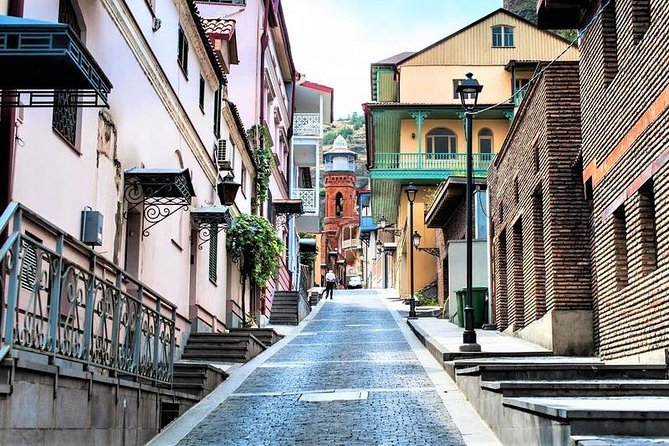
Tbilisi can feel like a puzzle at first, in the best way. One street looks old-world narrow, the next opens into a view that makes you understand the city’s geography. Doing it on foot matters, because details are the point here.
This tour is built for that. With a maximum of 15 people, you get a calmer pace and more questions actually get answered. It also helps you move through busy areas without feeling like you are herding through them.
Another value point is how the morning is structured. You start in a central spot, then you’re guided from viewpoint to viewpoint and stopped at places with real significance, not just photos. On top of that, admission tickets are included for the stops that require them, which keeps the day from turning into a pay-as-you-go scavenger hunt.
If you enjoy history but hate lectures, this will likely work for you. The guide mixes what you see with why it exists, from the earliest settlement stories to the city’s bathing culture and feast traditions.
Metekhi Cathedral and the city’s origin story from above
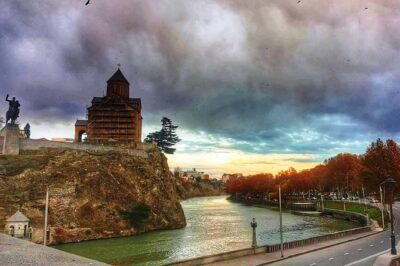
You begin with the Metekhi Cathedral area, starting on the plateau where you get one of the clearest reads of the Old Town layout. From here, you see the sweep over the historic core and the Narikala Fortress area in the distance. It’s not just pretty. It’s practical, because it helps you place everything you will see later.
This stop is about origins. You’ll hear how the area had an early settlement before Vakhtang Gorgasali arrived, and what that king’s affairs meant for the place that became Tbilisi. I love when a guide gives you that first framework, because it turns random buildings into a timeline you can actually follow.
You also get a sense of how religious space and political power have long been linked in Georgia. Metekhi is the kind of stop where the building matters, but the surrounding story matters just as much.
Time is about 30 minutes at this start, with the admission ticket included. The only drawback is simple: you will want comfortable shoes. Even when the walking is paced, you’re in a hilly, viewpoint city.
Kartlis Deda: the mother of Georgia and why her pose matters
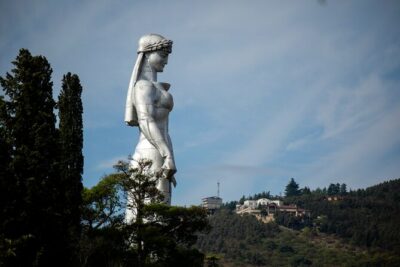
Next you head toward Kartlis Deda, the statue people call the mother of Georgia. This is one of those landmarks that looks iconic from photos, but becomes more interesting when someone explains the design and the meaning.
The statue holds a cup of wine in one hand for lovers, and a sword in the other for enemies. That contrast is the point. It’s not just symbolism for symbolism’s sake. It gives you a lens for reading Georgian culture, hospitality, strength, and the way people talk about identity.
You reach the viewpoint by cable car during this part of the day. That matters because it positions you above the city at the moment you are learning its meaning. It also comes with an important practical note: the cable car ride is not included, so budget extra for it.
This stop runs about 30 minutes, and the admission ticket is included. If you skip that cable car option later, you can still learn the story, but you’ll miss the vertical perspective that makes the statue feel even more dramatic.
Sulfur Bath No 5: where old legends meet practical bath culture
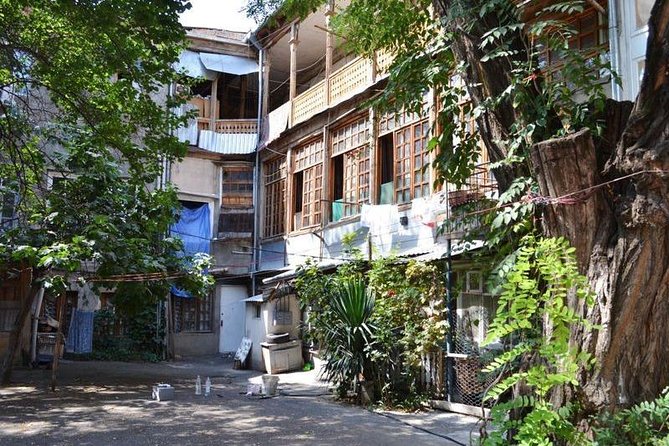
Then you arrive at Sulfur Bath No 5, a place tied to bathing traditions that even famous travelers wrote about. What I like here is that the guide does not treat it like a museum prop.
This is where you learn the logic behind the city’s bathing world. You’ll hear the founding legend that involves the first idea of these hot springs, plus smaller details that make the whole system feel real. For example, you’ll learn why only 15 of the original 65 baths remained, and how bath names evolved.
The naming topic is especially interesting. You might hear how the baths’ labels range from simpler styles up to more elegant-sounding ones such as Royal and variegated. Even if you do not memorize every name, you come away with an understanding that baths were social and status spaces, not only places to get clean.
This stop also takes about 30 minutes, and the admission ticket is included. It is a great middle of the day moment because it breaks up pure walking with an experience that feels distinctly Tbilisi.
One consideration: sulfur baths are historic and culturally important, but what you do inside may not match every comfort level. Even if you only observe and learn, go in with realistic expectations for a working, traditional bathing setting.
- Day Trip to Kakheti Wine Region Including 9 Wine Tastings★ 5.0 · 2,774 reviews
- Highlights of Caucasus Mountains-Jinvali,Ananuri,Gudauri,Kazbegi(Group tour)★ 5.0 · 2,682 reviews
- Day Trip to Kazbegi and Gudauri★ 5.0 · 2,009 reviews
- Day Trip to Mtskheta Gori and Uplistsikhe★ 5.0 · 1,801 reviews
- Tbilisi Walking Tour Including Cable Car and Traditional Bakery★ 5.0 · 1,310 reviews
Old Town Balconies and the Fig Valley waterfall moment
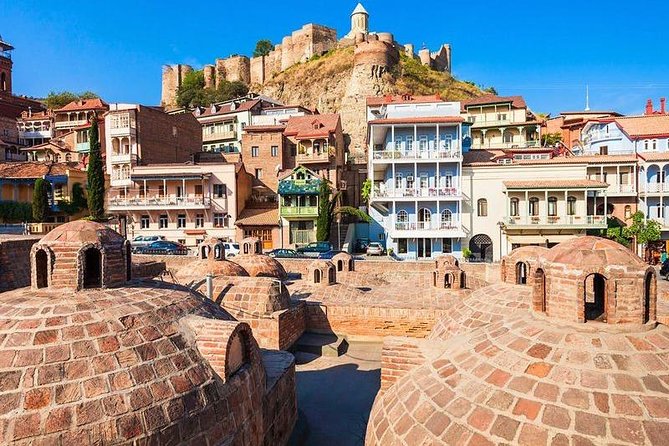
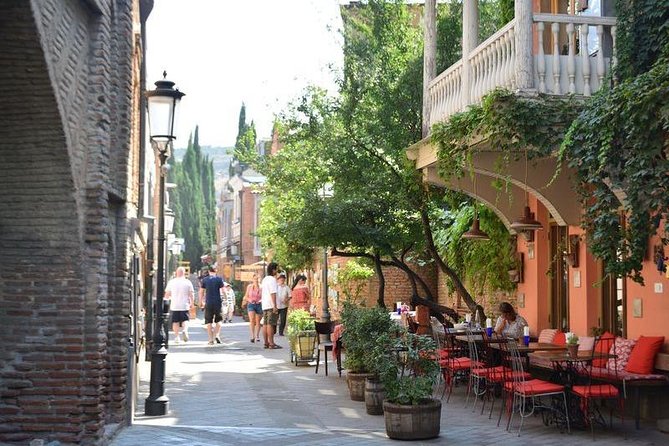
After the baths, the tour shifts into Old Town exploration. You walk through the kind of streets where the city feels layered. One turn reveals a balcony, another reveals a courtyard, then suddenly you are facing a view that makes you stop and look again.
This segment includes a standout natural surprise. You’ll reach a real waterfall connected with the Fig Valley area. It’s one of those things that can sound like a random extra until you see it, then you realize why it belongs in a Tbilisi walk.
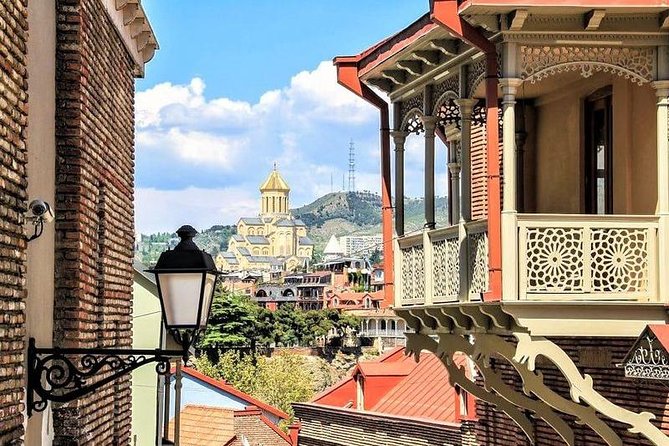
You’ll also spend time on balconies. This is the kind of detail people miss if they rush. The guide explains why it was impossible to find two identical balconies, and how those structures reflect changing eras. That explanation makes the architecture feel human, not just decorative.
This part runs about 20 minutes. It’s not long, but it’s a compact hit of atmosphere, plus it adds variety after the more landmark-based stops.
If you like photo pauses, plan for them here. This is the section where your eyes will naturally wander and you may want an extra minute for the view.
The Peace Bridge and the modern debate at Rike Park
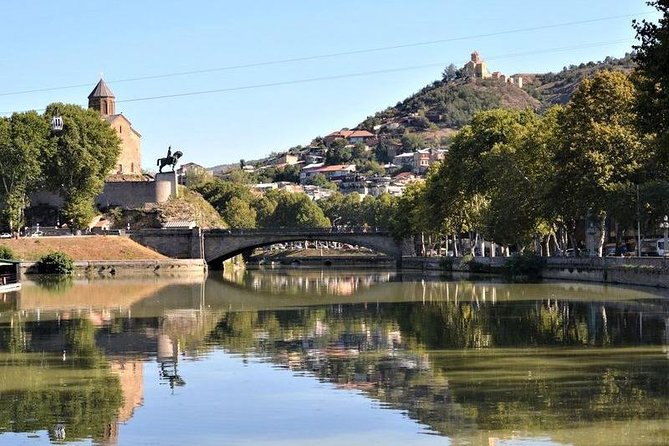
Next comes the Peace Bridge, one of Tbilisi’s best symbolic walks. Even if you’re not into political symbolism, you’ll probably appreciate the way the bridge connects different parts of the city and the way it frames views as you cross.
The guide also ties it to what locals think about modern Rike Park elements, including the glass skyscraper and unusual pipes. That angle is useful. It stops the park from feeling like a generic waterfront and turns it into a place where Georgian people are actively negotiating how modern the city should get.
Then the day uses a cable car again to reach the fortress area. From there, you can see small houses of Old Town and the historic narrow streets below. This is a strong payoff, because your earlier stories about where the city began suddenly make visual sense from above.
This segment includes about 30 minutes, with admission included for the stops in this part. Again, the cable car is the extra cost element, so check your budget for it.
The 17th century wine cellar tasting that anchors the whole day
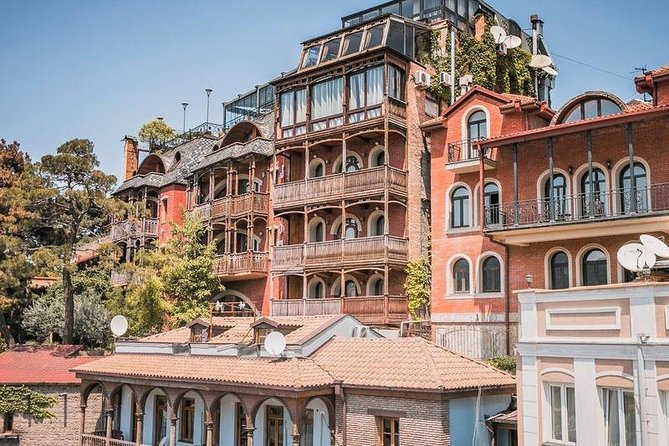
The last big push is Old Town again, and this is where the tour feels most like a Georgia visit rather than a checklist. You get stories about Tbilisi residents and the Georgian mentality, plus how food and social life connect.
You’ll hear about Italian courtyards in the city, and you’ll get the kind of quirky detail that makes you remember the place later, like the jokes written on the turret of the Rezo Gabriadze theater. You also stop at the Tamada monument, where the guide explains the secrets of the Georgian feast.
I like this kind of stop because it explains behavior, not just objects. Once you understand what to listen for at a Georgian table, you can watch it happening around you later in town.
Then comes the best value part: a wine tasting included for free. It happens in the cellar of a 17th century setting, with exclusive wines stored there. The tasting lasts about an hour with commentary from the winemaker, and it is presented as unrestricted for participants on this tour.
Even if you are not a serious wine person, this is still worth it because it teaches you how Georgia frames wine socially. And if you are a serious wine person, the winemaker commentary gives you context you would not get from a menu.
This segment runs about 30 minutes in the overall schedule, but the tasting experience is the main event within that time. Go in with a light stomach and plan to take your time afterward.
Price and what you truly get for $20
Let’s talk value, because $20 in Europe or near it can mean anything from a short entrance to a guided ride. Here, the price is low because the tour does not rely on transportation beyond small cable car add ons.
For $20 per person, you get an approximately four hour guided walk with included admission tickets at multiple stops and a wine tasting that is free. On a self-guided day, you would likely pay for entrances anyway, then add a tasting cost on top. This is why the price feels fair.
What is not included is straightforward: the cable car rides cost extra, and dinner is not covered. There is also the practical reality that the day depends on decent weather, since you are walking outdoors and moving between viewpoints.
If you want the city story plus structured stops and at least one hands-on experience, this hits the sweet spot. If you are looking for luxury comfort or lots of long breaks in cafés, you may find the pace a bit more active than you expected, but that’s often the trade for value like this.
Who this tour fits best
I think this works best for:
- People who want a guided, story-forward way to orient themselves in Tbilisi
- Visitors who like architecture details such as balconies and courtyards, not only big monuments
- Anyone who wants an included tasting with a winemaker’s guidance
- Small groups and solo visitors who appreciate not being lost in a crowd of 30 or 40
It may be less ideal for you if:
- You hate walking and prefer car-based sightseeing all day
- You are not comfortable adding the cable car cost for the best viewpoints
- You are sensitive to weather changes, since the tour depends on good conditions
Should you book this Tbilisi walking tour?
I’d book it if you want a practical, story-driven introduction to Tbilisi that does more than point at famous sites. The combination of Metekhi Plateau context, Kartlis Deda symbolism, sulfur bath culture, Old Town architecture details, and an included hour of wine tasting is a strong mix for the money.
Book it sooner rather than later. This one is often booked in advance, and you want to lock in your preferred date. Bring comfortable shoes, and decide ahead of time how much you want to spend on cable car rides for the panoramic parts.
If you want Tbilisi explained with personality, this small group format is the reason it feels worth it.
FAQ
How long is the Tbilisi group walking tour?
The tour lasts about 4 hours.
What does the $20 per person price include?
The price includes organizational details, admission tickets for the listed stops, and a free wine tasting.
Are cable car rides included?
No. Cable car rides cost $2 USD and are not included.
Where does the tour start and end?
It starts at Alani1 Vakhtang Gorgasali St, T’bilisi, Georgia and ends back at the same meeting point.
Is the tour offered in English?
Yes, the tour is offered in English, and you receive a mobile ticket.
Does it run in poor weather?
The experience requires good weather. If it’s canceled due to poor weather, you will be offered a different date or a full refund.
Georgian Streets on Foot
More Georgian Tours We Have Read Closely



Everything Else Across the Caucasus

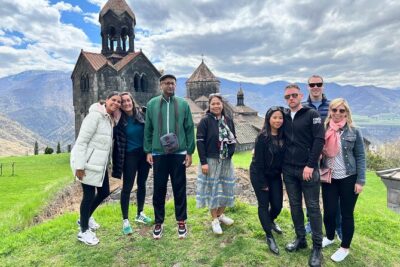
Other Georgian tours we have been through, from the Black Sea to the Kakheti vineyards
- Private Adorable City Tour of Tbilisi
★ 5.0 · 3 reviews - Tbilisi Airport to Gudauri, Bakuriani, Batumi, Tbilisi
★ 5.0 · 3 reviews - Private Wine Tour In Kakheti Region with 7 Wines and Lunch
★ 5.0 · 3 reviews - Two Capitals in One Day: Tbilisi and Mtskheta Combo Tour
★ 5.0 · 3 reviews - Private Effortless transfer from Tbilisi to Gudauri ski resort
★ 5.0 · 3 reviews - Tbilisi to Gudauri Stepantsminda Private Transfer
★ 5.0 · 3 reviews
Walking Tours, compared.
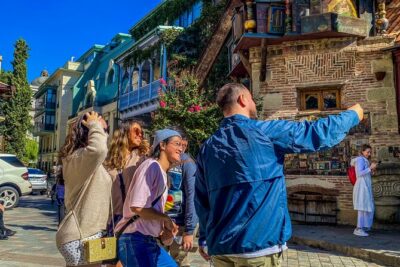 ★ 5.0Tbilisi Walking Tour Including Cable Car and Traditional BakeryFrom $191,310 reviews
 ★ 5.0Evening Walking & Talking Tour with Wine & Boat RideFrom $10572 reviews
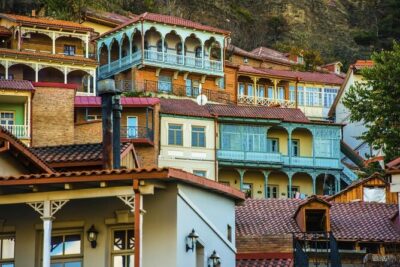 ★ 5.0Old Tbilisi Highlights walking tour with wine & 10 tastingsFrom $15276 reviews
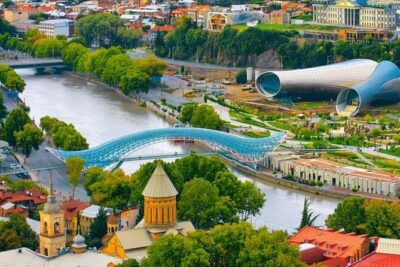 ★ 5.0Old Tbilisi Tour: Private Walking Tour With Wine TastingFrom $39273 reviews
 ★ 5.0Private Tbilisi Food Tour: 9 Tastings Walk in Bohemian DistrictFrom $79227 reviews
 ★ 5.0Tbilisi Old Town Walking Tour with a Local GuideFrom $38168 reviews
 ★ 5.0Private Walking Tbilisi City Tour (Day Trip)From $5969 reviews
 ★ 5.0Kutaisi Walking TourFrom $1559 reviews
Browse the lists this tour appears in