
REVIEW · PRIVATE
17 Day Private Tour through Georgia
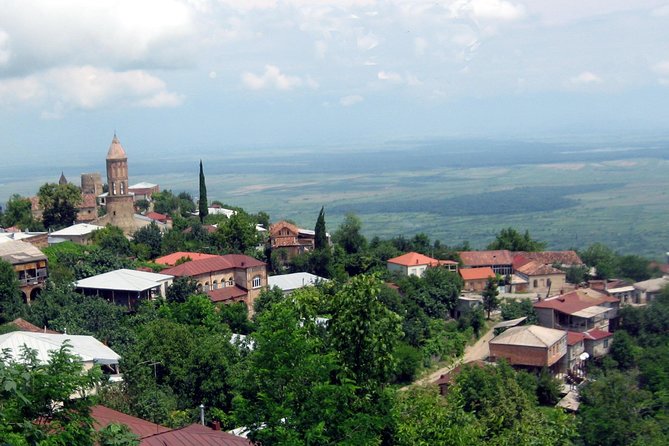
Georgia hits every mood in 17 days. This private-feel tour turns Tbilisi into a history lesson, then strings together wine country cellars, mountain icons, and UNESCO sights across the country with a pro guide and driver handling the long drives. The tradeoff is you will spend real time in the car, and a couple of walks can feel like a workout, especially if you are not used to altitude or steep steps.
I also like how many stops are built around places you cannot really appreciate from a drive-by. Think Narikala Fortress views over the old city, cave monasteries at David Gareja, and Svaneti churches with medieval murals. One possible drawback is that the schedule is dense, so if you want slow mornings every day, you will need to pick your moments during the few free periods.
Because the route is seasonal, plan your timing around the Apr to Oct window. Bring layers for mountain weather swings, solid shoes for uneven paths, and some patience for checkpoints, narrow roads, and scenic detours that take longer than you expect.
In This Review
- Key Things You Should Know Before You Go
- Tbilisi First, Sameba to Narikala Cable Ride
- Kakheti Wine Country: Cellars, Monasteries, and Gremi Walls
- The Caucasus Drive: Cross Pass Water and Gergeti Church Views
- Gori to Kutaisi: Stalin Museum, Cave Towns, and UNESCO Relics
- Sataplia to Svaneti: Dinosaurs, Palaces, and the Highest Villages
- Mestia Museum to Batumi: Mountains to the Black Sea
- Borjomi Spa Walks and Akhaltsikhe’s Fortress-Mix Cities
- The Return to Tbilisi Through Volcanic Lakes and Reservoirs
- Pricing and Value: What $4,219 Per Person Really Covers
- Who This Georgia Tour Fits Best
- Should You Book This 17-Day Georgia Private Tour?
- FAQ
- Where does the tour start and what is the meeting time?
- What is the best time of year to visit?
- What is included in the price?
- What is not included?
- How big is the group for this tour?
- Can I get a full refund if I cancel?
Key Things You Should Know Before You Go
- Small-group control with a maximum of 15 people, so the day stays flexible.
- A guide plus driver combo that reduces stress on long intercity stretches.
- Major UNESCO stops paired with lesser-known sites like cave towns and fortress ruins.
- Wine country visits that focus on how Georgia makes wine, not just what it tastes like.
- Mountain time at altitude (Gergeti Church, Ushguli), where comfortable shoes matter.
- Good built-in pacing with free time in Tbilisi near the end.
More trips with the car and the guide to yourself

Tbilisi First, Sameba to Narikala Cable Ride
Tbilisi works as a warm-up city, and day one sets the tone. You meet at Tbilisi National Airport, then go straight to your hotel, which is a practical start if you land tired or want to get your bearings without guesswork.
Day two is classic Tbilisi, starting at the Holy Trinity Cathedral (Sameba). It is big, modern, and designed to be seen from inside and out. From there you head to Metekhi Cathedral on the river Mtkvari bank, a quieter stop that helps you understand why people built here in the first place, with the water and the cliffs doing part of the work.
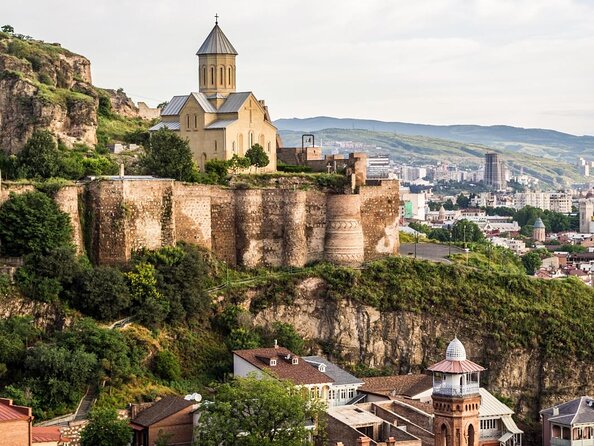
Then come the views. A cable car ride gets you up to Narikala Fortress, an ancient fortification overlooking the city. The payoff is not just the skyline, it is the way Tbilisi looks like it was built in layers, with older neighborhoods spilling down the hillsides.
After the fortress, you walk into Abanotubani, the sulfur bath district. This is where you will see the city’s old-world rhythm, plus Shardeni street and Meidan Square with cafés and small shops nearby. It is also a good day to think about how Georgia likes to mix sacred and everyday life, all in one radius.
The museums add substance. You visit the Tbilisi History Museum with a large collection spanning archaeology, ethnography, documents, and everyday items, then the Georgian National Museum for broader human history and Georgian-focused artifacts. Admissions are included at several museum stops, so you are not constantly deciding what is worth it. Just keep an eye on your energy level, because museum hours can quietly turn into a long day.
Kakheti Wine Country: Cellars, Monasteries, and Gremi Walls
Once the tour leaves Tbilisi behind, the mood shifts toward vineyards and religious heritage. Kakheti is Georgia’s major wine-producing region, and the schedule reflects that with multiple cellar visits and village-scale history.
On the way to Sighnaghi, you start with David Gareja Monastery, a 6th-century semi-desert cave complex. The cave cells, churches, and chapels feel both remote and alive, partly because the complex is partly located in Azerbaijan territory. It is the kind of place where you stop talking and just look, even if you are not a big monastery person.
Sighnaghi then gives you a town built for viewpoints. It sits in the eastern foothills, overlooking the Alazani valley, and the defensive medieval curtain walls make it feel like you are wandering a historic lookout. Even if you skip extra photo stops, the location itself does the heavy lifting.
Day four is a full Kakheti day in the best sense: monasteries plus wine in a tight loop. Bodbe Monastery of St. Nino connects to Georgia’s Christian story, and it is still active as a nunnery and pilgrimage site. Nearby, you shift into wine-mode at Velistsikhe and its Numisi Wine Cellar Museum.
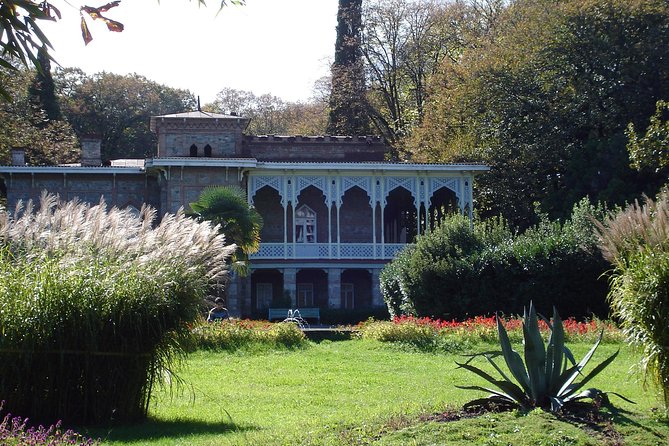
Tsinandali adds another layer by mixing a residence museum with wine cellar access. The House Museum of Alexander Chavchavadze gives you the Georgian gentry angle, plus gardens and wine cellars in one stop. Then Napareuli pushes the hands-on theme with Twins Wine Cellar Museum, where you can watch the process through transparent 500-liter pitchers, from pressing and boiling to natural filtration. If you like details, this part will stick with you.
Gremi finishes the loop with medieval stakes. The Royal Citadel and Church of Archangels are the remains of a former royal capital, with a castle, bell tower, wine cellar, and surrounding medieval walls. It is not as polished as some major tourist sites, which is a plus. You feel like you are walking through history, not a theme park.
You sleep in Telavi after this day, which makes sense because you are still in the Kakheti orbit and it helps prevent backtracking.
The Caucasus Drive: Cross Pass Water and Gergeti Church Views
As soon as you head north toward Gudauri and Kazbegi, the itinerary leans into altitude and wide views. The stop at the Cross Pass is quick but memorable, especially because you taste local mineral waters at about 2395 m. It is a small moment, but it helps you feel the geography changing right away.
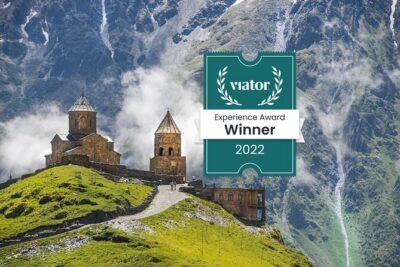
In Kazbegi (Stepantsminda), you get the iconic Georgian photo story, and then some real walking. The Gergeti Trinity Church hike is described as an easy walk of around two hours. From the top, the views over Kazbegi town and the Kazbegi Glacier area make it worth the effort. You return to Kazbegi and then head to Dariali gorge and Gveleti waterfalls.
A practical note: this is the part of the tour where weather matters most. Even in the Apr to Oct season, mountain conditions can change fast. Wear layers, keep an extra dry layer in your day bag, and do not plan to rush photos. The slower you move up there, the more you enjoy the views at the top.
This day also shows why having a guide and driver helps. Routes in the Caucasus can be unpredictable, and having someone who knows the timing keeps your day from turning into stress.
Gori to Kutaisi: Stalin Museum, Cave Towns, and UNESCO Relics
Day seven is a contrast day, and I like contrast. You start in Gori, then shift to prehistoric and rock-hewn history, then land in Kutaisi for UNESCO-era masterpieces.
Gori’s House Museum of Joseph Stalin is included, and it is the birthplace connection that brings people in. If you are not into Soviet-era museums, you can still treat this as a social history stop, not just politics.
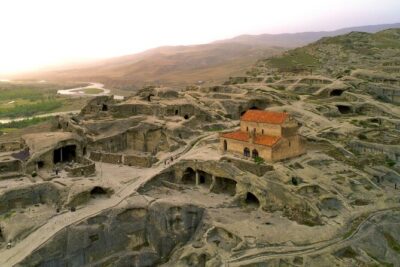
Then the tour moves to Uplistsikhe Cave Complex, a rock-hewn town dating as early as the first millennium BC. This is one of those places where you can imagine daily life before Christianity took over the story. The chambers, tunnels, and street-like spaces feel carved with intention, and it makes the region’s ancient roots harder to ignore.
From there you drive west toward Kutaisi. There is even a stop at Rikoti pass, with a chance to see pottery and farmers’ markets along the way. Those market moments are small, but they are often where you get a better sense of local rhythms than at major landmarks.
Kutaisi itself brings two UNESCO stops in the evening: Gelati Academy and Monastery, plus Bagrati Cathedral. Both are associated with Georgia’s golden age, and the buildings help you understand why this region became a cultural center.
If you want to be strategic, keep your museum brain on for this part. Even when the days are full, the UNESCO stops reward attention.
- Day Trip to Kakheti Wine Region Including 9 Wine Tastings★ 5.0 · 2,774 reviews
- Highlights of Caucasus Mountains-Jinvali,Ananuri,Gudauri,Kazbegi(Group tour)★ 5.0 · 2,682 reviews
- Day Trip to Kazbegi and Gudauri★ 5.0 · 2,009 reviews
- Day Trip to Mtskheta Gori and Uplistsikhe★ 5.0 · 1,801 reviews
- Tbilisi Walking Tour Including Cable Car and Traditional Bakery★ 5.0 · 1,310 reviews
Sataplia to Svaneti: Dinosaurs, Palaces, and the Highest Villages
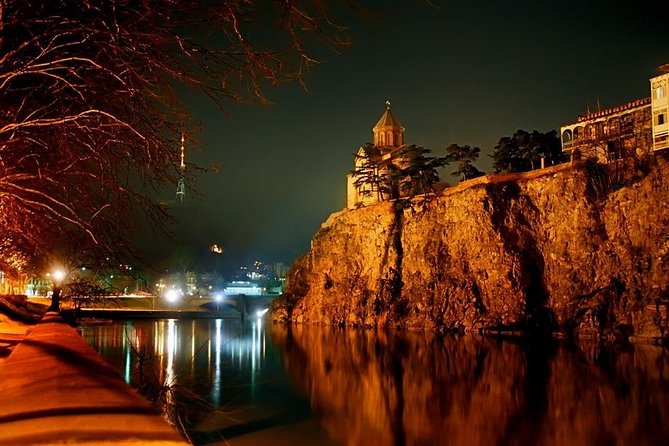
Western Georgia continues with a nature and culture blend before you climb into Svaneti, one of the most distinctive regions in the country.
Day eight begins with market time in Kutaisi. You can see eco-friendly fruit and vegetables, plus Imeretian cheese. After that, you go to Sataplia Cave and Nature Reserve, about 10 km outside Kutaisi. The main draw here is the combination of relic forests, karst caves, and well-preserved dinosaur footprints. It is a different kind of wow than a fortress view, and it is a good change of pace before mountain days.
Then you head to Zugdidi in Samegrelo-Zemo Svaneti and visit the Dadiani Palaces Historical and Architectural Museum. It gives you a regional power story, with palace architecture that reflects local history in a more grounded way than big-city monuments.
From Zugdidi, you stop at Enguri Dam before reaching Mestia in Svaneti. This is a reminder that Georgia’s big projects sit right alongside old religious sites and medieval villages.
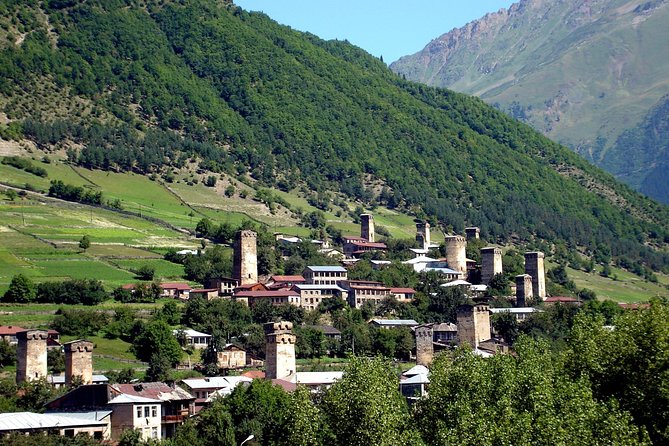
Day nine is when Svaneti becomes real. You go to Ushguli, a UNESCO-listed community and one of the highest continuously inhabited places in Europe. The tour also includes stops at Ipari and Kala villages, where you can see churches with medieval frescoes and murals. You have an option for an easy hike toward the foothills of Shkhara Glacier, Georgia’s highest peak.
Then in the evening back in Mestia, you visit Margiani’s House Museum, located in an ancient Svan housing estate. This kind of museum helps you understand the daily life side of Svaneti, not just the scenic postcard version.
Day ten adds more village-church time near Mestia, including Latali and Lemjeri. These are known for churches with medieval decorations, frescos, and murals. If you like art and symbolism, this is where the tour becomes extra satisfying.
Mestia Museum to Batumi: Mountains to the Black Sea
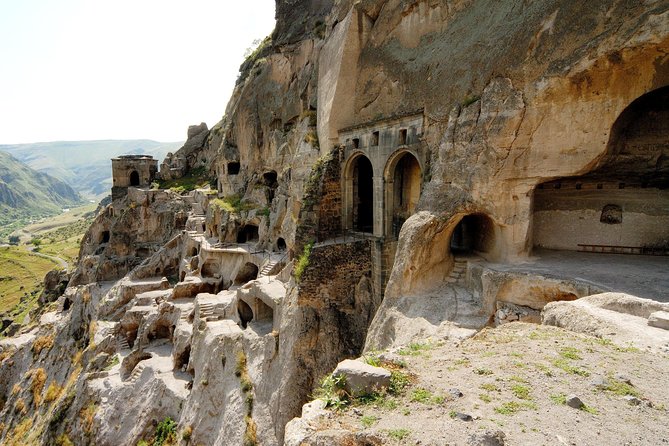
Day eleven starts with the Svaneti Museum of History and Ethnography. The collection includes ethnographic and archaeological artifacts, old Georgian manuscripts, and Orthodox icons painted in the Svan style. It is the best kind of museum stop because it helps you interpret what you saw in the villages over the last couple of days.
Then you go from mountains to sea. You drive to Batumi, the capital of Adjara and Georgia’s second-largest city, located on the Black Sea. That shift is noticeable, and the tour builds it in with a short city tour: Piazza Square and a walk on the boulevards.
Day twelve adds historic layers around Batumi. You visit Gonio Fortress, an archaeological site dating to the 1st century AD, where Gonio was a fortified Roman city in Colchis and later came under Byzantine rule. Then you head to the Batumi Botanical Gardens on Green Cape. Opened in 1912 and expanded during Soviet times, the gardens bring plants and trees from different climate zones into one place.
This section is for people who want a less intense pace after the mountain trek, with enough history to keep the trip from feeling like only beach time.
Borjomi Spa Walks and Akhaltsikhe’s Fortress-Mix Cities
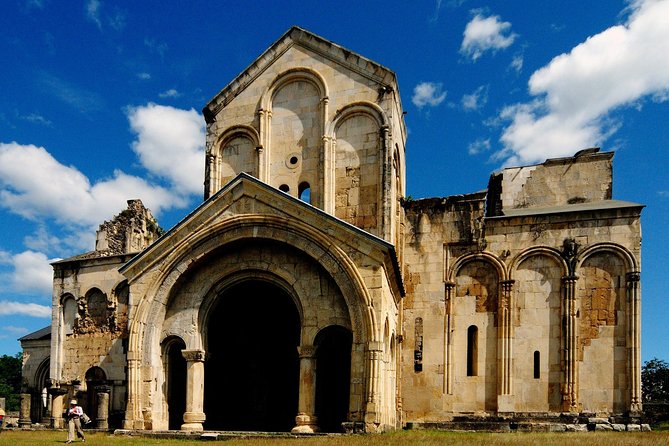
By day thirteen, you are heading inland again. Borjomi is a spa-resort town famous for mineral water. You take a walk in Borjomi Park and taste the natural mineral waters from the springs. This works well as a reset day before heavier fortresses and rock-cut monasteries.
You continue to Akhaltsikhe in Samtskhe-Javakheti, and day fourteen focuses on a mix of cultures and faiths. Rabati Castle is a complex that includes a 14th-century castle plus churches, a mosque, a synagogue, and a museum. The museum holds manuscript, book, photo, archaeological, and numismatic collections, which means this stop is not only about walls, it also about understanding the region’s layers.
Next you stop at the ruins of ancient Khertvisi Fortress, along the way to Vardzia. That short pause is useful, because it sets expectations for what Vardzia delivers.
Vardzia is the big one. This medieval monastery, founded in the 12th century during Queen Tamar’s reign, is cut into rock along the Mtkvari River. You see multiple chambers, cave dwellings, and churches and chapels on different tiers. It feels like a city designed for survival, and then repurposed for worship.
If you are prone to rushing, slow down here. Vardzia rewards looking at how the floors connect and how the carved spaces work.
The Return to Tbilisi Through Volcanic Lakes and Reservoirs
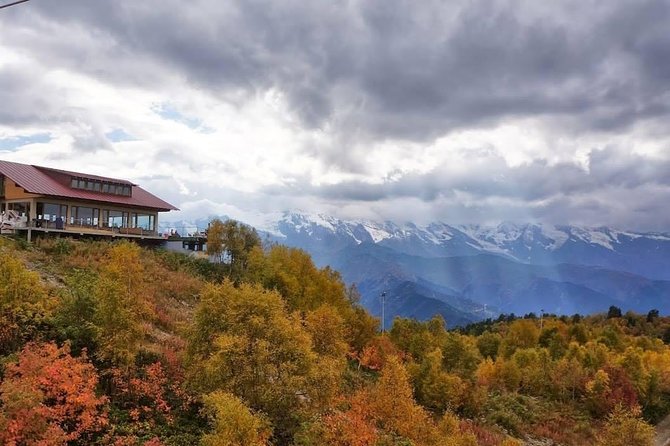
Day fifteen is a long but interesting drive back. You depart for Tbilisi and pass through Javakheti volcanic plateau. There are stops at alpine lakes Sagamo and Paravani, plus the Tsalka reservoir, described as Georgia’s largest artificial lake.
These pauses matter because they break up the road time with scenery you cannot get anywhere near Tbilisi. You arrive back in Tbilisi in the evening, so you can enjoy one last night without packing again.
Day sixteen is free time in Tbilisi, which is important. After many structured days, this gives you room to revisit something you loved, grab a meal at your own pace, or simply rest.
Day seventeen ends with breakfast, hotel checkout, and transfer to Tbilisi International Airport.
Pricing and Value: What $4,219 Per Person Really Covers
At $4,219 per person, this is not a budget trip. But it is also not paying for just a list of photos. You are paying for a full 17-day routing across Georgia with a professional guide and driver, 16 overnights, and practical inclusions that add up fast.
The tour includes all fees and taxes, water, and breakfast every morning for 16 days. Dinner is included on three evenings, and admissions are included at several key sites like Narikala Fortress, plus multiple museums and fortresses across the route. That means you are not constantly pulling out your wallet to keep moving.
Also, this tour emphasizes “private” comfort, which usually means you spend less time waiting. With a maximum of 15 people, it still feels small enough that you do not lose the day to crowd bottlenecks.
If you compare this type of trip to the cost of arranging flights inside Georgia, rental car, hotels, guides, and the admission fees one by one, the value starts to make sense. You are buying time and stress reduction, not just transportation.
Two details I take seriously from past feedback: the organization tends to run smoothly, and the operator uses staff and planning that can handle a tight route without turning it into chaos. One name that came up in that context is travel expert Dali, and a guide called Lasha was specifically praised for making the journey work well in practice.
Who This Georgia Tour Fits Best
This tour fits best if you want a full-country snapshot with enough structure to feel effortless and enough variety to stay interesting. It is ideal for couples, friends, and small groups who like history and nature, and who are okay with car days.
It may feel like a lot if you want a slow pace every day, or if you avoid walks entirely. The included hike toward Gergeti Church and the longer time in Ushguli are the main physical considerations, so comfortable shoes and a realistic attitude help.
It also works well if you enjoy learning how Georgia connects faith, food, and geography. One day you are tasting mineral water at Cross Pass, the next you are in a cave town from the first millennium BC, then in wine-cellar museums focused on actual production.
Should You Book This 17-Day Georgia Private Tour?
If your goal is to cover Georgia from Tbilisi to Svaneti, with wine country, the Black Sea coast, and rock-cut monastery highlights, then this is a strong match. The best part is that many key stops have admissions included, so your day runs with fewer decisions.
I would especially consider booking if you want a guide-led experience that handles the long drives and keeps the schedule coherent. The only clear reason to hesitate is if you dislike driving time or know you are not up for the included walks.
If you want Georgia without the planning math, this one does a lot of the heavy lifting for you.
FAQ
Where does the tour start and what is the meeting time?
The tour starts in Tbilisi, and the start time is 9:00 am. On day one, the meeting point is Tbilisi National Airport, with a transfer to the hotel.
What is the best time of year to visit?
The best time to go is April through October.
What is included in the price?
The price includes all fees and taxes, water, 16 overnights, breakfast for 16 days, and dinner for 3 days.
What is not included?
Flight tickets, insurance, visa fees, and meals unless mentioned are not included.
How big is the group for this tour?
The maximum group size is 15 travelers.
Can I get a full refund if I cancel?
Yes. You can cancel up to 6 days in advance of the experience for a full refund, as long as you cancel at least 6 full days before the experience’s start time.
More Trips With the Car to Yourself
More Georgian Tours We Have Read Closely
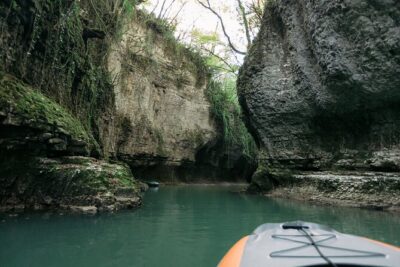
Everything Else Across the Caucasus
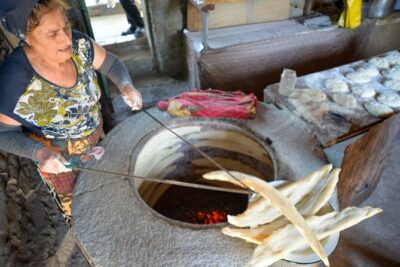
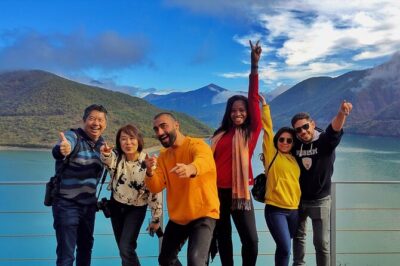
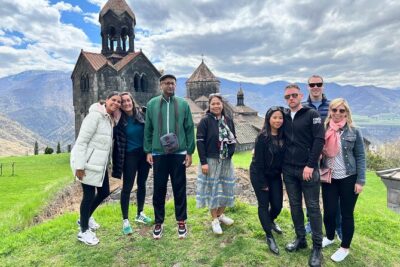
Other Georgian tours we have been through, from the Black Sea to the Kakheti vineyards
- Private Adorable City Tour of Tbilisi
★ 5.0 · 3 reviews - Tbilisi Airport to Gudauri, Bakuriani, Batumi, Tbilisi
★ 5.0 · 3 reviews - Private Wine Tour In Kakheti Region with 7 Wines and Lunch
★ 5.0 · 3 reviews - Two Capitals in One Day: Tbilisi and Mtskheta Combo Tour
★ 5.0 · 3 reviews - Private Effortless transfer from Tbilisi to Gudauri ski resort
★ 5.0 · 3 reviews - Tbilisi to Gudauri Stepantsminda Private Transfer
★ 5.0 · 3 reviews
Private, compared.
 ★ 5.0Kazbegi and Gudauri Full Day Private Tour from TbilisiFrom $69447 reviews
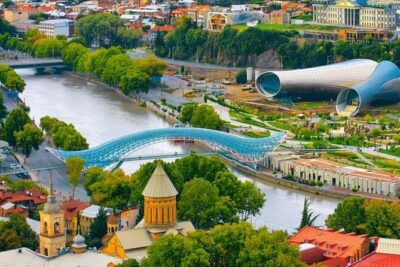 ★ 5.0Old Tbilisi Tour: Private Walking Tour With Wine TastingFrom $39273 reviews
 ★ 5.0Private Tbilisi Food Tour: 9 Tastings Walk in Bohemian DistrictFrom $79227 reviews
 ★ 5.0Kakheti – Small wineries and family-cooked lunch • Private tourFrom $116151 reviews
 ★ 5.0Kakheti All Inclusive Private Wine Tour Including LunchFrom $65135 reviews
 ★ 5.0Kazbegi Full-Day Private Tour with Scenic Stops from TbilisiFrom $97125 reviews
 ★ 5.0Tbilisi Airport Arrival Private Transfer To Accommodation & HotelFrom $24122 reviews
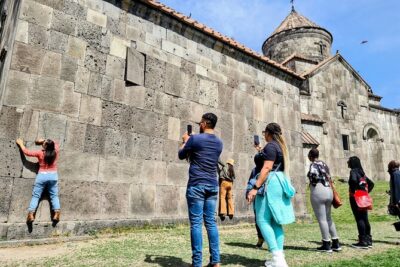 ★ 5.01 Day Private Armenia: UNESCO, Soviet & Curated Family LunchFrom $135106 reviews